
Welcome to GingerLeafLiving – a sustainable living blog. Please have fun exploring my blog and I hope you find some inspiration for creating positive change in your life!
8 days, 4 countries, 0 flights 🧳
One of the biggest personal challenges I encounter is how do I protect the planet and leave a minimal footprint, but also get to see and explore all the wonderful things in this world? Travel makes up a significant proportion of global carbon emissions, estimated around 8%, and of this almost half comes from transport. And it is no surprise to hear that flying has the highest carbon intensity of any travel medium.
In January I signed up to Flight Free UK, an initiative to grow momentum for non-flight travel, and began planning for a type of trip I’d always wanted to try: Interrailing. In this post, I’m going to share my tips on interrailing for if you’d like to try it yourself, as well as my experience of a train only international trip (Spoiler, it was pretty great!).
Planning
First of all, planning the trip. You might have ideas about where you’d like to go, a certain budget, or are willing to be inspired. The Interrail website is really helpful for explaining the types of passes on offer and has an interactive map for trip planning, perfect for seeing your route come to life. Top tip – Interrail has annual sales where you can get significant discounts on their passes. There is usually a sale at the start of the year, but as I missed this I held on until the Spring when luckily they ran their Spring sale. Another useful thing to know is that you don’t have to be ready to take your trip to buy a pass, you can buy a pass up to 11 months before travelling and then you can activate it and choose your specific trains later, so if you think you are likely to take a trip in the next year it is worth buying your pass during a sale. You can also get discounts for Youth (12-27) and Senior (60+) tickets.
For this trip I got the four day pass, which allowed me to have four travel days on which I could take any trains, including the trains to leave from and return to my home country. So I guess your next question is, where did I go?
The route
With this trip, as well as having an adventure and setting myself a challenge, I really wanted to be able to do the full trip without having a take a single flight. I also only had a limited amount of days available and so my destinations had to be somewhere I could reach easily from the UK. This led me to choosing a route that was kind of like a big Northern European triangle! During my 8 days, I travelled to:
- London, UK
- Amsterdam, The Netherlands,
- Antwerp, Belgium
- Paris, France
Leg 1: London – Amsterdam
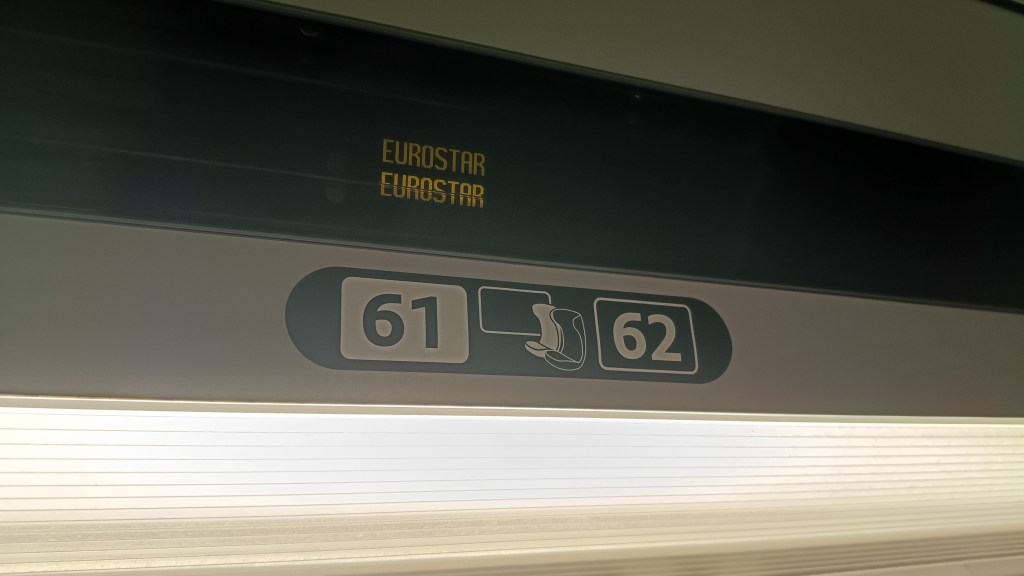
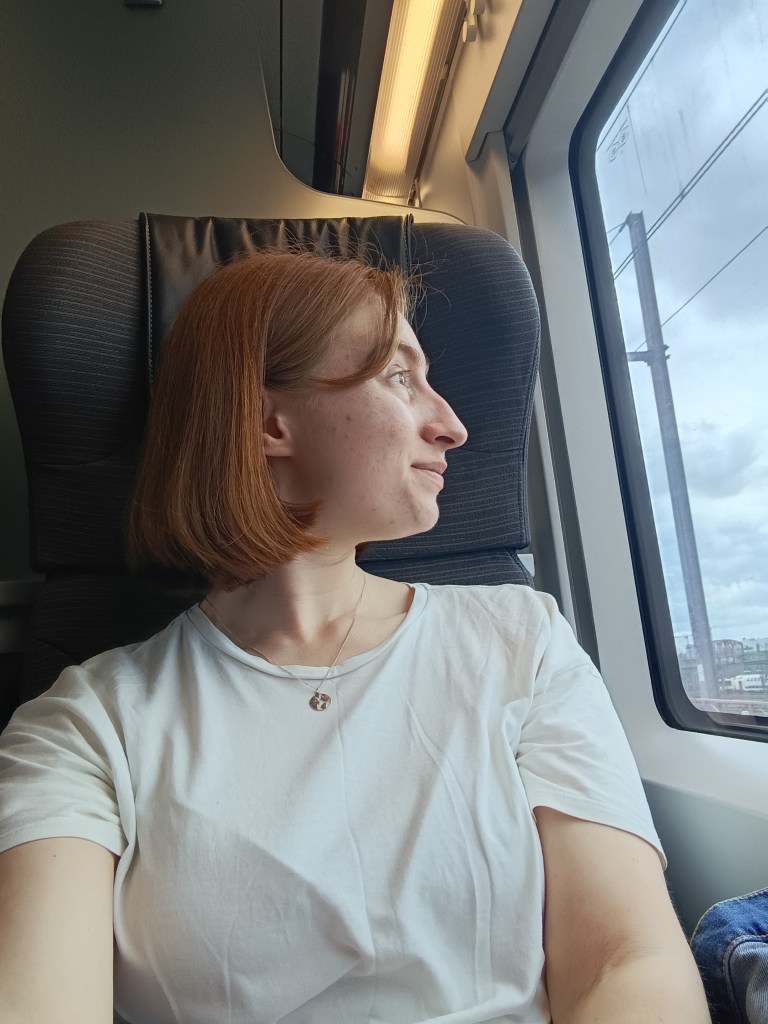
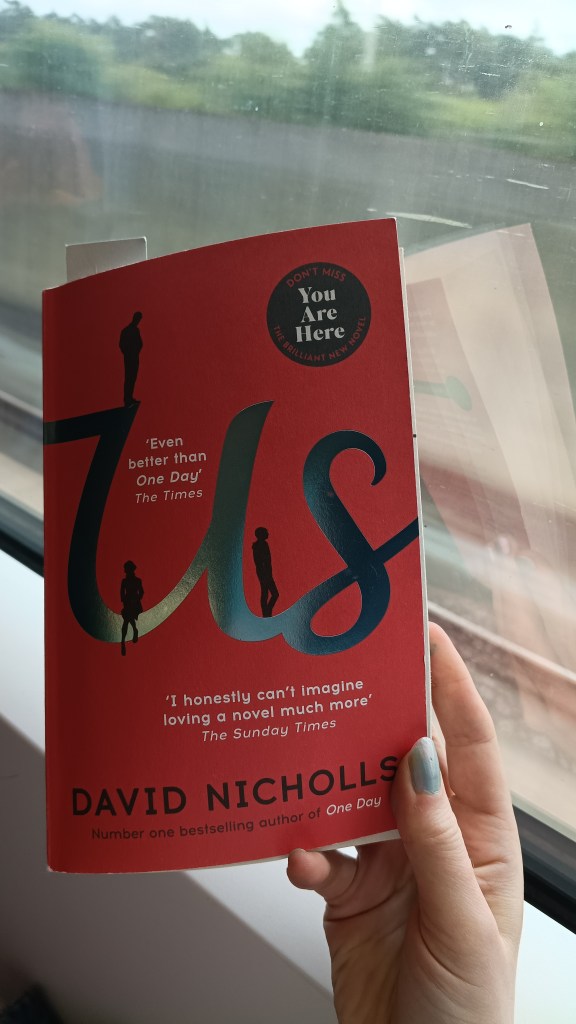
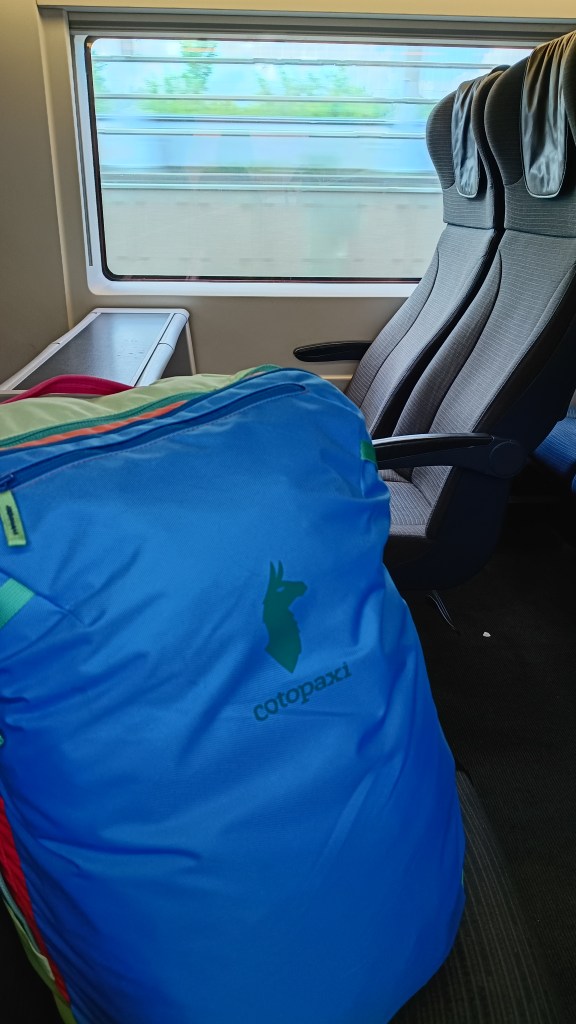
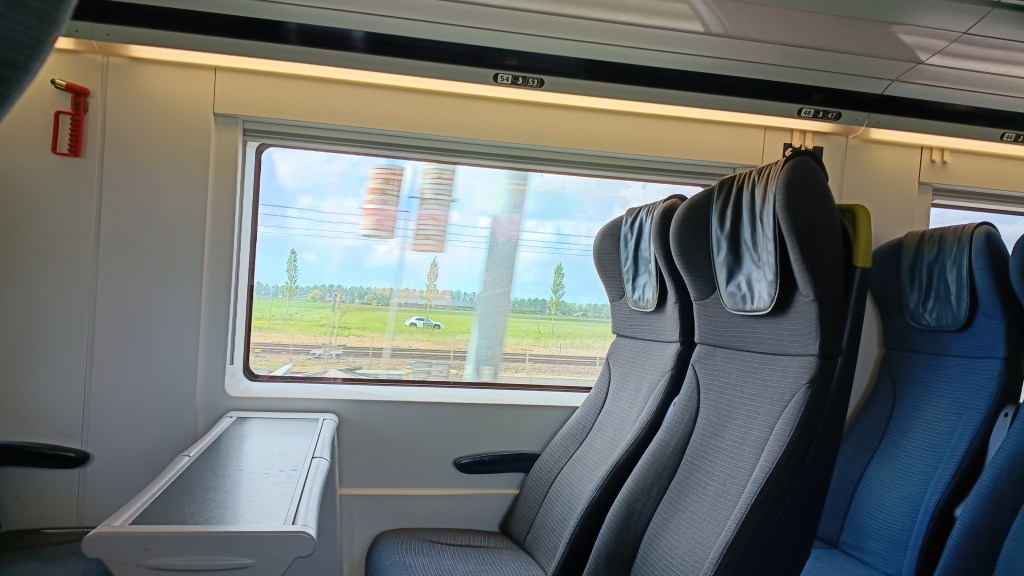
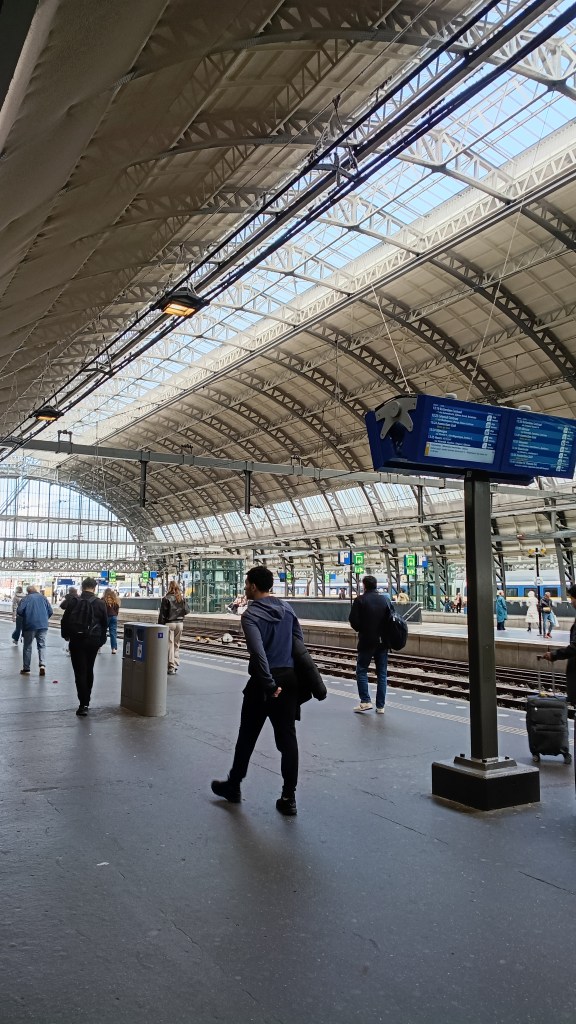
After waking up super early and taking the train (my first of 6 on this trip!) to London, I boarded my Eurostar train to Amsterdam – and was allocated the iconic seat 61. This was the longest of all the trains I took, at around 4.5 hours, but I found these hours travelling by train were very enjoyable, and as much as a part of the trip as the planned destinations. The time easily passes by when you’ve got a tasty lunch to eat, a new book to read, colouring to do, a bespoke interrailing playlist (I created before leaving) to listen to and such interesting views to enjoy. Along this route I got the see the cityscape of Brussels, enjoy watching the birds flying over the fields and even spotted some Dutch windmills too!
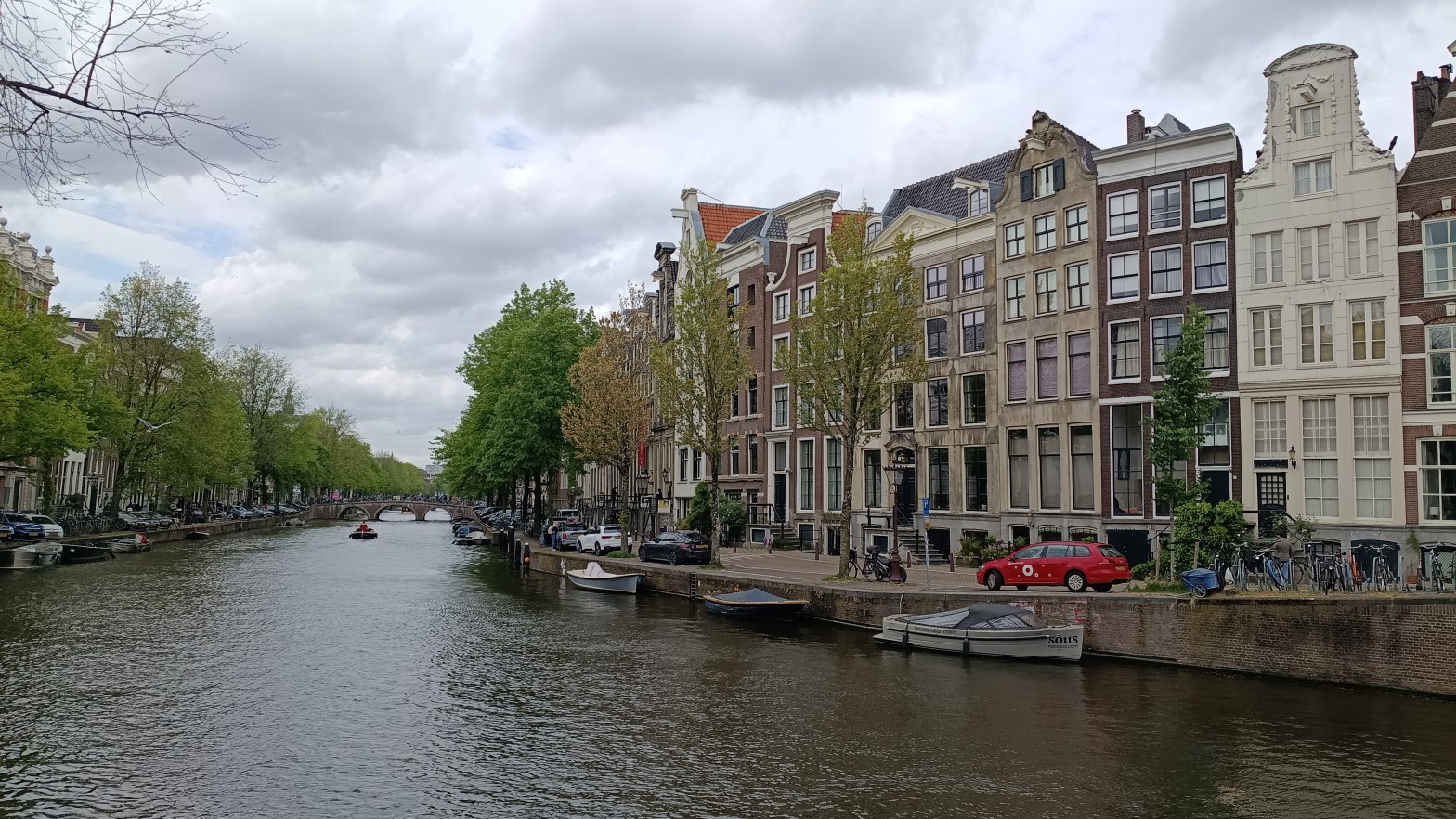
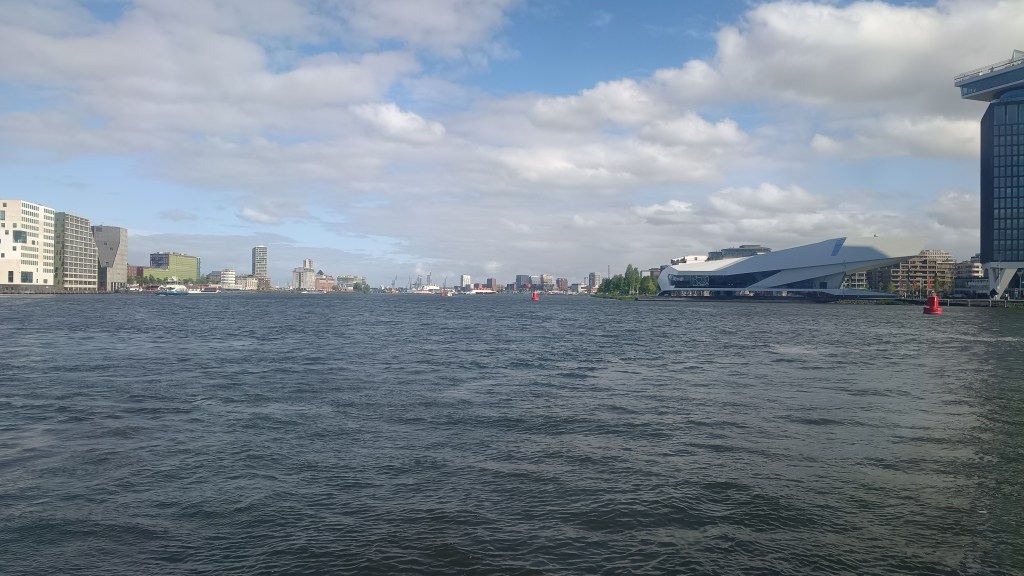
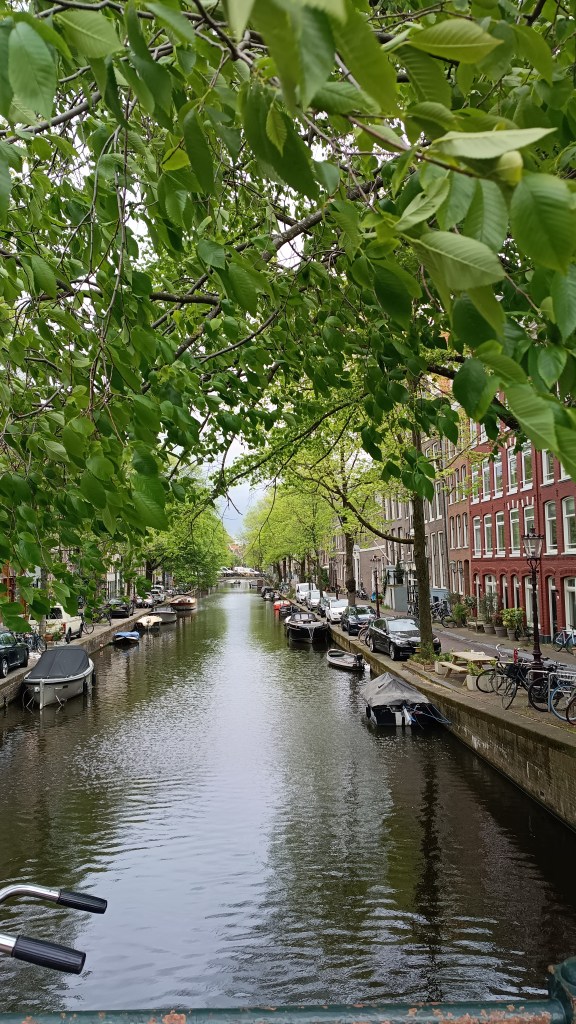
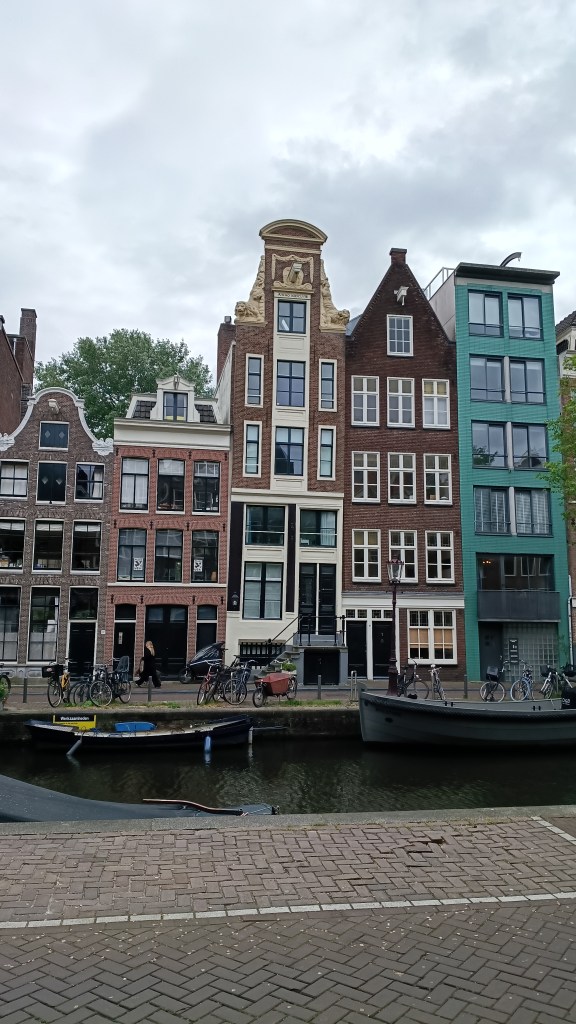
Once in Amsterdam I took the free ferry over the river to my hostel. The north of the city is less intensely connected to tourism, so it was a nice area to be based in, and meant I got to enjoy travelling over the river everyday, which was an added bonus. And my oh my they weren’t kidding about the bikes! They were everywhere in this city and were by far the predominant way to travel. It was so cool to see so many people enjoying the city by bike and it being so normalised, compared to the more car-dominated cities I was used to.
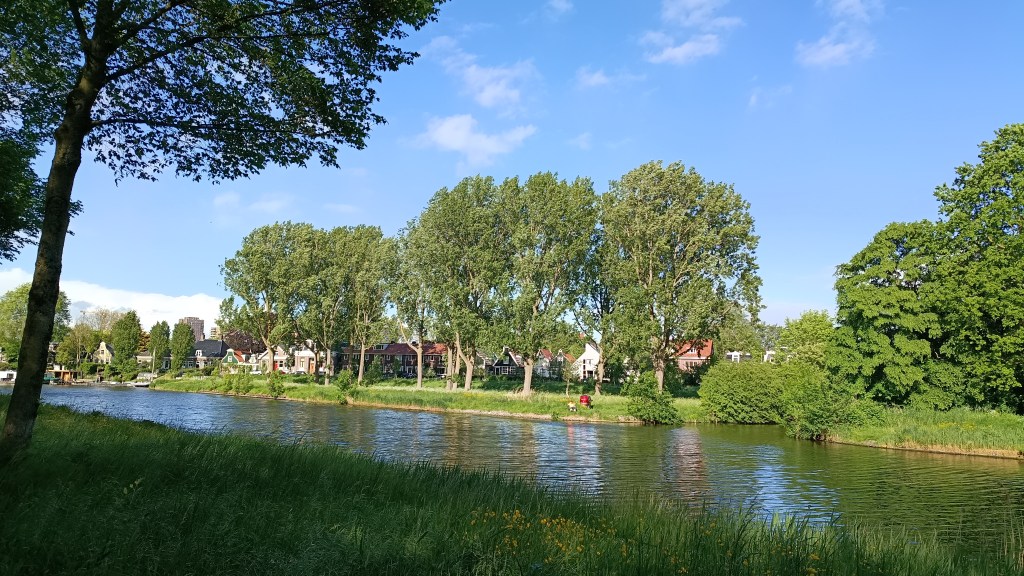
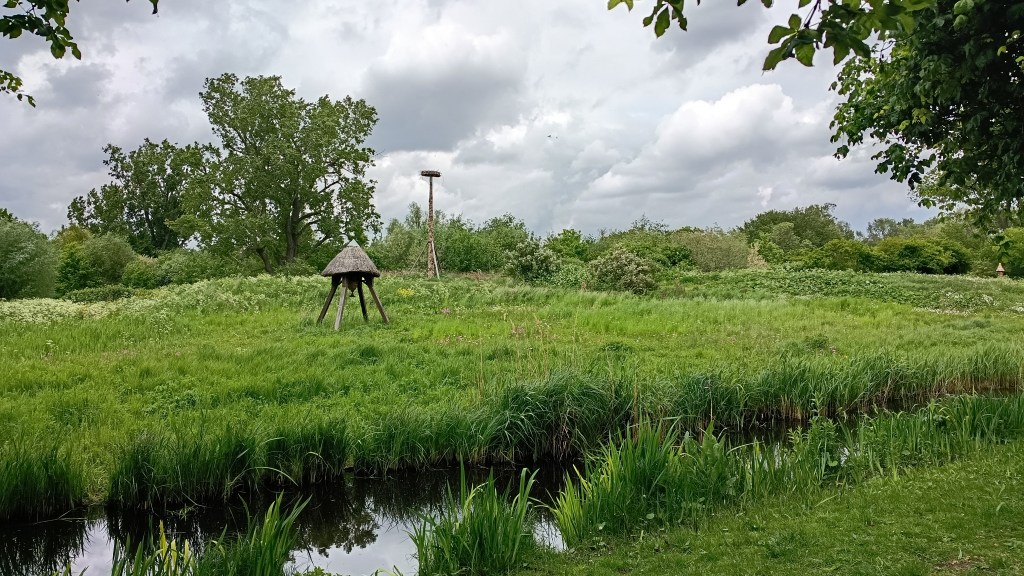
Whilst in Amsterdam I attended a Free walking tour, explored Noorderpark, the Jordaan area and Vondelpark. I also got to know another traveller staying in my hostel room and we attended one of the hostel’s events as well as a delicious brunch together. One of my biggest worries about doing this kind of trip and solo travelling was the types of people I would meet and have to share with in the hostels. There is a certain amount of luck involved, but I was pleasantly surprised that everyone I met was so nice and that other solo travellers were up for doing things together or just having a chat, which made the whole trip still feel very social.
I really liked Amsterdam for its beautiful architecture, the way the city was so walkable and had so few cars and its friendly, laidback culture. Oh to be the type of cool girl that cycles in the most fashionable outfit, one hand free to eat a pastry! Amsterdam are also making strides in regard to sustainability, recently making the news for banning fossil fuel and meat adverts. Walking around the quiet canals, it was inspiring to see how many benefits a walking/cycling dominant culture brings, and how these ideas can easily be translated elsewhere.
Leg 2: Amsterdam – Antwerp
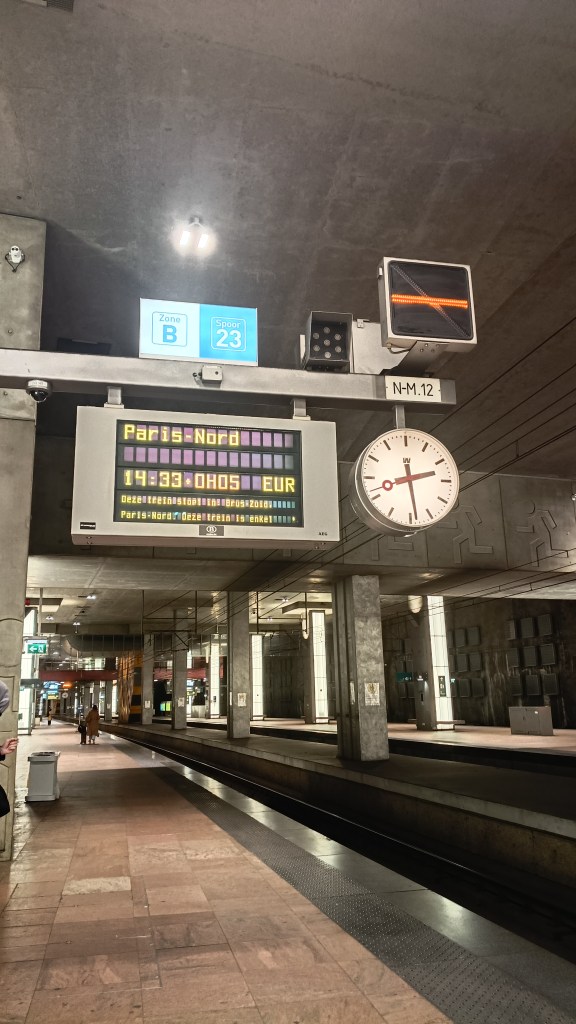
After two nights in Amsterdam, I took the ferry across the river for the final time to catch my train to Antwerp. Most of the trains on this trip were operated by Eurostar, due to the locations I was travelling from/to, and so required seat reservations. However the train to Antwerp was a regular inter-city train connecting Amsterdam with Belgium, so I actually got to feel like a real Interrailer and show my pass! The train itself was really nice on the inside, with interesting split layers and big windows, and the 1.5 hour journey went very quickly. Before I knew it, I had arrived at the beautiful building that is Antwerp station, and promptly stepped out into a huge thunderstorm!
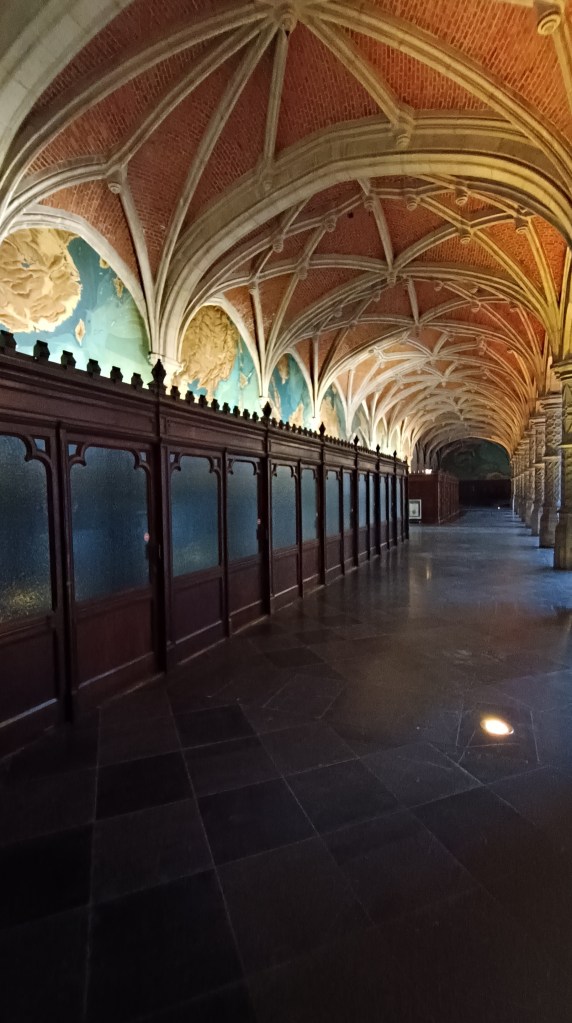
Unfortunately, my whole trip was quite overshadowed by rain (and on a few occasions hail), which *wasn’t really* the conditions I had packed for, but the worst of the weather did fall while I was in Antwerp. Between showers, I did manage to fit in another Free walking tour of the city, multiple visits to the unexpected delight which was the old Antwerp stock exchange (it’s only open on certain dates like public holidays, but if you are ever in Antwerp and it’s open, it is well worth a visit), a look around the traditional shopping malls and then when the weather didn’t improve, I had no choice but to visit Chocolate Nation, the Belgian chocolate museum. Their interactive layout was really interesting for learning about chocolate production, and then finishing off by trying ten different types of warm melted chocolate was the best remedy for spending most of my time in the city being rain soaked.
While less of an obvious tourist destination, my two nights in Antwerp were a great break in between two busy capital cities to explore somewhere in a more relaxed manner, and a great place to pick up lots of tasty souvenirs for my family back home.
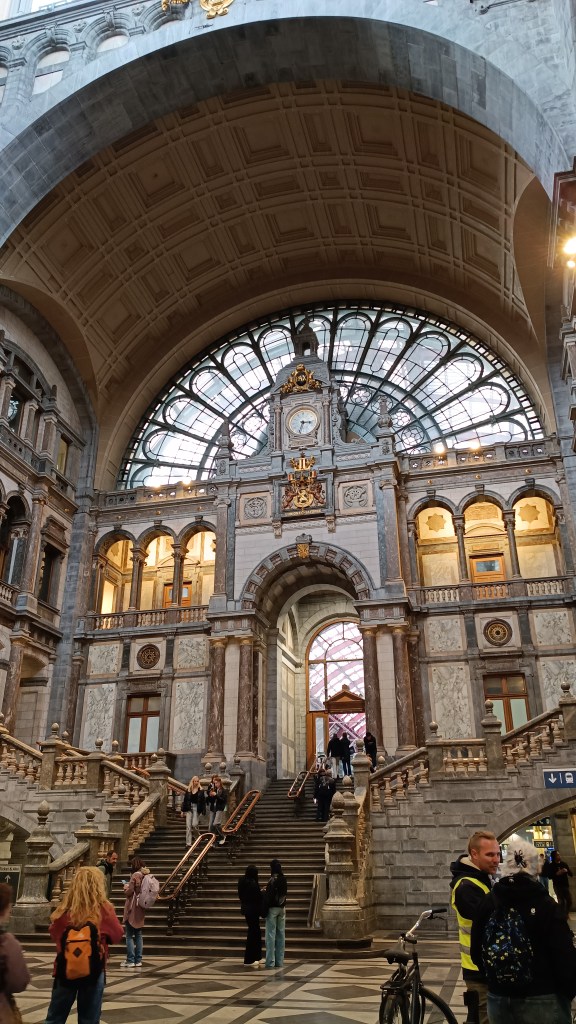
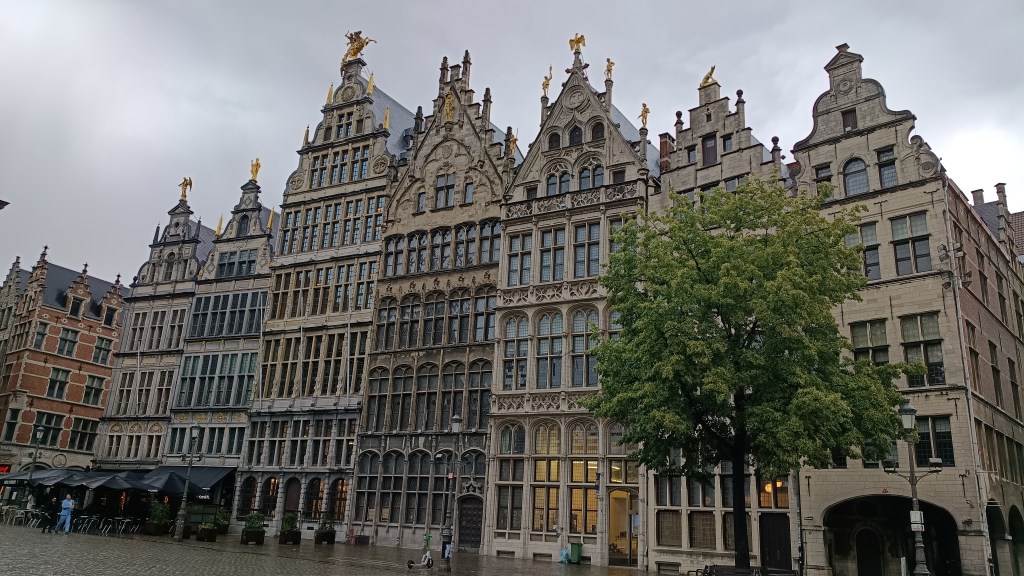
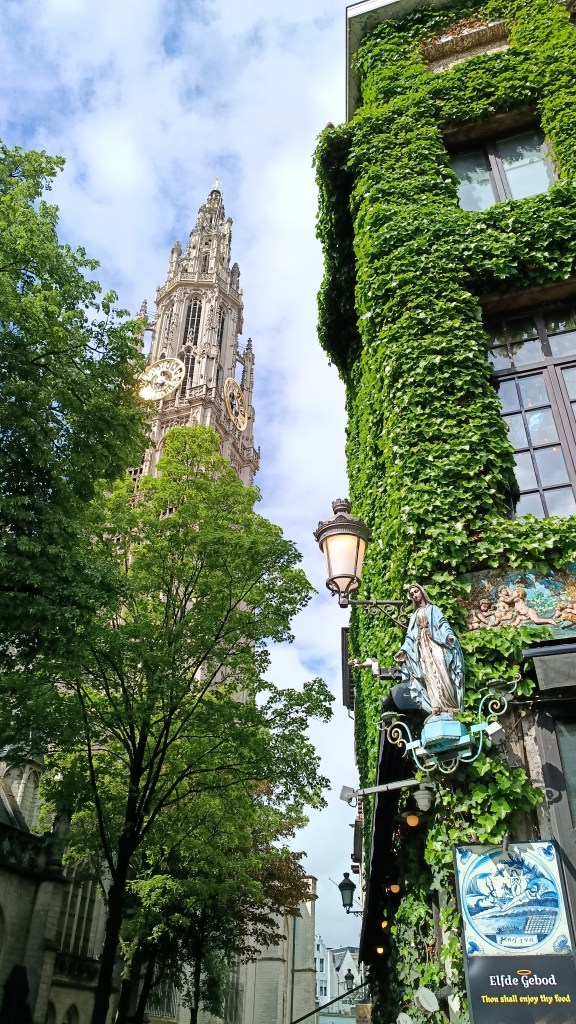
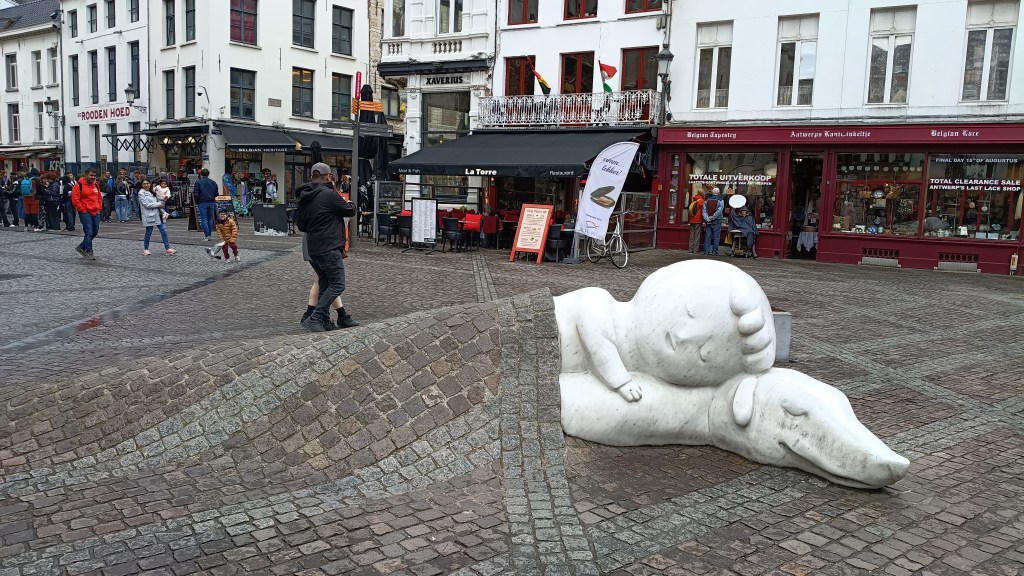
Leg 3: Antwerp – Paris
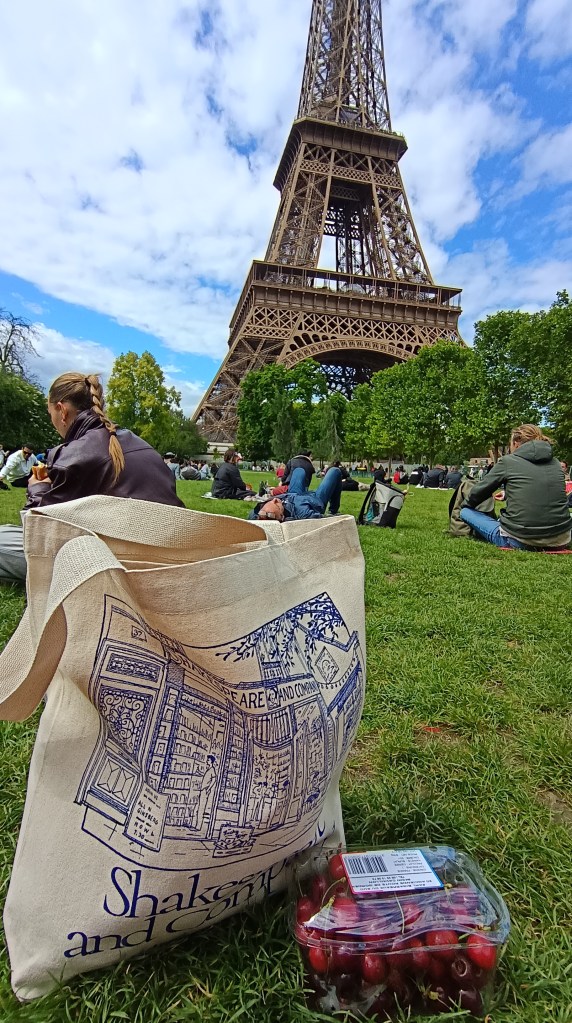
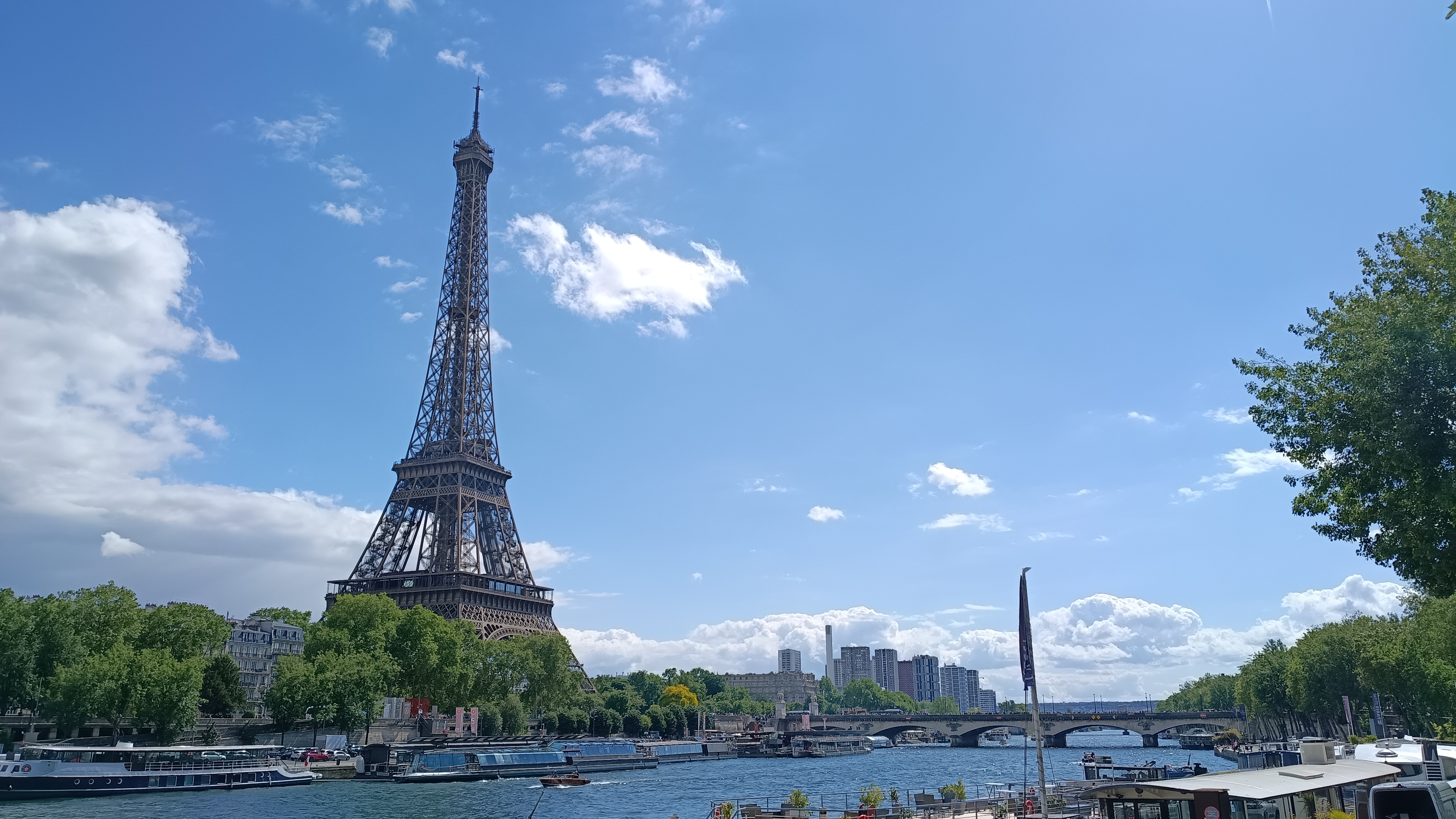
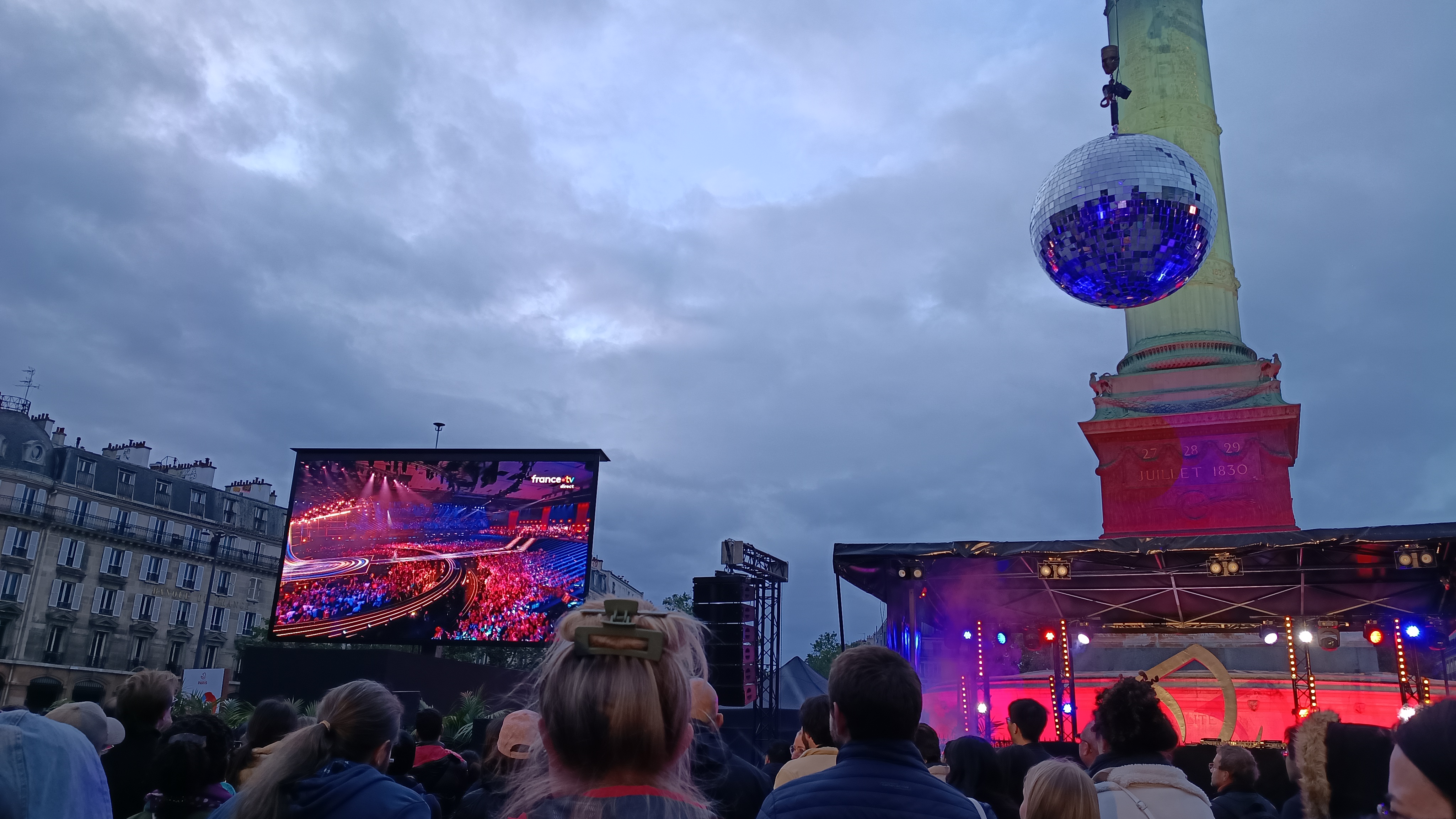
Upon leaving Antwerp, I took yet more pictures of its incredible train station (what a picturesque Pret) before boarding the train to Paris. I hadn’t visited any of the places I went to on this trip before, and of all the destinations I was most excited about seeing Paris for the first time. The weeks before my trip had been spent reading some of my parent’s guidebooks on the city, working out what was still relevant (not the part about bringing enough Francs with you) and dreaming about what I might get to see in one of the world’s most iconic cities. As was the theme of this trip, I arrived during a downpour of rain, and had a very wet walk to my hostel, housed within a stunning historic building a few steps away from the Seine (I learnt how to use the Metro by the time it was time for my train home, so didn’t have to do that walk with a backpack in the rain again thankfully!). One day was spent just walking, following the banks of the Seine, diverting whenever I was near something iconic and of interest (this led to a lot of diversions and some very sore feet that evening) and taking in all the sights of Paris. I read my book in the Jardins de Luxembourg, ate French cherries by the Eiffel Tower, and in a burst of sunshine and something that could almost be described as warmth, I took the opportunity to get an ice cream as I walked along the river. Emily Cooper move over, I was not coming to Paris to do things by halves. In the evening, despite my feet crying out to not walk any further, I went with my new hostel roommate to a Eurovision screening party nearby and even made it by accident onto French TV, although that part of interrailing is optional.
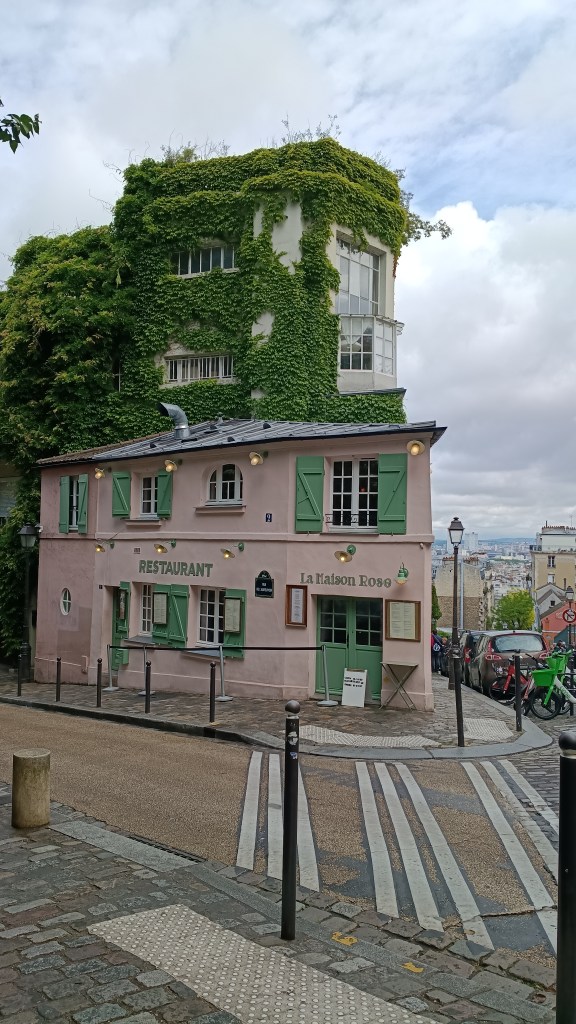
On my second day in Paris, I decided it would be worthwhile working out how to use the Metro system so I could visit the Montmarte area. Once you’ve bought a ticket, it is really easy to add money to your card for as many journeys as you need, and with a numbers and colours system, I found the trains easy to navigate, despite not speaking much French. Montmarte was a beautiful area to explore, although it did get very busy later in the day so I’d recommend going earlier in the morning to see the sights without ten tour parties following you around. In the evening my roommate and I pushed through the language barrier and went to see the Eiffel Tour sparkle, which really was spectacular.




Leg 4: Paris – London
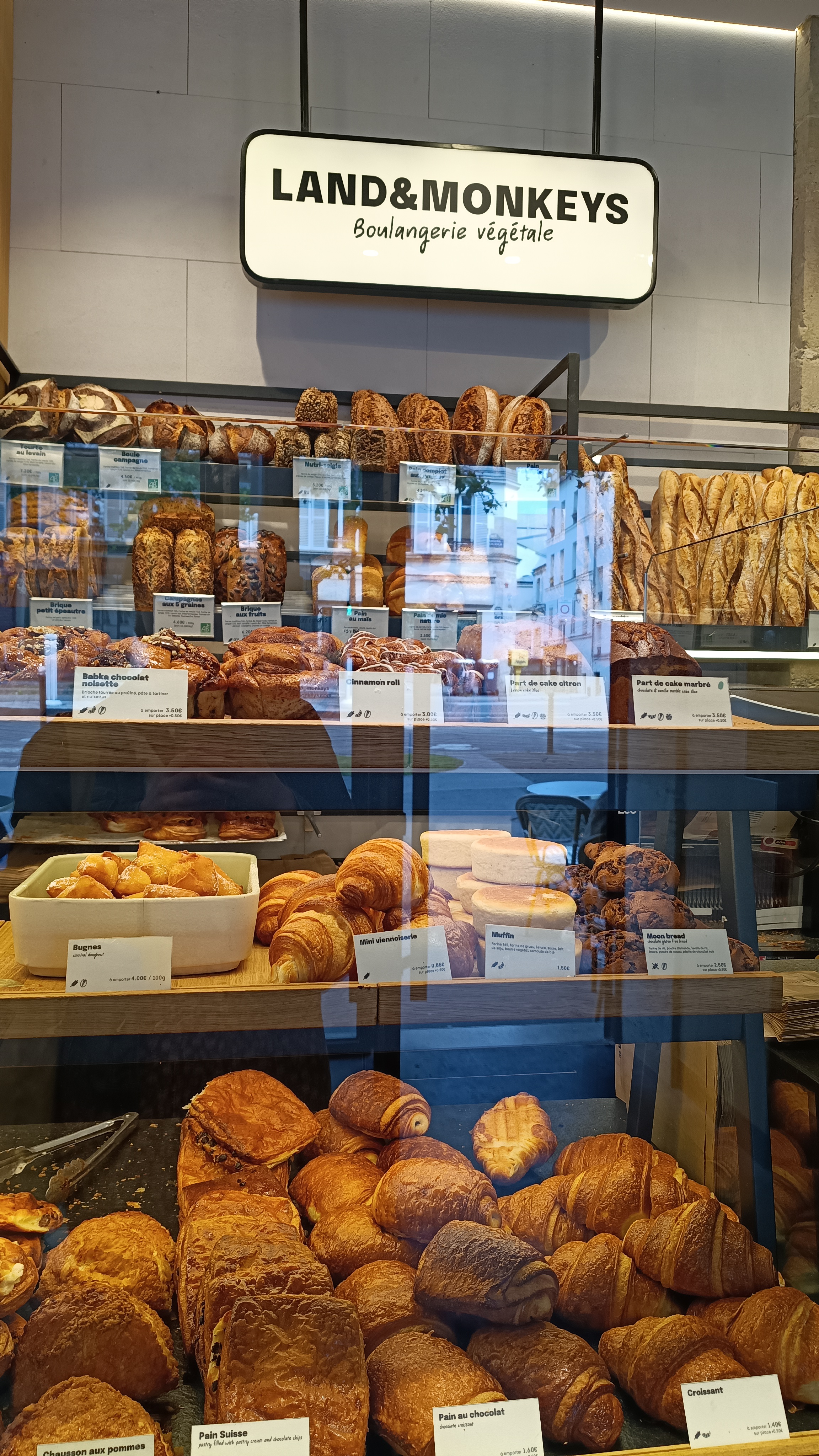
For my final morning I walked around Les Marais area, and found a (vegan) bakery to sit outside, eat a pasty and people watch (which was my Paris fantasy). Then before long it was time to return to Gare du Nord and embark on the train back to London. By this point I had to start the second book I’d bought with me, but after many days of non-stop walking and exploring, I was just happy to sit and enjoy the journey. Back in London I had a gap between arriving and my train home, so I spent the reminder of the afternoon in the British Library, fitted in seeing the Magna Carta (as you do), then got my Leon at Euston and finally caught train number 6, getting back home right at the end of day 8.
Embedding sustainability during the trip
The minimise my environmental footprint further beyond not flying, there were a few other things I did to make my trip as sustainable as it could be. As my first foray into backpacking, I knew I needed to get a bag big enough for an extended trip. My bag of choice was a 35L Cotopaxi backpack, which I managed to buy on sale before my trip. I first of all loved it because it was so colourful, but it also came with great credentials: Made with leftover fabric, a 30% lower carbon footprint compared to similar bags made from new materials, sustainability prioritised in choosing the materials used, repair schemes and a percentage of revenue going to non-profits, this bag is really working hard! And on a practical level I had a great time bringing it on the trip with me. I really like how you can unzip it the entire way round and it has built in compartments, so you never have to worry about removing everything just to get a pair of socks out from the bottom. It also has plenty of pockets and different size sections, perfect for accessing snacks. Finally did I mention the pretty colours?
Where you stay also has an impact on your footprint as you travel. Generally speaking, the more luxury the accommodation, the greater the footprint, as more resources are required. Luxury can be nice for special occasions, but on a trip like this where travel and experience were the driving forces, I stayed in hostels in all three locations. Not only did these end up being a great way to meet fellow travellers and a much more affordable option, but their paired back set up is less resource-intensive, and also shows how little we actually need to be comfortable – living out of a backpack will start a lot of decluttering thoughts!
Finally – the food. Sometimes going abroad can make it feel more difficult to find vegetarian and vegan options, but it seems like the choice is definitely improving. I enjoyed a very tasty pastry and tea in a vegan bakery and café in Paris, and when I did eat out I always had a choice of veggie dishes. I also tried where possible to try local dishes and seasonal local food, such as cherries in France, which were delicious to eat in season.

The verdict
8 days, 6 trains, 4 countries, 2 French pastries and 1 TV appearance later, and the trip has come to an end. As a first ever interrail and solo travel experience, I have to say I think it went pretty well. In only 8 days I got to see such a variety of places, experience multiple countries and languages and got to enjoy the journey between each of those places too. The travelling days weren’t frustrating and nor did they wipe out an entire day for exploring, but were instead an enjoyable and core part of the trip. A trip driven by minimal environmental impact, but delivered big cultural and personal impact. Sure, you can’t travel to every destination in the world by train, but if you are fortunate enough to be able to take the train over flying somewhere, you’ll get to experience a whole lot more. So go on, see where the train could take you; plan a trip, get your ticket, and make your next trip a flight free one.

Sustainable Spring Things 🌼

It’s light when you get home, the big winter coat is back in the wardrobe and blossom is adding colour back into the trees – that’s right, spring has returned! Here are some of the things I’ve been enjoying so far this season and some ideas for positive actions we can all take to make this spring a more sustainable one.
- Easter recycling – If you were fortunate enough to get a visit from the Easter bunny, then chances are you have a pile of colourful foil left over from all those Easter eggs. But wait before chucking them in the bin – foil can be recycled with metals, but is best done in bigger pieces. Start by making a ball from one foil wrapper, then add each additional wrapper around it until you have one big foil ball (or egg, depending on the shape you’ve made!) and add to your metal recycling. Maybe that very same foil will be made into your wrapper for next year, ready to repeat the process 🐣
- Attend a screening of the National Emergency Briefing – In the UK last November, a National Emergency Briefing was held in Westminster on the Climate and Nature crisis, to present the facts to politicians and leaders in order to kickstart the emergency response needed to a crisis of this scale. From this briefing a film has been made, and is being screened by communities, organisations and groups all over the country. You can find a screening happening near you using the National Emergency Briefing’s interactive map. It is especially important that politicians attend so they are properly equipped with the stark facts relating to the climate emergency and the response required, so even better if you get in touch with your local MP and invite them to attend. We have seen how emergencies like COVID-19 and international wars can initiate national and global responses, now it’s time to take climate change as seriously and respond to a crisis on a scale never seen before. In a time of doom scrolling and eco-anxiety, it can be tempting to skip these events because it is too painful, but in an emergency situation, it is important we are all able to face the very real threat facing us so we know what the solutions are. Hosting and attending screenings brings communities together to strengthen our collaborative approach to implementing solutions. Want to know more? Check out more info on the film and watch a trailer here. 🎥
- Get out there – Spring brings longer days and some more sunshine to our weather, so it’s the perfect time to get out in nature and enjoy your local environment. Whether visiting a nature reserve, exploring natural landscapes of national parks or the countryside, or taking your lunch or a book and sitting in the park, reconnecting with nature is good for us both mentally and physically, and reminds us why protecting nature is so important. Put the screens away and instead notice the new flowers emerging, a bird collecting nesting material, the environment changing with the seasons. And as you do so, leave the space a little better than you found it, like picking up litter, so everyone can continue to enjoy the space, including wildlife. For me, this has been exploring areas of natural beauty local to me that I’ve never visited before, and sitting under a tree in the park on my lunchbreak. This time outside both relaxes and re-energises me, and is a wonderful antidote to the working week ⛰️
- Decluttering for spring? Ground-breaking – If the new season has got you clearing out your wardrobe or spring cleaning your cupboards, make sure your items are going to a good home. Ask yourself: Is this in a good enough condition to be sold? Can this item be donated? Is there another use for this, like turning a chipped mug into a planter? If not, can I separate this out for recycling, such as textiles? Was there anything from your winter wardrobe that you didn’t year this time around, and therefore could be sold or given away? It’s always nice to have a clear out and refresh as the seasons change, but this doesn’t have to cause waste – with a bit of organising you can create your own circular economy of reduce, reuse and recycling. ♻️
- Active travel – Now the weather is showing signs of improvement, leave the car at home and use your own power to explore nature/your locality. Whether you enjoy running, cycling, kayaking or walking, after a winter of being inside, reconnecting with outdoor exercise is a great way to get active again and enjoy all of spring’s natural joys. Maybe combine with point 3 above and cycle to your local nature reserve, or go for a run somewhere new, or walk to the supermarket when you’d normally take the car. Exercise, nature and low environmental impact, yes please! 🚴
The change in seasons is a wonderful reminder to us as humans that nature operates in it’s own timescale, with periods of rest, nurture, growth and blooming. As spring transitions, this gives us the opportunity in the year too to embrace a new beginning, re-sync with nature and go feel the warmth of the suns rays once again. This energy can be used too for good – to support a movement actively taking on the response to the climate emergency, to waste less in our homes and to get out and enjoy our natural environment. And if you have any other sustainability tips for spring, let us know! 🌷
Why Climate Change Inaction is the Ultimate Procrastination

We’ve all got a task on our to do list that never really gets ticked off. The form to return, the rip to repair on a pair of trousers, the spot in the kitchen that needs cleaning. Every week they are there, and when we find a spare ten minutes there’s that lurking thought that we could finally tick that task off. We could………………. Or we could go shopping! Or watch another episode! Or literally anything else! And that’s fun for a while. But then we miss the deadline to return the form, and can’t continue the application without it. Then the trousers rip beyond what is respectable to wear in public, and suddenly the weekend outfit is ruined and there’s a good chance you had an embarrassing moment when said trousers finally gave up. And when we come to spring clean, that stain in the kitchen that has sat there for months is now baked on, and what once would have just wiped off is now a permanent mark that has to be disguised as ‘heritage’ wallpaper. And you can’t help but wonder, why didn’t I just sort this at the time?
That, I believe, is basically where we are at with climate change in 2026.
We heard about it at various points last century, and thought it sounded like a way off. There seemed to be more important things to do at the time. But the issue came when this mindset continued but time passed anyway. A new century arrived, a pandemic changed the world, and all the while the global narrative was ‘We’ll get to it when we have time. People just need more awareness of the issues and they will instantly stop doing all bad things’. Hmmm.
Remember those tasks from the beginning? How they actually got harder to deal with the longer they were left? That’s kind of what’s happening here. In the 1960s, there were decades ahead to reduce emissions, so we could change our behaviours gradually by reducing emissions by a small amount each year and still hit global targets. By as the years pass, each year we need to reduce by more and in less time. Setting a Net Zero goal of 2050 in the year 2000 gave you a maximum of 50 years to reduce emissions. So to reduce by 100% that was a 2% annual reduction. But setting that same goal in 2025 would mean a 4% annual reduction – double the work per year! Imagine paying 5% of your income towards something vs 10%. Doubling is much less fun then. The closer we edge to the global goals of 2030 and beyond, the steeper the reductions needed and the harder the work.
And just like the form and the trousers, the more time spent procrastinating, the greater the consequences. A small rip can be fixed while you watch a film. A form may take a tedious ten minutes, but is less uncomfortable than failing an entire application because of it. The cost of acting now is nothing on the cost of dealing with the consequences of heated up world because of inaction. A lot of the time our biggest regrets are not things we have done, but what we didn’t do. Inaction only delays the problem, and causes collective regret.
But there’s another aspect to procrastination. It isn’t just that we put off a task until another day. It is that we are actively distracted from completing it. By our phones, pinging messages, more exciting things to do. And these distractions stop us making progress. And on a bigger scale the systems around us are built to keep us distracted. There’s a war and gas prices go up – now how are you going to heat your home? There’s a cost of living crisis – are you going to be thinking of creating a better world for the future or worrying about how the budget will stretch this week? We could maybe debate better environmental protections in government – or a random MP could bring up something scandalous which will need discussing and fixing straight away. We never find the time to come together and make a strategic and long-term action plan because there are always distractions and short-term issues that are much more urgent in our daily lives. And that suits certain people just fine.
Taking action to prevent to worst outcomes of climate change benefits everyone because it means we can continue to live, which most of us are quite fond of. But for some this still strikes fear, the fear of living a different way. If there is no oil and gas to sell, how will they make money? How will they keep up maintenance on the yacht? They were going to buy a second villa in France next year, how will they fund it? Better just to keep the masses confused, put the prices up and pipe up with questions like ‘how will solar panels work when it’s night-time?’ as if the world doesn’t rotate around the sun and energy storage doesn’t exist. That way they continue to rake it in as part of their own procrastination against the nightmare thought of ‘what will happen when we run out of oil?’ which then leads to a lot of existential thinking and presumably staring into the abyss.
Take energy as an example. It is easy to get put off moving to renewables because of the upfront costs (why these remain so high and are not subsidised to make the transition easier is another story). But then when an energy crisis comes along and disrupts oil and gas prices, those on renewables continue as normal. The sun keeps shining even when pipes are cut off, there’s no queuing for emergency fuel if you charge your EV at home. And so a previous decision sees you with less friction in the future. And as we inevitably reach the end of our supplies of fossil fuels, we can either wait to use the last drop of oil and then look at each other blankly, ask what’s next and then spend ages creating new infrastructure where we have a period where we go without. Or we can transition over now, be ready and leave those fossils in the ground where they belong. Society always tells young people to not leave things to the last moment – do we need to send the reminder back?
As the famous Chinese Proverb goes: ‘The best time to plant a tree was 20 years ago. The second best time is now’. If you can make a difference, you should do so. If societies can plan and take action now they should do so. If the world can still think beyond the distractions, it should do so now. The time for gradual and slow pace of action has gone. Radical change is the only option left.
This is our sign to stop procrastinating.
Be a sustainable Valentine 💌
It’s the season of love once again, whether you celebrate it romantically, with your best friends or by treating yourself. It can also be a time to show the planet some love too. In a time where every event/celebration/occasion has been hyper-commercialised (why am I seeing everything being made in pancake-flavour this year?!), Valentine’s can instead be a time to share real love, aside of the material things. Here’s a few tips for making this celebration lovely all round 💕
- Don’t just buy, show you care – Valentine’s gifts like bears, plastic mementos and other material items are all well and good, but how much are they actually used once the 14th Feb has passed? While there can be a pre-Valentine panic to make sure you have something to give the special someone/people in your life, these items often end up contributing to the global waste problem and do not easily biodegrade. A more heartfelt way to show you care is to do something for someone instead, or share an experience together. It could be cooking them a homemade meal, hosting a move night in, or just setting aside time to spend together. These are the things that matter most and will be remembered longer than the last-minute gifts 🥰
- Support local – If you do want to get a special gift that you know someone will love, take a look at local businesses and makers around your local area. Not only does this support your local community, but you’ll find something more unique that can be cherished for a long time. Where we choose to spend our money is one the biggest ways we have an impact on climate change and the environment, so by shopping small, the positive impact expands within your local community 💚
- Roses or Lilies? – Flowers are synonymous with Valentines, but are they a sustainable choice? Cut flowers imported from overseas have a significant carbon footprint, due to the energy used to grow them and transport them. For fresh flowers, pick local and seasonal blooms, or choose dried bunches that will last much longer and can be reused. Still beautiful, just for longer. Even better, go and enjoy the first signs of spring flowers by taking a Valentine’s nature walk in your local patch 💐
- Ethical chocolates – Another Valentine (and all year round) favourite, the chocolate box! Not all chocolates are made equal though, with chocolate production being a driver of deforestation and unethical labour practices. That’s why buying chocolate is another opportunity for us to use where our money is spent to build a better world. Brands in the UK like Tony’s Chocolonely, Seed and Bean and Divine are all good choices for ethical and tasty chocolate treats. Is this an excuse to buy chocolate..? 🍫
Whoever you celebrate with, share the love this Valentine’s day by showing the planet some love too, it definitely deserves and needs it right now. Love is more than single-use products marketed for one specific day, it’s quality time spent with loved ones and doing something kind for yourself. So avoid the waste, choose quality and show your loved ones just how much you care 💓
2026 New Year Goals
Happy New Year all! I think this may become an annual thing where I only acknowledge the new year right at the end of January on here. Hope your 2026 has been going well so far – we seem to have globally started much as we did in 2025, with a big political bang. Thinking about your own personal sustainability goals when the backdrop is all oil, threats and chaos can feel quite hopeless, but setting aims within your own control can help us combat feelings of eco-anxiety and help us frame action within our own lives. This is why I personally love January – a fresh start to begin again and decide how we want to spend this year. So grab a pen and paper, notes app or journal, and let’s set our sustainability intentions for 2026. Here are a few ideas I’ll be taking into this year…
- Getting involved in positive campaigns – For many of us, the realisation has hit that no matter how much we recycle, walk to the shop or use a reusable coffee cup, without huge change to way big business and national government run, the impact on preventing the worst climate impacts will be negligible (although do keep doing those things!). That’s why this year I want to be part of a bigger movement looking to make more of a systematic change. Whether it’s a local cause or national movement, we have strength in numbers and can support in many ways. For example, in the UK there is movement to enact a Climate and Nature (CAN) Bill, which would provide the legal framework for this country to protect nature and the environment and take action on climate change. So far this has not been made into law, but every time it gets knocked back in parliament support continues, so I want to be part of the movement to make this official. This also stands for any other relevant campaigns that will make a big impact, whether opposing destructive behaviour or supporting positive new ideas. Our voices stand for a lot and 2026 is the time to use them 💬
- Volunteering – It’s one thing to be concerned about nature loss and the environment and let these feelings make us feel low, then inactive, but it’s much more positive to feel those feelings and then get involved in a practical solution. So this year I want to get involved in local nature projects near me so I can be part of the positive stories of helping nature return and thrive. There are many different ways you can volunteer your time, from practical work to supporting others and taking on admin tasks. I’d really like to combine a few of my goals and do some practical volunteering in the outdoors, supporting the wonderful charities and organisations looking out for our natural spaces and making a difference 🌱
- Time in nature – We know time in nature is so good for our health and wellbeing, and I for one spend a lot of time thinking about it/writing about it (in blog posts like this one). It is easy to fall into the trap of only spending time outdoors when you have the time, so I want to prioritise being in nature, being surrounded by wildlife and living a bit more in tune with the natural world, whether that’s taking camping trips or having tech-free days. There’s a whole world out there to be looked after, and it is also there to be enjoyed ☀️
- Miscellaneous extra ideas! – Finding vegetarian lunchtime recipes for the office (so I can go packaging free), looking at small businesses first when making purchases, getting a refillable kitchen hand soap dispenser (already set up!), continuing to take the train for holidays and travel adventures and eating more fully plant-based meals 🌎
As we’re reminded each year, living sustainably really is a process and develops over time, which gives us the opportunity to refocus each year on what we can do. Imperfect progress is a much more positive mindset than striving for perfection by December and setting goals that you want to work towards will help on the journey to living better and with less impact on the planet. Got ideas of your own goals? Let us know in the comments! And with that, may 2026 be our year of making imperfect progress to be more sustainable. Happy New Year! 🪩
2025 Sustainability Wrapped

Happy New Year’s Eve folks! It doesn’t feel five minutes since we were just embarking on this new year and setting our 2025 goals. There have been global high and lows, and personal progress too this year, so before we look ahead to 2026, let’s reflect on sustainability in 2025…

In 2025 the story of the last few years continued, the scale of action needed for sustainability and climate action is still urgent, essential and a priority for this decade. As we move closer and closer to 2030 and the goals we set set as a global collective, real action will need to be expanded and doubled down upon. On one hand, this landmark year, being a decade on from the 2015 Paris Agreement and halfway through the 2020s on the path to the 2030 Sustainable Development Goals, did not come close to the ambition and impact we needed to see. Globally we have still seen division, inequality, climate denialism and rising emissions. But some progress has emerged during 2025, as complied from the BBC.
This includes the rise in global energy generated from renewable sources, overtaking coal as the world’s largest source of electricity. There have been some strengthening of environmental and nature based laws, such as the High Seas Treaty, to protect more marine areas and glimmers of hope in conservation success stories, such as the growing population of Green Turtles. While COP30 did not deliver the strong frameworks we were looking for, the significance of having a committed group of leaders to transitioning away from fossil fuels is a definite sign of progress compared to previous years. 2025 also marked the continuation of strengthening climate justice, by being bought to the International Court of Justice, helping to keep countries accountable for their climate impacts. Indigenous groups were also included more in this year’s global conferences, allowing more voices to be included in climate discussions.
On a more personal note, my 2025 sustainability goal was to have a No Buy Year. I wanted to see how much over-consumption and material purchases I could cut from my life, thus preventing excess waste and emissions. The result? Well, I did still buy things. However, the way I thought about shopping changed. Thinking about it now, most of the things I bought this year were for practical reasons – items for my new flat, clothing for my new job and replacing items that I had used beyond repair. When I needed things, I tried to buy items that would last, were from quality sources and that I know I would use. For nice to have things, like books etc, I noted these down and added them to wish lists for my birthday and Christmas, so that those who wanted to send gifts could choose something that I wanted and would use. I finally got myself a swimming wetsuit, which I purchased second hand and fixed up the slightly broken parts, and has been one of the best purchases of the year. So while I did still buy, it was in a more conscious way and very little was impulse driven. Going into 2026, I will keep this mindset up and look at borrowing, buying second hand and supporting local/independent businesses first whenever I’m looking to buy. 🛍️
Another key change for this year was using public transport for all of my holidays. In 2025 I was lucky enough to go a few trips, both abroad and at home, and I used the train for all of them. Having had a year of travelling much further by train I now feel much more comfortable and enjoy this way of travelling a lot more, and am looking to do more train trips next year. I have also taken many a day trip by bus this year, and seen places I hadn’t been able to before. All of this has meant that car travel is less of a significant mode of transport for me now, and going without is less of a limitation. I’m excited for more adventures by public transport next year. 🛤️
And finally, 2025 held significant change for me as I started my first role in sustainability. I have learnt a lot more measuring and reducing emissions and am looking forward to taking these skills into next year to expand the positive impact I can have and share with others. I also had my first piece of sustainability research published, and am excited to see how that progresses in the future. 🌍
So, 2026 huh? In a time where we are being increasingly polarised, silenced and it can feel very bleak, I want to go into the new year with the motivation to take on more active roles to stand up for our planet. Whether that’s joining volunteering days, becoming part of a local organisation or supporting political campaigns to secure strong legislation for our environment and collective futures, I want to make sure I’m being part of the solution. I will be continuing the No Buy mindset to enjoy the things I already have and be conscious with where I buy from. And work out what tasty veggie lunches I can make for the office.
What are your goals for 2026? What would you like to pledge to do for the planet next year? And do you have any good veggie lunch recipes you’d like to share? Please share in the comments below!
Finally, thank you for another year of your support of this blog – we have now been going for over 5 years! 😮 If you ever read, shared or have just found this space, thank for for being here. I’m excited for what 2026 might bring for the Ginger Leaf Living community. All that’s left to say is….. Happy New Year!
Simply having a wonderful Christmas time 🎀

Hello friends, it’s December again! Anyone else thinking that we seem to have missed a few weeks this year, we cannot nearly be at the end of 12 months again surely? But if our advent calendars are right, then we are just one week away from Christmas. It really is a wonderful time of year, but also one that can feel increasingly pressurised to have it all and result in less than seasonal gifts, like huge amounts of waste from food, decorations, packaging and unwanted presents. If you celebrate this season and need a reminder of how to approach Christmas more mindfully, here is our 2025 Sustainable Christmas guide.
Firstly, the presents. I recently saw this brilliant infographic by Jen Gale, the author of Sustainable(ish) which perfectly summarises the hierarchy of Christmas gift giving. Celebrating the end of another year and showing those you care for how much you love them really is all about the thought behind the present and spending time together, rather than buying something for the sake of it. How we spend our money at Christmas (and all the year round of course) is one of the biggest ways we influence the world around us – who we support, who loses out, their ethics and their footprint. So buying ethically, locally and second hand means supporting people within your own communities, whilst also finding a unique present idea. If the person you are buying for has something specific on their wish list, which you know is something they will love and use for a long time, then gifting them an item that they can enjoy for years to come is much more appreciated by recipient and the planet than one-off novelties. And if you normally end up having to buy loads for extended family, colleagues etc, you could try a Secret Santa – still loads of fun and you actually get to enjoy planning the gifts for the person you pick!

Handmade gifts are also a fantastic option, and a chance for you to share the things you love with the people you love. It could be crafting, cooking, baking or something else entirely, either way you get to enjoy the process of the making as well as the gifting. Or you don’t even need to gift something physical at all, organising an experience, shared day out or gifting a ticket or experience are all amazing ways to create excitement to take into next year.
What if you’ve sorted all your gifts? Well my organised elves, here’s a roundup of a few more festive tips to keep Christmas kind and joyful this year:
- Wrapping – reuse pieces of fabric, wrap with recyclable paper and tape and sort your wrapping post-opening for reuse, other projects or recycling. No over-spilling bins on our watch! 🎁
- Food – Christmas is about all the trimmings, but there’s no need for wasteful excess. Be creative with your leftovers, share with others around you and enjoy every single bite. Dust off those recipe books and enjoy having the time to actually enjoy the process of cooking 🍽️
- Decorations – Keep those traditions alive and reuse your decorations from Christmas past, pick natural/biodegradable options and avoid anything single-use. We want to see it all looking merry and bright next year! 🕯️
- Be kind – Make a donation to charity, check in on a friend, send a personal card; all things that we strive to do all year round but feel especially precious as the year draws to a close. End 2025 on something good by helping others and that Christmas spirit feeling will be stronger than ever. 💖
With just one week to go, let’s try to release the stresses of a perfect Christmas and enjoy the process – the putting up of generations-old decorations, of making gingerbread to give to friends, and bringing everyone together. These things are what makes Christmas and they don’t cost the Earth. So as those final festive advertisements push harder for your attention and try to convince you that you haven’t bought enough, just let them be. Content in the knowledge that for so many of us we already have all we need to enjoy this wonderful season. If you celebrate, I wish you a very Merry Christmas, and if you don’t then a wonderful restful break to finish the year on – Happy Christmas everyone! ❄️🎅🤶🎄
An ordinary human’s guide to COP30 🌍

If you keep up to date with environmental/sustainability/political news in any way, then you may have heard about the recent COP30 global meeting. Billed as the meeting that would finally bring together global action on climate change – 30 is a lovely round number, it is 10 years on from the 1.5 degree commitment of the Paris Agreement, 5 years left to meet 2030 targets – this years COP once again missed the mark in some style. However the ideas and direction of many of the worlds leaders are pointing in the right direction. Here are some of the key takeaways and what we can use of this in our own lives…
- First of all, what is COP? Standing for ‘Conference of the Parties’, COP meetings have been annual international meetings since 1995 to review global progress on mitigating and adapting to climate change, including key targets such as global warming limits. They usually make the news a lot because they sound great, but after 30 years, in the face of rising emissions, increasing loss of nature, and more social upheaval around the world, have achieved very little. Leaders usually make the news for not attending, and a large proportion of people who profit from a business as usual approach usually enjoy making the most of a convenient global networking event and having fun causing chaos. As you might be able to tell, they are quite divisive events.
- Team work makes the dream work – This COP the focus was on implementation. We’ve been chatting about this climate malarky for a while now, they thought, why don’t we try doing something about it? Well, have you ever tried to pick an activity/film/song/food that everyone in the family will like at Christmas? Then you’ll know you can rarely get anyone to agree. COP30 was a bit like that, if your Uncle profited by the millions from preventing you from watching The Holiday and your grandparents straight up refuse to get you what you asked for and remain committed to the faithful satsuma in the stocking approach. Despite being the driver of planetary warming and underpinning issue of the climate change topic, the world’s leaders could not agree together to phase fossil fuels out. For some countries, committing to this goal was a core reason for attending, and on a more positive note, many countries – in fact more than 80 of them – pushed for a roadmap to phase out fossil fuels. But for others whose whole economy was built on them, letting go and embracing a new era was still just too big of a step. Nostalgia is a powerful emotion. With agreements only coming at the final moment and disappointment on all sides, can this method of global decision making be the best method for the future? Should we really create global deals that impact everyone’s future by stopping to the lowest standard, rather than taking them with us on the ambitious pathway?
- Words Vs Actions – We are all told that our actions are louder than words, but unfortunately at COP30, words and grammar must have been absolutely fascinating because they were a big part of discussion. For a global issue so physical in its causes and impacts, trying to solve it through clauses and word choices seems quite a disparity. Maybe the lesson here is to act positively albeit imperfectly, then perfect strategy in combination or once action has built momentum. Either way, it would be useful at this point to just do something.
- Hope – On a personal note, while words like disappointing, heartbroken, angry and appalled do not do justice to just how frustrating the news of another failed deal was, I do feel motivated by the fact that deals are now failing because the minority of countries are holding deals back, rather than most countries being unwilling or dismissive of climate science. With over 80 countries backing the transition to move away from fossil fuels, there is hope they will honour this in their own national targets, actions and progress. Many countries are also having their own sustainability wins that aren’t always given the spotlight as huge events like COP. The very fact that leaders were exhausted from trying to push through an action focussed deal and were disappointed by the outcome shows that commitment to climate change action is still a priority across the globe, and despite the political noise isn’t going anywhere. It doesn’t make it great, but it is marginally better than world leaders going on a 2 week holiday, agreeing that global warming is a hoax and going to the pub.
- What does this mean for me and you? We may not be attending global conferences, but keeping the momentum on climate action going lives on in all of us. We all know people of different opinions to us, who we can engage in the transition to sustainability in different ways, by appealing to their likes and values. We can focus on the local, get involved in community projects near us and look after our natural environment around us. Just because world leaders couldn’t pick a phrase they can all agree on doesn’t stop the amazing work going by ordinary people all across the globe. So keep doing good things, keep positive news alive and don’t stop the hope or the fight in the face of this deal. It will be the accumulative impact of every individual’s actions that shape our future, so keep making your difference a positive one.
Another year, another COP, another blog article with key takeaways. While the outcome was undesirable to say the least, what goes on at COP is just one part of the global agenda on climate change. Every year will we be pushing for more radical action, but for now, this should only spur us on to keep making change, and ultimately showing that community power can achieve more than these grand conferences. Feel let down, feel angry, then channel that into something good 💪
Resources:
Halloween 2025 🎃
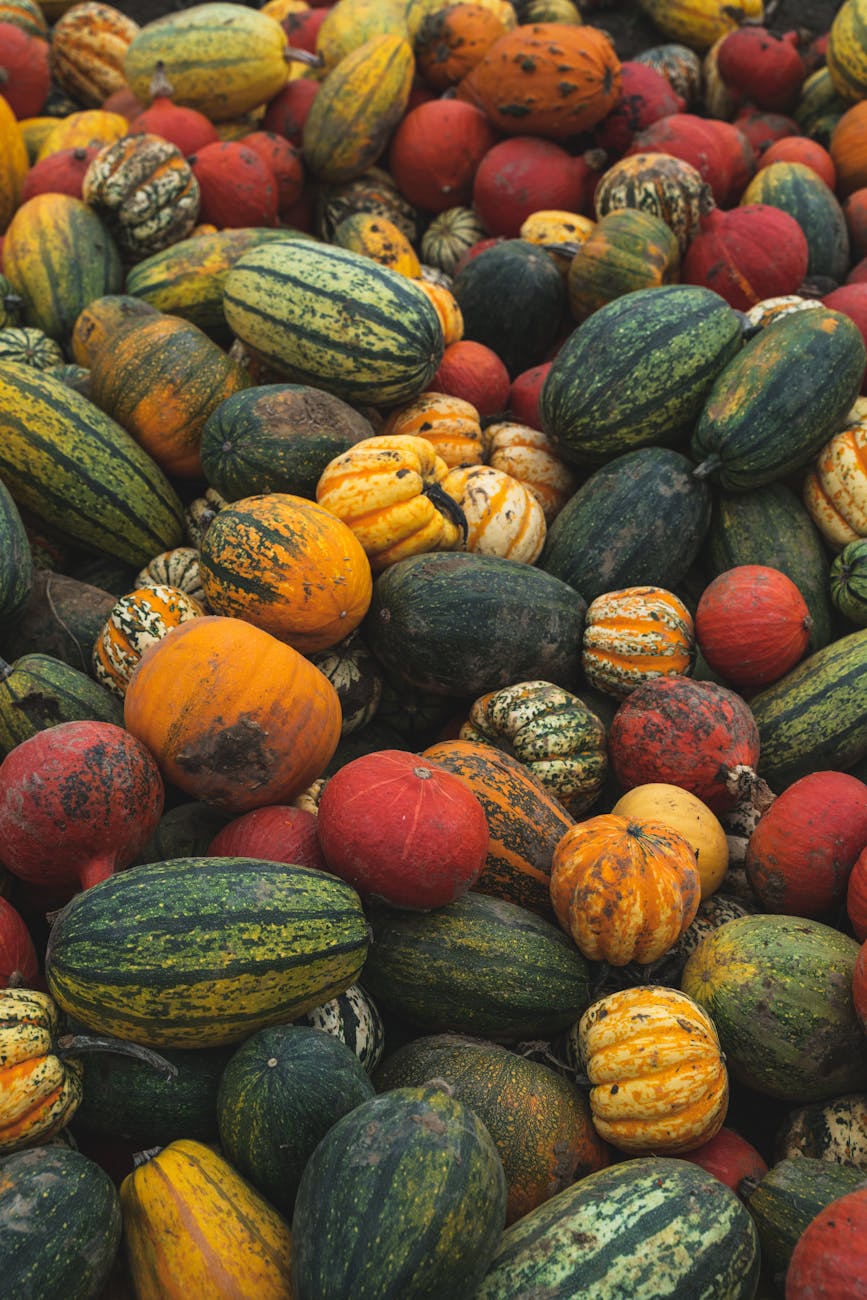
Happy Halloween folks! If you are an autumn lover like me then October really feels like being in the best season of the year. But just because spooky season is here doesn’t mean we have to give our planet a trick – be kind this year and make your Halloween a sustainable treat! Looking for ideas? Read on if you dare…….
- Pumpkins – My spirit vegetable, if there is such a thing! If it’s not enough that I usually dress like one at this time of year, I like decorating with them and eating them. But more often than not a huge amount of pumpkins are wasted every year at Halloween. To reduce this wastage, try to plan to make the most use out of your pumpkins. You could decorate one, then use it later for cooking. Or when carving, save the seeds for making into snacks and put your carved pumpkin in the food recycling bin once it’s looking a little scarier than intended. For me, I love making pumpkin soup, but get creative and see what seasonal recipes you can create using this wonderful plant. I’m quite a fan if you can’t tell! 🍲
- Decorations – Central to Halloween, but all that single-use plastic is truly terrifying! For just one night of the year, we don’t need to buy new stuff every time it rolls around. Hold onto your decorations and reuse them each year, prioritising plastic free options. As an example, this year I have put up some paper honeycomb decorations, and used paper clips to keep the ‘honeycomb’ sphere in place, so that I can simple repack them after Halloween and reuse them next year without fear of squashing them beyond use. If you decorate outside your house, avoid any decorations that may harm wildlife, such as fake spiders webs, which birds may mistake for real ones or get caught in, and anything that could break free and become litter. And if you are visited by trick-or-treaters, make some plastic free sweet treat options or buy snacks in recyclable packaging that will keep them happy without any of the waste. 🍬
- Costumes – Dressing up? It can be easy to think you’ll need a brand new outfit this Halloween. And with most costumes being made of plastic-based materials, this is another area where the amount of waste produced will have you looking ghostly! This year, upcycle something you already own, visit your local charity shop or search for second hand options, or do a swap with a friend from a previous costume. Making your own often means you can be more creative too, or you can opt for your own comfortable clothing just with a seasonal twist. 🧟♀️
Halloween doesn’t need to be a scare on our environment – make it fun and creative while reducing waste, eating seasonally and respecting our wildlife neighbours. Let’s make this Halloween no trick and all treat!🎃🧛♂️👻🐈⬛🦇
GLL Book Club: Less by Patrick Grant

Less by Patrick Grant ⭐⭐⭐⭐⭐
Recently, I needed to buy some new formal clothes for my new job, in particular a few top options smart enough for meetings. I looked around various high street stores and hit the same issue each time – quality. Regardless of brand, price, even fabric, I found the majority of items to be so thin they were almost see-through. You would think that clothing having the ability to actually cover the body would be one its primary functions, so when did we reach a point that most of the clothes sold to us are such bad quality?
If you’ve been mulling over quality of items nowadays, or how we seem to be wading through so much stuff, why we are forever in a cycle of decluttering or how a system built on constant pursuit of growth and sales can ever be sustainable, this is the read for you.
Intertwined with stories from his time in the clothing industry and how Community Clothing came about, Grant takes us through a brief history of how humans innovated their way into making things that added meaning to life, to our current shift to overconsumption and waste. This book covers the why behind what is driving this increase in consumption, the ways quality has been gradually reduced from most products, the shift in work since manufacturing industries dominated, and why so many people work in jobs that feel meaningless and unfulfilling and how having less, but better, can make us happier.
I’ve been reading this book on my morning commute for the past month or so. Aside from being super informative and interesting, I think it epitomises the shift of feeling in sustainability. At the beginning, sustainability usually materialises as turning off the lights, recycling, and having a vegan sausage roll. These individual actions are great (and I personally love a vegan sausage roll), but if when you recycle it just gets shipped abroad, or when you turn off the light the government open a new power station, we don’t see any real progress. The inconvenient truth is that our current system does not work for us or our planet. We need more radical systems change. And a fashion system built on churning out cheap, low quality plastic clothes is not sustainable.
What I enjoyed most about reading Less was understanding the examples of companies and individuals doing things a different way: going back to natural materials, repurposing, making local, and see the huge society wide benefits and returning to what Grant describes as a “high value, low consumption” model. The detail given to how his company Community Clothing operates is really inspiring for others can do the same. The book provides many examples of companies making high quality products of various goods, showing us the places where our money does good and where we can enjoy the use of our clothes and things for many years to come. I love the idea of having items for a lifetime, with their own stories and memories that can be passed on through the generations. This book celebrates making, whether for work or enjoyment, taking pride in the local and living a life with less stuff, but so much more good.
Review: Even though its not a Patrick Grant memoir (which may disappoint some people!), this book is such a good read for understanding how production and purchasing behaviours have changed over time, how to tell quality from basically single use clothes and how to be part of a more sustainable, community driven way of getting the things you need. Written in a no-nonsense yet friendly style, read this book and feel empowered to take on the big polluters while drinking from your favourite mug ⭐⭐⭐⭐⭐
Where to read: Borrow from a friend, the library, buy second hand, or support your local book shop https://www.waterstones.com/book/less/patrick-grant/9780008663971
 Ginger Leaf Living