The summer I turned sustainable πŸšβ˜€οΈπŸŒŠ

Bear with me on a short personal tangent, it does get relevant! End of last year we had to get rid of our family car. I live in a rural area where public transport routes are available, but limited, and most people use a car to get around. Even though I would use public transport where able to, the car was still a significant possession for ease of mobility. When it went and we were unable to replace it, public transport became our only travel-based option. Commuting moved onto the bus, longer journeys to the train. And while improvements to both systems still need to be made to make them more reliable, many positives came out of this…

I recently tried to go on a walk with a family member, where we drove around 40 minutes to the car park early one morning, only to find it full, the roads very congested, and return rather disappointed. Fast forward a couple of weeks, I went again, but this time by the bus that I’d seen pulling into the village where the car park was situated, and had a fantastic day. No parking stress, no rush to get back before the ticket expired, just transport direct to the walking location. Especially in the busy summer months, going car-free makes getting around much less stressful, and if more followed suit, congestion on the roads might ease a bit too.

Additionally, recently I visited some family in Lincoln. I had never visited before, and one of the main reasons for having never been was the distance from home, which made for an off-putting drive, let alone train journey. However, finding ourselves carless, the train it was! The journey was a number of hours each way, but all of those hours were enjoyable and whizzed by! It made getting cross country much simpler, even with the multiple changes that had always put me off. And a really lovely city too! Having done that journey, it opens up so much more of the country, knowing that train travel can get you to so many locations without having to sit in endless queues on the motorway……

Due to our lack of vehicle, every event, trip and plan we’ve had for this year we’ve attended by train – whether concert, holiday or day trip. If you’ve been looking for a sign that life without a car is indeed OK, this is it. We’ve reduced our emissions to these events considerably and had a fantastic time too!

Other sustainability related favourites of the summer include…..

  • Watching the butterflies in my garden – so so many of them! Absolutely beautiful, and what a joy to just take a few minutes and watch them sunbathe or flit between the flowers πŸ¦‹
  • Prioritising nature – Watching the sunset, exercising outside, going for walks, all so important for reconnecting ourselves with nature and with the seasons. Soak up the remaining warm air and sunshine, it is not only good for us but reminds of what is important and what we are looking after by embracing sustainability ⛰️
  • Eating homegrown produce – We are lucky to have some space to grow fruit and vegetables, so the summer is when we best get to enjoy the fruits of our labour (literally!). From beans and courgettes added to (almost all) recipes to fresh raspberries for dessert, this season makes eating fresh even more satisfying. And you don’t need an allotment or huge garden space, one of my favourites is using our little pot of basil to add to dishes just before serving πŸ΄πŸ“πŸ«πŸ…πŸŒ½πŸ₯¬πŸ«›

July πŸ¦‹

Today marks Earth Overshoot Day for 2025, the day when humanity has used up all of this year’s annual budget of natural resources. Only 7 months into the year. This is sobering news. The greed and constant want of our economic and social systems have pushed us to live well beyond our natural means, using up future resources as if today is all that matters. This landmark day, as well as the rest of the news, can make for depressing reading and exacerbate feelings of hopelessness. But there is potential for change. The #MoveTheDate campaign highlights how many days we can move the overshoot date by implementing different solutions, such as expanding renewable energy, preventing food waste and improving women’s reproductive health. We can take this news as another reason to despair, or we can use this to fuel us into moving the date back for 2026. If we humans have created this problem, it only serves that we can create the solution too πŸ’ͺ

Right, let’s do something positive now, shall we? If you are looking for something to do this weekend which is fun, free and quick to get involved in, make sure you get involved in the Big Butterfly Count. Running until the 10th August, all you need is 15 minutes to observe the butterflies in your garden or local space and submit your results online or via the app, to contribute to data on these beautiful creatures and help protect them. I did this last Friday, and saw 10 different species in my garden! It was so exciting to observe some new species and a very joyful 15 minutes to be surrounded by so many colourful butterflies and see the impact of the bounty of wildflowers in my garden. Looking to improve butterfly habitat in your own garden? The Butterfly Conservation website has plenty of information on planting for butterflies. My advice – Grow a Buddleia plant, butterflies and other insects adore this plant, and it also looks fab and smells amazing! And be messy – a joyful mix of wildflowers in your garden creates a mini meadow, fantastic for pollinators and a gorgeous sight in summer.

Quick fire actions for July…

  • Leave a dish of water out for wildlife – in hot weather finding water can be more challenging, so make sure as well as the good work you are doing creating habitats to leave out a shallow dish for drinking purposes πŸ’¦
  • Put the laundry on the line – If you have one at home, leave the tumble dryer firmly switched off and dry your clothes outside. Save the energy and let the sun do the job for you β›…
  • Get off the phone! – Summer is here: Go on a bike ride, sit in the garden, take a walk in nature. Rewild yourself and let these principles guide you for the rest of the year 🌿
  • Mid-year check-in – If you set sustainability goals for yourself back in January, check in and see where you are up to with them. If you’ve slipped off track, what can you do to bring your focus back? If you’ve achieved your goal, how can you now expand that action? Be kind to yourself and reflect on what can help you be more sustainable as the year goes on πŸ“

GLL Book Club: There is no planet B by Mike Berners-Lee

I’ll be honest, it has taken me a little while to get to the end of this book and get round to writing this review, but not for lack of interest or a negative reading experience. I got my (signed!) copy of this book at a live event with the author in the autumn of 2023. The talk was really interesting, and having read How bad are bananas?, I wanted to read more. But I procrastinated starting the book, because as someone who spends a lot of time in climate and sustainability matters, sometimes you just don’t have the mental energy to spend your free time reading about it too. It takes a lot of resilience to be involved in climate action, in the face of constant setbacks, political narratives and terrifying science. But having read it now I can say if you feel this way – this is exactly the book you need.

While How bad are bananas? focussed more on carbon foot printing and everyday items, There is no planet B focusses more on the big systems stuff; think food, energy, money and values. Not only does it break down the problem, but uses the data and science available to put forward the best possible solutions and how they would work. If you’ve ever (or still do) felt like the more you read about climate, the more confused you become and the less clear finding a solution seems to be, go read this book. If you’ve ever wondered what is meant by systems change, and what system we could actually change to, read this book. And if you or someone you know is in any kind of position of power, they should be familiar with the contents of this book in order to understand where we are now and where we should be headed.

Reading this, though full of stark reminders and an urgent need to implement these actions, was somehow somewhat calming for my eco-anxiety – just knowing that there are completely possible solutions already out there to transition our energy and our food etc to sustainable production means we have something we can support, promote and use as answers when people ask ‘well what will we do then?’ (especially to politicians and leaders!). Additionally, this book was full of more radical systematic changes, which are easy to get behind, such as a citizens wage and prison reform. There is also a fantastic section on the skills and values all humans need for this era of humanity, something we can all develop. If you like to find answers and are a solutions-focussed person, this book is a great resource for taking stock and understanding what we, in every part of our lives, can do to improve.

Don’t make the mistake I did. Don’t leave these kinds of books on the shelf just because the subject is heavy and its easier to go watch something fun (although that should be included as part of the balance). Developing your knowledge and feeling equipped with answers is more helpful than avoidance. And if its something that concerns you, this book is written in a very informal and enjoyable style, so no complex science explanations here! A definite recommendation from me, and at this point, better read sooner rather than later.

Find out more: https://theresnoplanetb.net/

Buy: https://www.waterstones.com/book/there-is-no-planet-b/mike-berners-lee/9781108821575 (Or buy second hand, borrow from the library or pass onto family or friends – share the wisdom!)

Get involved this June!

The Great Big Green Week

From the 7th-15th June, The Great Big Green Week is here! For a whole week, communities up and down the country come together to share and show collective action for our planet. By visiting the website, you can see what local events are taking place near to you that you can get involved in. This year’s theme is ‘Let’s swap together for good’, to help everyone make better swaps for the environment and other benefits like health and community connection. Missed out on attending any of the events or can’t get there? Set your own personal goal for this week, perhaps including a swap you are committed to making. Maybe you will cook an entirely new plant-based meal, or take a day out using the bus, or set a long-term goal to swap your soap for a refillable bottle, or your commute from car to public transport. Make sure to share your swap with others to keep you accountable and get them involved too. The Great Big Green Week is a fantastic way to celebrate all things sustainability and environmental action and meet up with others local to you who are also interested in making their impact on Earth a little better πŸ’š

30 Days Wild

The Wildlife Trusts annual month-long event, 30 Days Wild, is back this June! For this month, bring your focus back to reconnecting with nature. You can sign up for the challenge online, and receive resources to help you try different activities during the month, with additional resources for kids too. You can choose whether to do an activity a day, or focus on doing something each week. Activities could include listening to the birds, planting wildflower seeds, visiting your local nature reserve, making your garden hedgehog friendly, create some wild art, camping out in your garden, have a plastic free day, go on a litter pick in your local area or eat breakfast outside. Nature is us and we are nature, so allow this challenge to be an opportunity for us to prioritise getting outside and reconnecting with our natural world. Time to get a bit wild! πŸ„β€πŸŸ«πŸŒ³β›…

Connect with your MP

In addition to the wonderful two events described above, we have some real action that needs taking this month peopleπŸ’ͺ On the 11th July, the Climate and Nature (CAN) Bill will return to parliament, but will only be debated if granted emergency debate time. For this it needs to support of our PM and a majority of MPs. If you haven’t already, one super important action you can take today, on your lunch break, commute or while tea is in the oven, is to head to the Zero Hour website and sign the Open letter to Keir Starmer. Then, use the website to find the details of your local MP and contact them to check if they are supporting the campaign.

If only we could leave it there, hey?! In the UK we are facing a huge threat to our local environments and nature due to the proposed Planning and Infrastructure Bill. Due to rejections of amendments to include environmental protection as part of the bill, the best way to avoid destruction of our local green spaces and wildlife is to scrap Part 3 of the bill. All of us can call on government to do this, by emailing our MP and the Treasury, which you can do via the Wildlife Trusts website. This isn’t anti-development, its doing future developments sustainably and incorporating nature. If you feel awkward emailling your MP, rest assured that this is literally their job and what they are paid to do – they act as a representative for our views, concerns and hopes. I know I’ve been there before! And if you are within travelling distance of London, consider joining the Mass Lobby on 9 July to speak to your MP and make sure nature and climate change remain at the front of their minds and their work. Our voices are so important, so make sure yours doesn’t go unnoticed! βš–οΈπŸ“ƒπŸ”Š

Types of Sustainability Action

Creating a sustainable, fair, healthy and happy planet is a pretty big undertaking and one that needs everyone to be on board. It requires collaboration, international partnerships, community and collective action towards the same vision. The goals are long-term and so require a sense of delayed gratification to see the best results. Future happiness, life for the next generation, a thriving planet? None of these things make the priority list when we are constantly fighting fires. A new crisis. Instability where there was once peace. New crimes, new threats. The constant need to respond to new and emerging issues at frequent intervals leaves no time for the kind of well planned and collaborative action we need, and leaves many of us feeling mentally drained from responding to different appeals and petitions all the time (a luxury of a problem considering many of us are not living on the front line of these issues). Therefore, here are my categories for sustainability action. Some you can get involved in, others are just helpful reminders…..

The Preventables

These are things that were not a problem before, but that have been added to the list. They use up energy, money and time that could be spent on solutions focussed work. Absolutely no need for them, no benefits and should be first to go so we can focus on the good stuff. These are my tips for things we could do without:

  • Not starting a war. Or getting involved in one.
  • Not starting unnecessary fires outside that you can’t control.
  • Not creating new unnecessary industries or investing/supporting them ( e.g. cryptocurrencies, AI, space tourism). We have enough problems with energy usage without creating new and demanding industries just for fun.
  • Disposable vapes
  • Harming wildlife. No excuses.
  • Litter. Just use a bin
  • Building developments for the sake of profit, rather than enjoying the natural environment of the Earth.
  • Not opening anymore fossil fuel mines. Anything remaining must now stay in the ground.

The improvements

These are the day-to-day, individual led changes that we all can get involved in. Changing daily habits won’t save everything, we need business and government to take responsibility, but these are things everyone should be doing to make their negative impact minimal and maximise life:

  • Eat more plant-based, the right portions and use up food supplies
  • Create a wildlife friendly garden and rewild your space
  • Take public transport wherever possible
  • Reduce flights
  • Buy less, and buy quality
  • Try to switch your energy supplier to a renewable one

The Big Ideas

These are the juicy ones. These are the changes that would propel us into a future to be excited for. Where we meet our sustainability goals, live happier and healthier lives, and may not be squashed by existential dread about planetary health. Just an idea.

  • Second hand shopping, repairing and reusing being the norm. We already have an excess of products in existence that will satisfy us and future generations. Shopping could change from linear and profit-based to circular and community-based.
  • Local, regenerative farming, working with rather than against nature. Delicious and nutritious food, grown local to consumers and in balance with nature.
  • Thriving green spaces. Both wild, protected areas for biodiversity and beautiful, integrated urban spaces. Better air, cooling effects and wellbeing benefits, happening side by side with residents.
  • Honest, truthful and effective political systems. We can but hope.
  • Shift from individualism to collectivism. Replacement of capitalism with more circular and collaborative systems change. Going back to our roots, but with all the progress we have made now.
  • Efficient use of renewable energy generation, making use of key solar hot spots and sharing this around the world.
  • Environmental education embedded from a young age, so all children grow up understanding the natural system they are part of and becoming active, generous adults.

Underconsumption core

If you’re not up to date with your ‘cores’, here is a brief description. In recent years, social media and the online world have been mainly trying to convince of us one thing: Our lives are not enough as they are and if we want to fix that we can do so by just buying more things. Online shopping has increased, low quality materials and products are the norm and ‘overconsumption’ – consuming beyond a person’s own needs – has become glamorised within society. As the quote by Jeffrey Hammerbacher goes: β€œThe best minds of my generation are thinking about how to make people click ads.”

But in the past year a new trend has emerged to counter this: underconsumption core. These posts present an alternative to constant consumerism, where people use what they have, reuse and repair their belongings and keep things in use for a lot longer, without romanticising constant extravagant ‘hauls’ or shopping. This idea also resists ‘influencer culture’, where we are constantly being sold lifestyles and products we must have to buy into them and keep in a spending spiral.

In many ways, this trend is absolutely nothing new. It is how the generations before us lived and aligns more with the principles of existing in balance with nature. We know that increasing waste and landfill is damaging our environment, and that financial pressures are increasingly high as well. Therefore, using what we have and stopping the cycle of overconsumption is an important behaviour all of us can learn and practice to live more sustainably. Let’s explore some practical ways underconsumption can be incorporated into our everyday lives…

  • Using products up fully – This means squeezing all the way to the end of the tube or adding a little bit of water to liquid products like soap or shower gel to help pump out the final bit of liquid. You’ll get a lot more out of your products and won’t have to buy as many refills.

  • Streamlining your products – Social media will tell you that you need 30 skincare products, the same top in every single colour, and new shoes as soon as they look like you might have even dared to wear them. But does anyone actually need three different moisturisers, or are they just wanting you to buy more? Having a core, small collection of products, clothes etc you actually use makes us feel a lot more purposeful in what we use, less wasteful and saves us money in the long run.

  • Repair – If you own items you love, you’ll want to keep using them. Looking after our things, fixing them if they break, repairing them if they need it, keeps them in use a lot longer and prevents unnecessary items being thrown away. Also – it is normal for items to look worn and show wear and tear, it means you are getting use out of them! It is good to wear something so much that it needs some TLC! Get comfortable with a needle and thread or making friends with someone handy at fixing electronics and keep the things you love in your life for longer.

  • Changing your shopping habits – If you make a habit of impulse buys and overconsumption, there’s a little bit of work to find out why you respond this way. Do you feel there is a certain standard you feel you are constantly chasing? Do you ever shop in certain circumstances, e.g. when you’re anxious or sad? If there is a pattern to your financial/shopping choices, you can start the path to trying to curb this. You might want to choose better when shopping, so that items are a higher quality and last longer. You might choose to unsubscribe from online creators that push a overconsumption lifestyle. Or you could choose to enjoy the things you already have and spend your money instead on other things, such as saving goals or experiences. This blog is in no way a place for financial advice! But because overconsumption is so integrated into multiple aspects of our lifestyle, taking a moment to look at your spending might help identify where you are consuming beyond what you need.

  • Do the things you can’t buy – Those of us who are truly rich are rich in health, nature and happiness. Businesses want you to feel a high from buying their products, then return when the high wears off. But we can all get that feeling without spending money: A walk in nature, a swim in the sea, spending a whole day with friends, having a home free of clutter to enjoy the things we already own. There is no price tag on these things are yet they are the things we remember most.

The eye cream in question….

Finally, here are a few things that are completely normal but that social media may try to convince you of otherwise…

  • Repeating outfits (clothes are there to be worn more than once!)
  • Having a simple skincare routine
  • Owning and using items that you have had for years (and years)
  • Using items that have been visibly repaired
  • Buying second hand

No Mow May 2025 πŸŒΌ

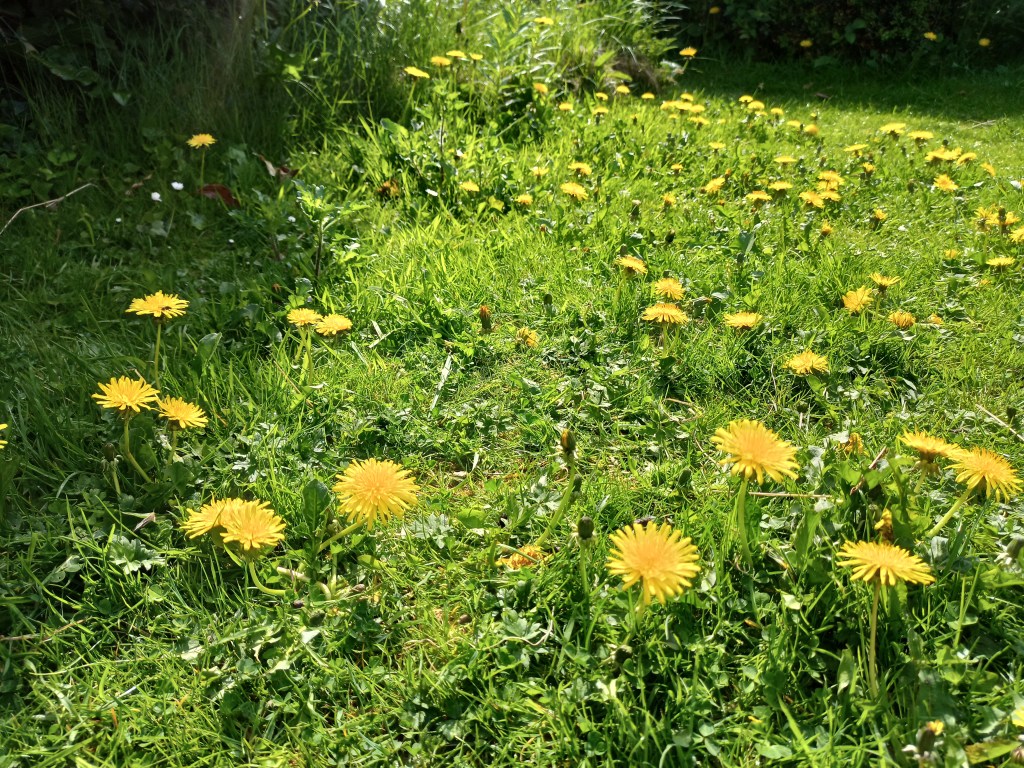
The sound of people mowing is often said to be a sign of summer arriving. Which when you think about it, is quite odd. Instead of the sound of the hum of insects, birds calling and nature blossoming all around from the spring plant growth, we chose to make the mechanical sound of cutting it all down our stimulus for the change of seasons. And for what reason do we mow in the first place? While there are some benefits to mowing in certain areas, the standard societal desire for a neat and managed lawn all year round generally stems from aesthetic ideals. Manicured lawns are highly valued and seen as traditional in our culture, but in terms of wildlife they could be doing a lot more. We are told that seeing flowers in the lawn means they are weeds. How crazy is that! When I see a lawn or village green or field full of dandelions, I personally don’t think ‘ooh, what a mess’, but ‘wow, look at all the colour, like tiny suns, how pretty’. Weeds are just other plants, the ones we have been told are undesirable. At a time when our pollinators, garden wildlife and so many other species are declining, creating habitats for them to thrive in is a necessity. And the wealth of land used as gardens serves as an important ecosystem in itself. All of these benefits are why Plantlife launched its No Mow May annual initiative. To sign up and access useful resources, please visit their website to learn more. Had a look? OK great, let’s get growing!

Firstly, you need to decide how long you are happy to leave the mower in the shed for. While it is all well and good letting your lawn grow during May, if you’re just going to mow it all back down again on the 1st of June, when many species will have already moved in, the positive impacts will be limiting at best. The RSPB provides information on different mowing cycles, but generally if you can wait until later in the summer, the species that grow in your lawn can be used during the intense spring and early summer breeding season period as important food sources and habitats. This way you can enjoy your time outside in the garden, making the most of the season, surrounded by beautiful flowers and visiting wildlife. Does anyone really prefer to see short stalks of grass when they could enjoy an abundance of colour and life?

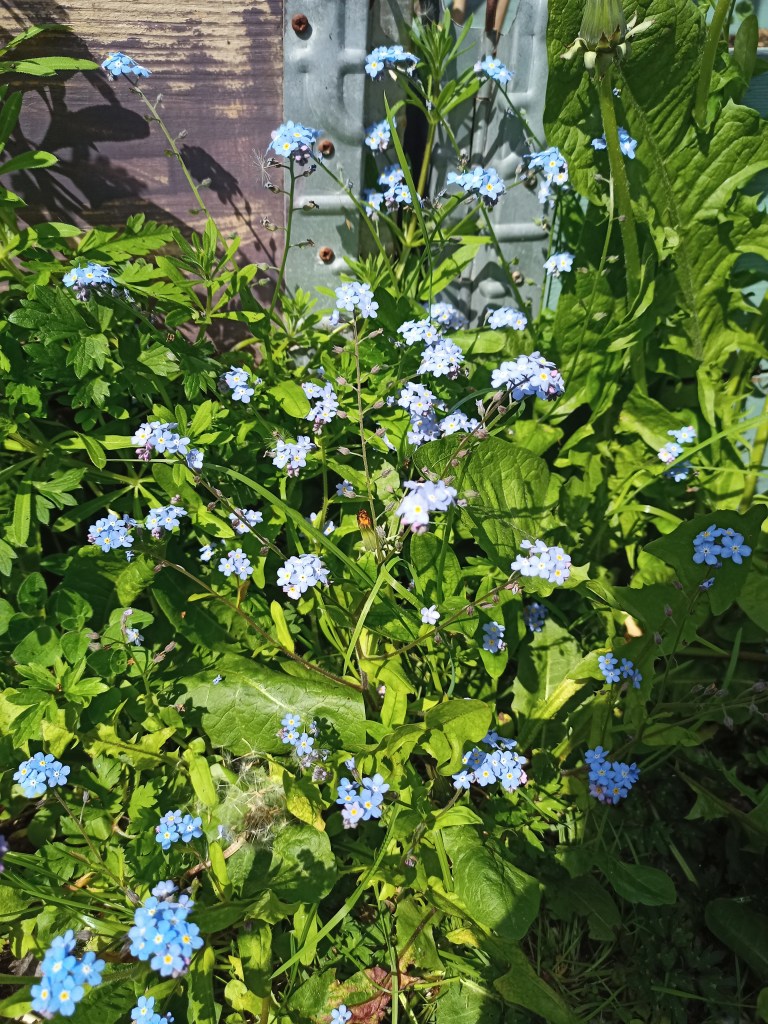
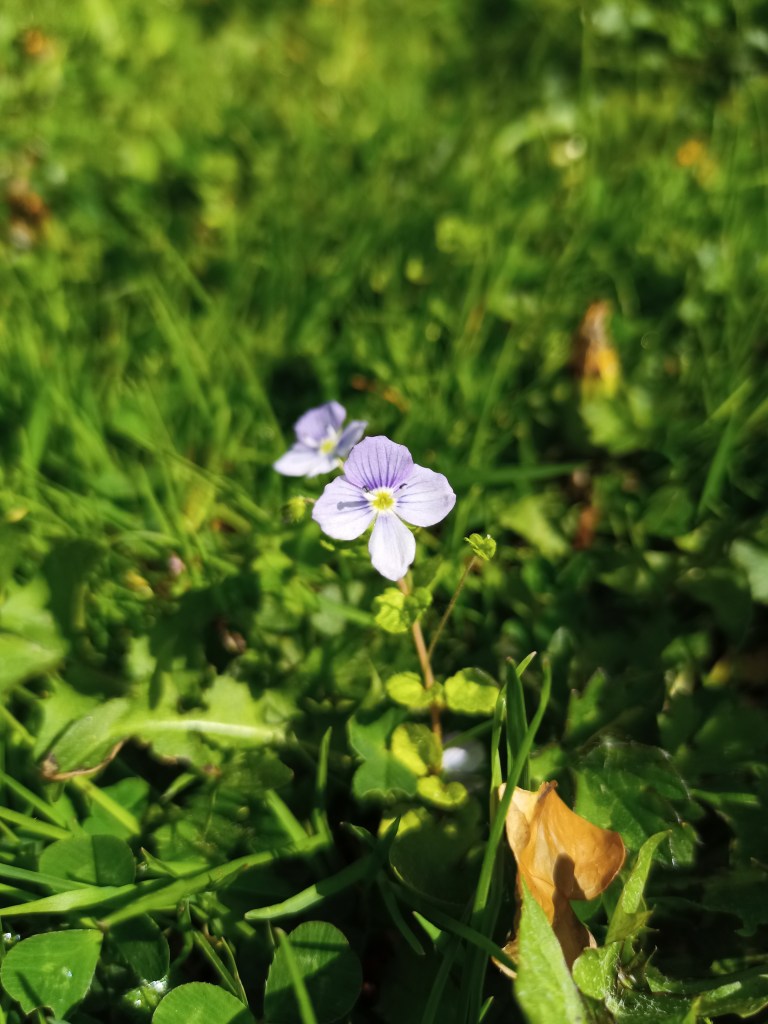
Here are some of the little pockets of joy growing in my garden right now…

Alternatively, it might work better for you to let one section of your lawn grow wild. You could put aside one area of the garden to be free of mowing, or you could mow a path between the wild areas and keep that part neat and accessible. There are many examples of this working and looking really beautiful too, plus you don’t get tickled on your way to the washing line.

Now then, I see you Recovering People Pleasers. I hear that little voice that says ‘Everyone will judge me for not looking after my garden? What will they think?’. Well, there is no need to make them speculate. You can download an official No Mow May sign, or you could make your own, and put it out on your front lawn to show people why you are leaving it wild. Some councils have started doing this to show the public the areas of land that are being left for nature, and there’s no reason why other councils, businesses, land owners and gardeners can’t do the same. Also, when they see what beautiful life you have encouraged, they are going to wish they hadn’t spent their Sunday mowing too.

Earth Day 2025 πŸŒπŸŒŽπŸŒ

Modern life tells us that we are invincible, that anything can be fixed with enough money and technology and that the future is guaranteed. Life is anything but. We have stopped waking up each morning filled with wonder at the fact we live on a huge rock that contains such an enormous diversity of life. When we look at ourselves we have stopped seeing nature, and instead have classified and organised until we have put the world into neat little categories with ourselves at the top. I personally do love a bit of structure, and I am quite a big fan of organisation, but we have to remember that as a society, it is all made up. None of it is really ‘real’. You and I have no more right to exist than an ant. This is all a bit deep, but the bottom line is: Earth is miraculous. It is everything. And it is the only one we have. So this Earth day, really celebrate our home like you would a birthday, because this planet is worth celebrating.

At this time in existence, every day is Earth Day. And everyday we should all be doing what we can to make a difference. But if after a relaxing Easter weekend you would like a few ideas of things you can slip into your day to celebrate while you get over the return to work/studies, here’s what I suggest…

  • Get outside – Walk home, go into your garden, open a window. Look up at the sky and zoom out a little – isn’t it extraordinary? Look for life: follow a bee, lie on the ground and watch for beetles, look at your favourite flower. See things in the way you did as a child, full of wonder. This is the nature you are part of. This is your bit of the world to save. What a beautiful task πŸ’š
  • Pick up litter – On your way to work, when running errands, from the front of your home, if you see litter on the street or in natural spaces, pick it up and put it in the relevant bin. I recently read about this idea from Denmark, that you are CEO of everything in a 3 metre radius from you. The environment in that vicinity is your responsibility to look after, so if you see litter you pick it up. If someone looks like they need help, ask them. So if you see some litter when out and about, even if it’s not your fault, just pop it in the bin, and leave places better than when you found them πŸ—‘οΈ
  • Do something different – Use today as an opportunity to switch off from autopilot. This evening, you could challenge yourself to cook something new using only what you have already in your cupboards or spend time on a hobby rather than social media. You could go out for a post-work stroll, or instead of getting a takeaway coffee, donate that same money to an environmental organisation. Charities that help us care for the planet rarely get the same fundraising events that other topics do, so if you can, donate towards sustainable projects. Learn somethings new about our planet, by watching a documentary or reading a book. Making a swap can change today from just a Tuesday to something a lot more impactful ✨

Hello Spring 🌷

  • The other day while I had breakfast, I watched a few different birds run around my garden collecting up any soft/wispy/light nesting material. It was such a beautiful moment to know that your house and garden aren’t only yours, but support so much life too. If you’re lucky enough to have a garden, we can all help by making sure our gardens have lots of natural material available for wildlife and that we aren’t too quick to make it neat and tidy. As they say, life is the messy bits. Keep dried materials, grasses, any feathers or sheep’s wool that has blown in accessible in your garden so that it can be repurposed into a nest for the next generation of visitors to your garden. It feels so good to share πŸ’•

  • I don’t know about you, but I always associated Spring with new life, nature and the joys of Easter, rather than tariffs and censorship, but hey, maybe I just had an alternative childhood. If life for you has been a bit hectic/stressful/heavy recently, maybe you can find 5 minutes at the start of this new season to make a hot drink, sit in the garden or by a window and observe the wildlife that visits your garden. The more you watch the more you see, maybe you have some regulars or there’s a pattern to their garden visits. I love to watch the interactions of a distinctive blackbird pair in my garden, and see how long it takes the jackdaws to swoop in and pick up the bits of apple core I put out after my lunch break, and wondering why the biggest bumblebee you’ve ever seen has managed to get into my house via a small window opening but can’t find the large open door. Whatever species you get and however many, this is your patch to look after so enjoy being part of your local nature. Creating a wildlife garden doesn’t save the whole world, but it save your little bit of it 🌿

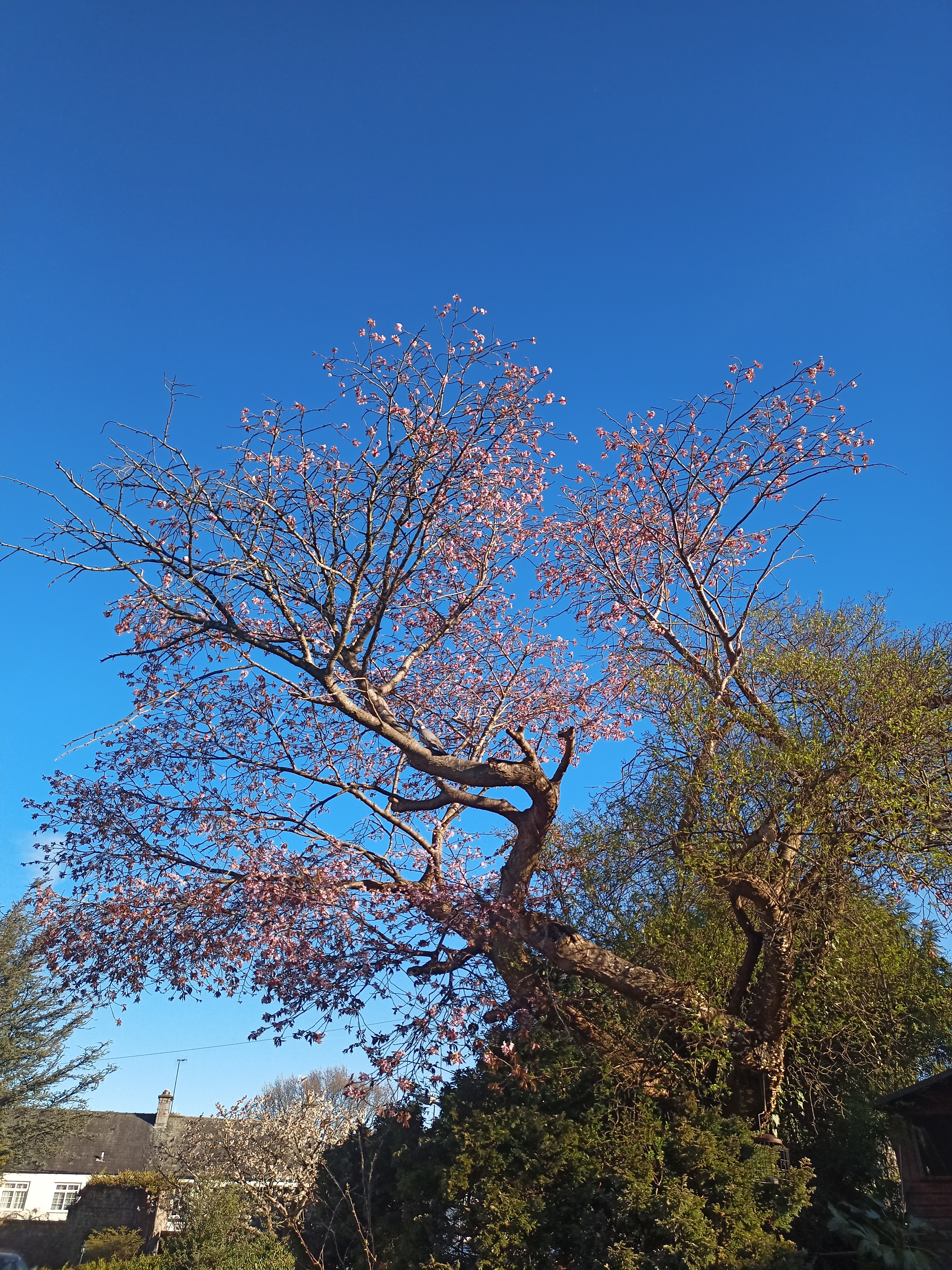
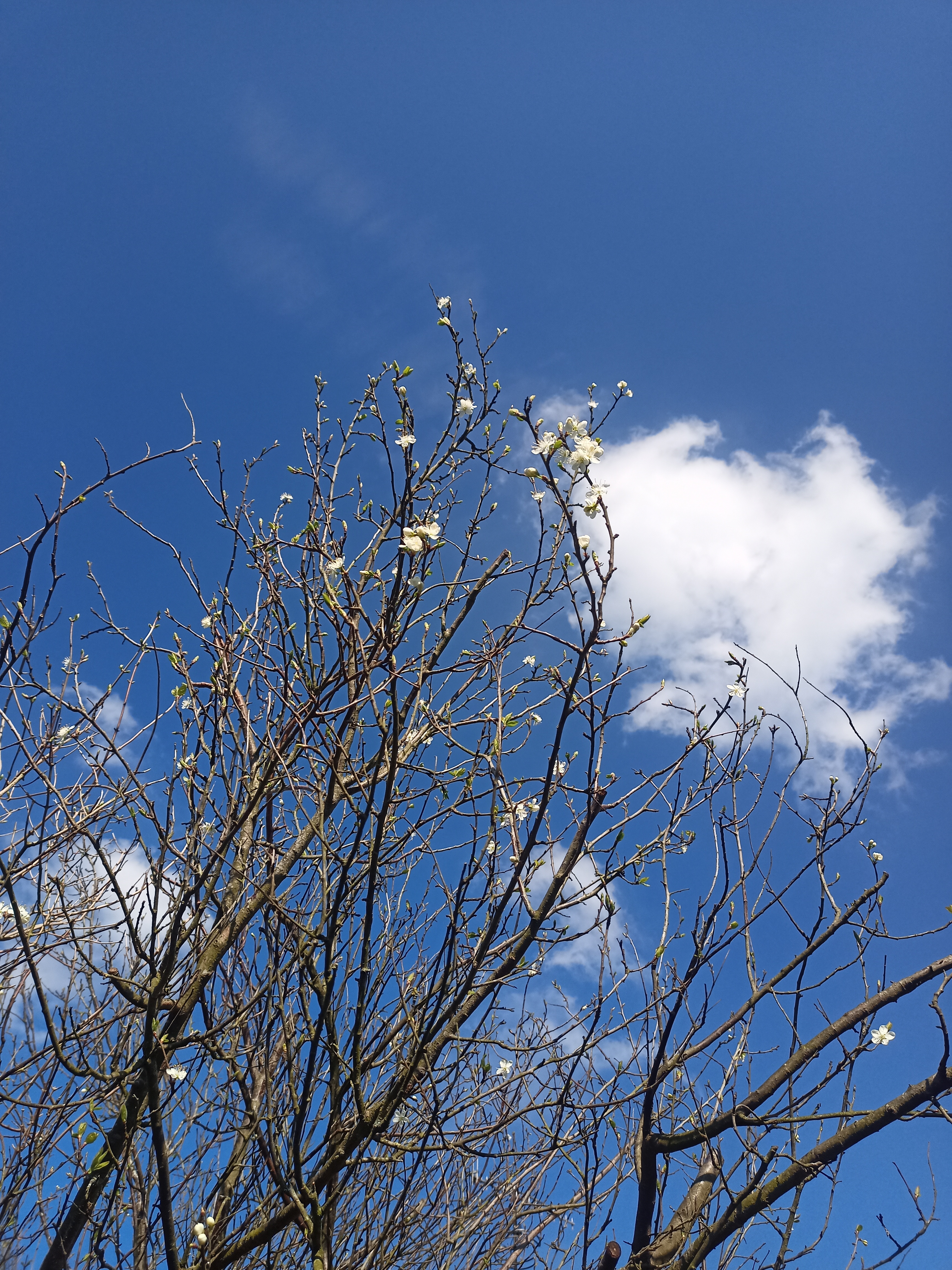
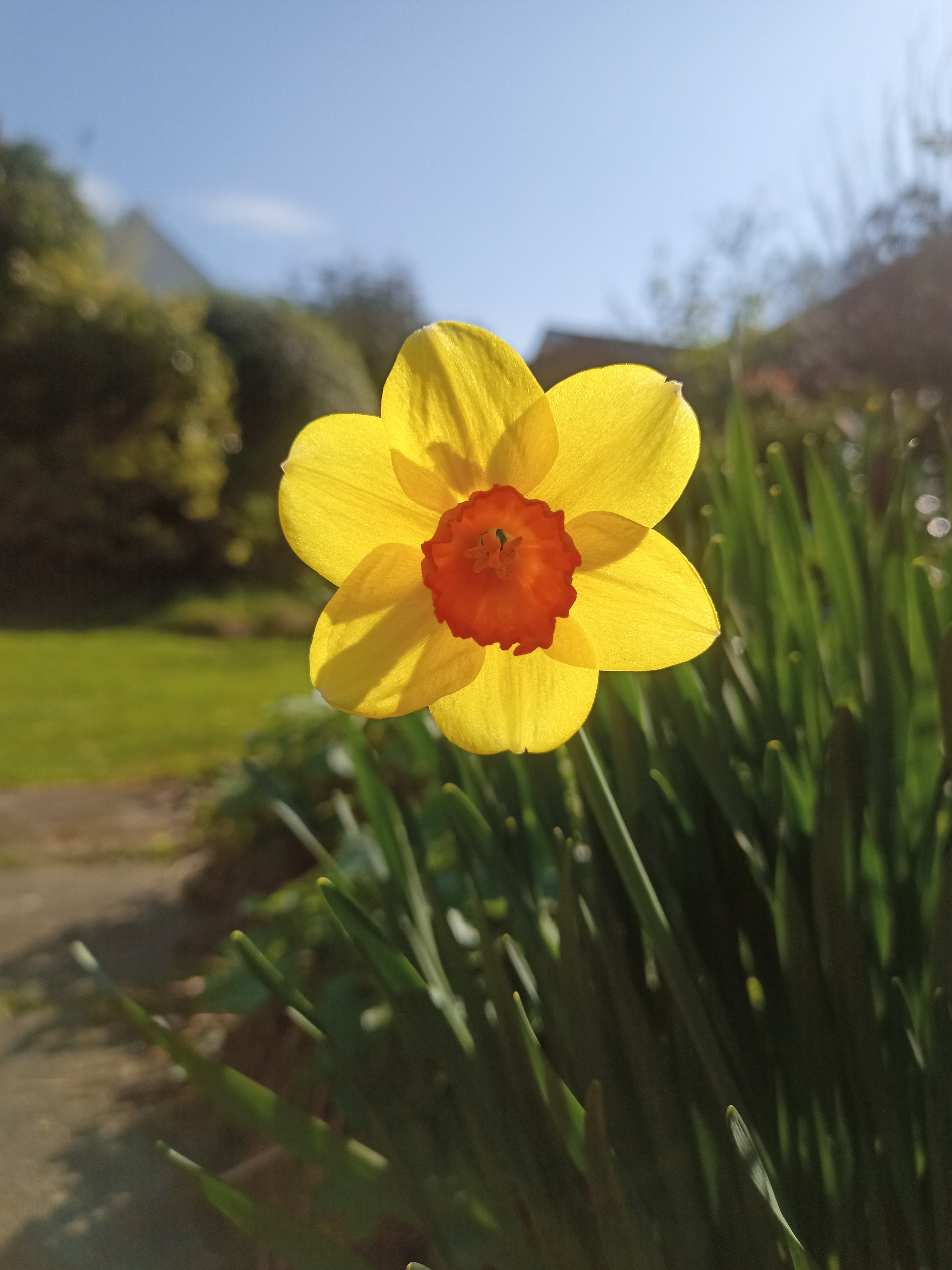
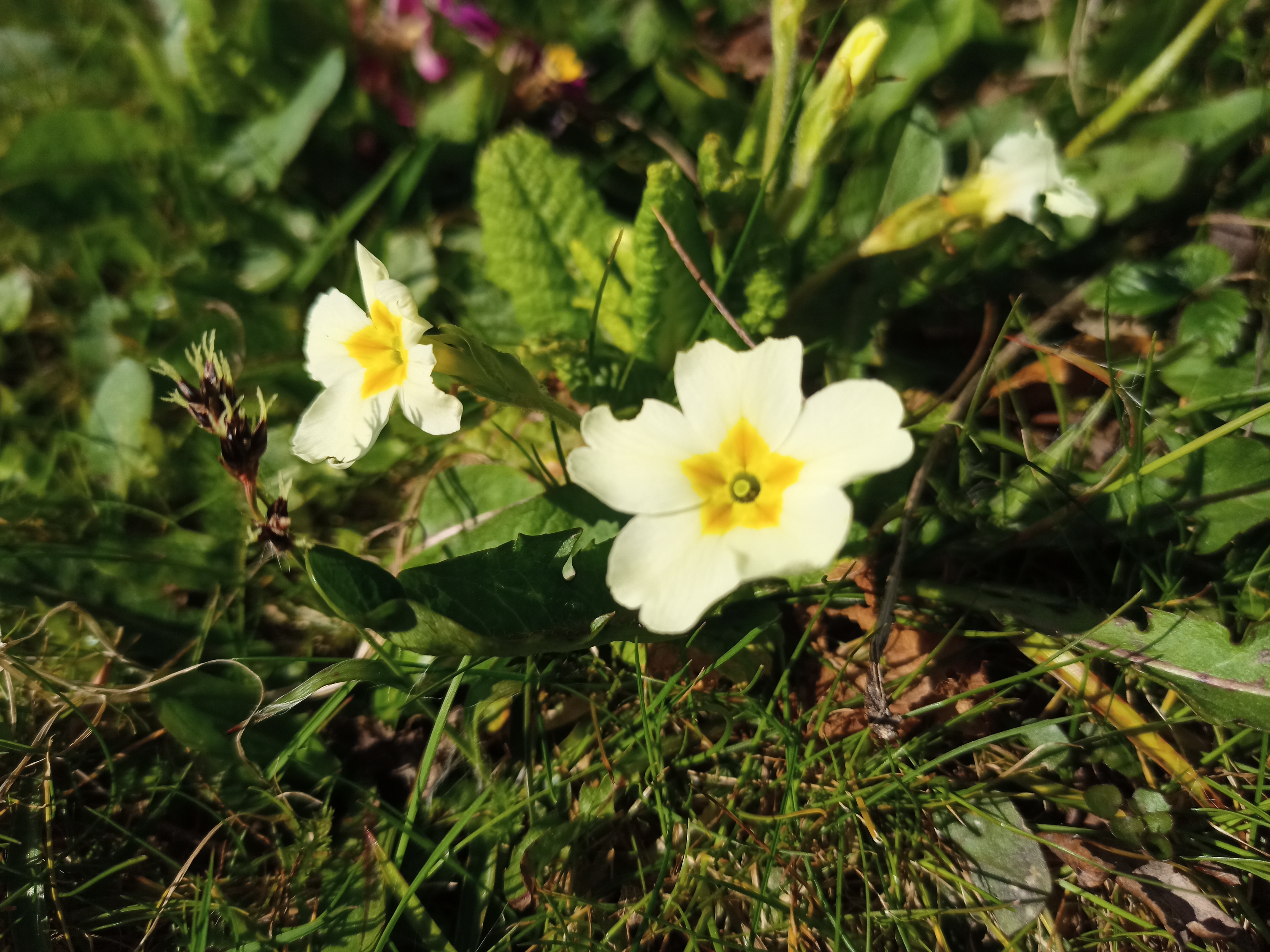
  • Get involved in The National Trust’s Big Blooming Break and find yourself some blossom! Is there anything some springlike than when the blossom comes out and the world erupts into tiny blooms? Whether you live in a city or in the countryside, the sight of blossom is sure to brighten up your day. You could get involved in a locally planned event, or just take your lunch break outside and eat under a tree, or go for a blossom-finding walk and take a picture when you find some. Before writing this post I walked around my garden and took a few pictures of the flowers popping up, which I will share below….
  • Ditch the dryer, get out the washing line: Tumble dryers are one the most energy intensive machines in our homes and additionally release a whole load of microplastics and fibres from our clothes. They aren’t good for the planet and research shows they aren’t good for human health either. And when the weather is like this, drying clothes outside is made even easier! Additionally, drying clothes outside has lots of other benefits, including the impact of UV on killing bacteria on clothing. It’s also somewhat of a tradition, gets us outside and reduces energy use. Trust me, as someone who lives in a fairly old and cold house but doesn’t have a tumble dryer (and didn’t use one when I had access), you can absolutely function without one. But for now, make the most of the sun and get those clothes out! 🌀️

  • Now sunlight hours are longer, we can use this opportunity to re-evaluate what we do with our free time. It is normal to want to come home and relax after a long day at work, but do we really want to keep doom-scrolling into this next sunny season? Do we want to give the social media people that power over our days? Maybe the longer evenings give us the opportunity to pick up a project we started, like crafting or running. Maybe instead of looking at other people’s pictures of the world, we could go for an evening walk and see our own corner of it. Maybe instead of working out inside, we could do exercises in the garden or local green spaces. Whatever it is you enjoy, while the sun is shining and nature is blooming take your opportunity to enjoy it all🌸

  • Finally, this couldn’t be a spring ideas list without a spring clean! Now we have reached the end of the winter season, spend some time decluttering anything you didn’t use. Maybe it’s a jumper you said you’d wear but didn’t, a series of books that you never feel motivated to start/finish or crockery at the back of the kitchen cupboards you told yourself you’d use during party season but they never made it down. I’m the first person to admit that I find it hard to let go of things, and something I’ve had to ask myself recently is do I love it and have very sentimental memories using it? Or do I just have strong memories of buying/owning the thing? Separate your things into piles as you sort, I like to categories into: Things I love, Things I use, Things to recycle, Things to sell and Things to donate. It can be a hard task to start but it will make more room in your life for the things you love right now. And that is a lovely feeling to start the season with! 🧹

My experience at the 2024 Green Gown Awards πŸ’š

So what are the Green Gown Awards I hear you cry?! (I had to do some quick googling when I heard about them!) These awards recognise a range of individuals and groups within further and higher education in the UK and Ireland (there are also international versions) for their work towards sustainability and environmental action. I was lucky enough to be shortlisted as a finalist last year in the Student Sustainability Champion category and invited to the awards ceremony in Edinburgh. While I didn’t walk away with the award, I had a fantastic experience and wanted to share some of my thoughts on the whole process…

  • 1 – We don’t celebrate sustainability enough πŸ†

Because our ambitions are so high, progress takes time to implement and there is still so much bad in the world, we rarely get a chance to celebrate the actions people are taking right now in our own communities. Sustainability hardly has celebrity status, and wins don’t make the headlines because this kind of work isn’t considered ‘cool’ or high profile ( when it is in fact saving the world, but hey what do I know?). So to have an event with so much recognition and grandeur – there was a green carpet! – felt like a rare occasion in this sector. The event was so well organised and I felt so valued to be part of it, which was a wonderful way to round off my student experience.

  • 2 – There are people out there doing amazing things 🀩

Right now most of what we are hearing about are the people out there doing terrible things, and it’s easy to come to the conclusion that all people are bad and its better to stay in and talk to the cat. But trust me, there are others out there in the world, without fame or a spotlight, getting on and taking positive action. At the awards ceremony we got to hear about the projects that became winners and highly commended, and there was such a variety of incredible work going on in educational settings up and down the country (and of course across the sea!). From sustainable building projects to outreach schemes, so many different aspects of sustainability and the Sustainable Development Goals (pictured in the display below…) were being progressed by students, staff members and the wider community. It was such a pleasure to be amongst such a high calibre of people!

  • 3 – We don’t have to work in isolation πŸ«‚

We all know that collaboration is key to progress, but being part of the Green Gown Awards taught me that there are always people out there who share your interests and can help you grow, even when your interest is pretty niche. What were the chances that I got to sit next to staff members from a university that I had never visited but ran a project that so closely aligned with my own research and interests? (Pretty low if you’re wondering but it did happen!) Sharing our interests with others not only allows us to share our uniqueness but also to engage people you don’t normally mix with and enable connections to be made when you have something in common. I sound like a paid sponsorship for LinkedIn networking (I’m not) but the general idea is talk to people! Spread ideas, have discussions and maybe good things will come of them.

I also want to take a moment to appreciate how sustainability was implemented at these awards. I was able to travel to Edinburgh by train (a beautiful journey!) and the menu served was fully vegan. I’ve shared some pictures in this post of the event and it was beautifully done, so if anyone is ever nominated or gets the opportunity to attend, it is definitely worth it. My thanks go to the people who put me forward for the award, helped me create the application and the Green Gown Awards team for inviting me. Thank you to everyone who reads this blog and anyone who has been involved in my journey, you all helped this happen!