POV: Is Gingerism a thing?

I don’t know how many of you have questioned the name of this blog. It is in fact not named after the leaves of a ginger plant, lovely as I’m sure they are, but represent the 3 strands of this blog. Leaf represents the environment and nature, Living represents the change to a sustainable lifestyle and Ginger represents the social and personal views offered, as I myself am indeed a ginger/redhead/auburn/orange/red/copper…… And while this may not be relevant to sustainability, with this platform I wanted to share something that has been on my mind for a long time – is Gingerism a thing?

Red hair only makes up 1-2% of the global human population, making it a rare and beautiful phenomenon. With minorities, there always comes differences felt between people, and this is particularly true for redheads in regards to hair. The following are just some of the ways I have experienced ‘Gingerism’ in my life which may be true for others as well….

  • Changing of conversation when you walk in the room – usually something along the lines of “That reminds me, X has had a nightmare with his hair dye this week, it practically looks ginger” or ” I don’t really like my new hair colour, but at least it’s not ginger” – often implying that having ginger hair is the height of hair related disasters and to avoided at all costs.
  • Being confused with other redheads/grouping together redheads – I’ve had this happen with teachers mixing up my name with other red headed students (“Sorry, I mixed up my gingers!”) and next door neighbours confusing redheads walking near our houses with me. While genuine mistakes do happen, this can sometimes lead to a feeling of loss of individuality and ignorance of individual identities for redheads.
  • Bullying – probably the most obvious, and most common for anyone who is slightly ‘different’. Included name calling, nicknames, teasing etc…….. people shouting “Her head is on fire!” when you get up in assembly to collect an award, that sort of thing.
  • Misunderstanding – having red hair is a natural trait caused by the recessive MC1R, but from the amount of times I’ve been asked by hair dressers and others “Wow, is it natural?”, “How long has it been like this?”, ” Why are your eyebrows a different colour?” I get the feeling that red hair is largely misunderstood.
  • Representation – a few examples include the ginger hair emoji being launched after other hair colours were already available and at first only on certain devices, before they were finally released further πŸ‘©β€πŸ¦°πŸ‘¨β€πŸ¦° and beauty products not including shade ranges for redheads such as matching hair colours, eyebrow products or products for very fair skin tones.
  • ‘Harmless’ jokes – jokes about redheads are a basic part of banter in the UK, it is easy to make ginger jokes because its not really discrimination is it? One teacher I actually did like at school made an unfortunate comment about embryo screening, that it could be used to wipe out undesirable traits “like gingers”. While he did apologise after, he still seemed shocked when I said I’d be happy to have a child with red hair. At the time I just laughed along with everyone else, but in the years that have followed, it struck me that this comment probably wouldn’t have been so accepted if it had been about race or gender, but because he mentioned gingers, nobody minded.
Me, My hair and I

This post aimed to show that there is discrimination faced by redheads, and that as a society we need to show more kindness and compassion and accept rather than fight against our differences. The most important point I must make though, is that while I believe Gingerism is a thing and should be better tackled, it does not compare to the injustice faced by other minority groups. As a redhead, I am still likely to be given a fair job interview without bias, I am unlikely to be stopped by police regularly, I am less likely to be killed in hate crimes, I am likely to find the products I need in a shop. All things that are a part of our institutionally racist society. So while we must question how we treat people with red hair and do better, the big institutional actions must focus on tackling racism and sexism in our society.

I have been wanting to share these stories and views for a long time, so if you read this far I really appreciate it. If are are not red headed, maybe just take a moment today to consider how you could make redheads feel more included in the future and if you need to change any of your actions. If you have red hair, I’d like to take this moment to remind you that no matter what you have experienced, your hair is beyond beautiful and is a gift to have. What makes us different, makes us beautiful πŸ‘©β€πŸ¦°β™₯

Meaningful May

May the 4th be with you on your sustainable journey this month, and let’s focus on bringing greater meaning and intent to our actions this May so we can achieve our goals and feel more present.

  • Seasonal eating – May marks the connection between the growth of spring and the energy of summer, and so is a great time to check in again with the produce local to you and eat a more seasonal diet. In the UK, May is a great time for asparagus, new potatoes and many herbs such as parsley, rosemary and wild garlic. You may have some of these things growing in your garden, or if not, look out for the British grown symbols at the supermarket to help you pick produce in season right now. Check out this seasonal food calendar (Seasonal calendar – BBC Good Food)
  • Make a motivational music playlist – we all have times when we feel unmotivated and overwhelmed, and the transition to a sustainable lifestyle is not always an easy path. So to pick up the energy this month, create playlists to help you in particular situations. Calming piano for study or work? Favourite songs in one place for added motivation? While music streaming services also face the need to make their services more sustainable, this exercise is here to get you thinking of what you can use to motivate yourself to be the change, keep trying and pursue your sustainable goals, even when its hard. My motivation recommendation – Gotta Work by Amerie (empowering lyrics and a great track to run to) 🎡😊
Photo by Polina Kovaleva on Pexels.com
  • Check in with your goals – if you made your own sustainable goals earlier in the year, use this Month as a bit of a reset to see what progress you have made. Have you made any product swaps? Have you reduced polluting activities? Or has everything gone out the window as a result of restrictions easing? Either way, take some time to see where you are now and write down the next steps you can take to achieve them. For example, if your goal was to make your bathroom products waste free, and you swapped to a solid soap and shampoo, but still use some disposable products and have seen your carbon footprint in other areas of your life e.g. travel increase, you can now modify your goals to suit your current situation and keep improving.

May you have a productive, fulfilling and meaningful May! Check in with yourself, be kind and be the change we need to save the planet . You got this! 🌷

An Ordinary Human’s Guide To….Rewilding

This series hopes to break down key sustainable terms and ideas to make them more accessible for everyone to understand and use to make change. If you are already are familiar with these ideas, refresh your mind and use your knowledge, but if this is new to you, read on and learn!

Welcome to rewilding – your new best friend! This is a fantastic concept to understand as its a nature based solution that we can use in the fight against climate change as well as restoring wildlife and their habitats.

What is it? Rewilding is a form of environmental conservation and restoration that allows natural environments to return to an ecological balance by letting them evolve naturally. It also includes us humans learning to live more in tune with nature, instead of being separate to the natural world. For a visual explanation, check out this video from The Scottish Rewilding Alliance (The Scottish Rewilding Alliance) and the resources on their website, especially if you live in Scotland 🌳

For instance, there are many beautiful places in the UK we think of as natural: The Lake District, The Scottish Highlands, etc……. However, these majestic, bare mountains we see are not in their natural condition, but have been mainly shaped over many years by human practices, like sheep farming, so that instead of native woodlands and natural habitats for our wildlife, we have these barren landscapes we are used to today. While these places are still beautiful, the stories we have accepted about the landscape being completely natural is untrue (the ‘artificial natural’), and can cause conflict between those who want to conserve the landscape and those who want to farm it, for instance.

Photo by Sam Kolder on Pexels.com

What can I do? On an individual scale, you can embrace rewilding in your garden. If you have your own green space, let a part of it or the whole thing go wild. It could be part of your lawn, a tucked away corner of your garden or a shrub/hedge. While it may look ‘messy’ at first, over time nature will restore its own balance and create a rich habitat, increasing biodiversity and the visitors to your garden.

If you want to learn more, there are increasing numbers of resources and places which have rewilded to use as an example. A pioneering example in the UK is the Knepp experiment, talked about in Wilding by Isabella Tree (Wilding by Isabella Tree | Waterstones). Other interesting reading includes: Rewild Yourself by Simon Barnes (Rewild Yourself by Simon Barnes | Waterstones), Feral by George Monbiot (Feral by George Monbiot | Waterstones) and Rewilding by Paul Jepson and Cain Blythe (Rewilding by Paul Jepson, Cain Blythe | Waterstones) along with many others.

Get involved with rewilding projects local to you, either on a regional or national scale. Here are some links for national and international rewilding bodies in Scotland (The Scottish Rewilding Alliance), Britain (Think Big. Act Wild. | Rewilding Britain), Europe (What is rewilding? | Rewilding Europe) and the world (Rewilding Earth Welcome – Home of the Rewilding Institute). It may be talking to your local council or MP about letting road verges grow wild, volunteering at rewilding projects such as beaver reintroduction in the UK (an example of bringing back key species to help natural habitats keep balance) or even campaigning at a national level to raise awareness about rewilding, as in Scotland where they are attempting to be the world’s first rewilding nation.

Photo by Pixabay on Pexels.com

Rewilding allows us the opportunity to turn the tide on environmental degradation and instead offer a sustainable home for our vulnerable native wildlife. So lets say goodbye to neat and tidy, and embrace the wild in our gardens, parks and countryside. Say hello to the wild side! 🏞

Activity – Earth Day 2021 πŸŒŽ

Thursday the 22nd April 2021 is Earth Day! Earth Day 2021 | Restore Our Earthβ„’ | EARTHDAY.ORG

If you need some extra motivation, want to join others in making a difference, educate yourself or do something for the planet, then your day is coming up. Due to the pandemic, most activities will be online, but this is a great opportunity to join activities from around the world. Take part in quizzes online (no zoom question hosts πŸ₯³), attend talks or even just do your own thing: family litter pick, vegetarian day, environmental chat with friends, anything you want to support our planet. Earth Day is a long established event, so if you are new to it, I recommend checking out the website above ⬆

Watch out for companies and businesses making environmental claims on this day, which they then abandon after the Earth Day activities have passed. Get involved and discover who and what is really making a difference and who is jumping on the green marketing bandwagon. Sustainability is for life, but Earth Day can be a particularly good way to connect with other environmentalists and highlight what has been done and what still needs to be done. Happy Earth Day!

Making Sustainability Sustainable

Ya what?

Sustainability, eco-friendly, green, conscious, ethical, clean…. all words we hear a lot of right now. But how do we know which words are translating into actions and which are empty? Is this just a trend or marketing or can it really be sustained?

Recently, I read March’s issue of British Vogue – in their designer and business profile pages I was surprised to see so many companies claiming to be sustainable. From swimwear to sandals to designer clothing, profile after profile contained phrases, including ‘sustainability’ or ‘environmentally conscious’. And you’d think this would make for hopeful and happy reading, and to some extent it does. But this examples shows us the importance of understanding and spotting buzzwords and greenwashing, and filtering them out from companies really making changes.

In recent years, sustainability has become a buzzword used in many areas of life, which while is great for generating awareness, can remove our focus from what is urgent. Sustainability is defined as the ability to be maintained at a certain rate or maintaining an ecological balance, in order to leave resources for future generations. We often think of the traditional view of sustainable living, where people only took from nature the exact amount they needed and only took what nature could afford to give by living in tune with the seasons. So now it is important that we translate these views to modern life.

Photo by Daria Liudnaya on Pexels.com

Although the focus of this blog is on environmental sustainability, it is important to note that there are many other types of sustainability. In our daily lives, that might be how long you can sustain a certain style of work without burning out, or the sustainability of a business that has not adapted to modern needs. We need to think holistically about all kinds of sustainability in order to make it work effectively.

As an example, what type of bag do you think is the most sustainable option to take to your supermarket shop: a plastic bag, a paper bag or a cotton bag? The answer is not as simple as it seems…. Though we think of plastic as the ultimate environmental enemy, it takes much less energy to manufacture than a paper bag, and you would need to use a cotton bag around 130 times to make it a more environmentally-friendly option than a single use plastic bag. While paper may be easier to biodegrade, plastic is more durable, and while plastic can be more polluting to our land and seas, paper and cotton require lots of land and resources to produce. ( See Plastic or paper: Which bag is greener? – BBC News for facts and visuals). So what is the most sustainable option? Use whichever option you have to hand and reuse it as many times as possible before replacing it or getting rid of it. Sustainability does not come from a claim on a product’s packaging, but from action and the way we use these items.

So what is the point of all this waffle? To create real action we need to focus on the actions that will make the biggest difference. In regards to climate change, urgency is needed in reducing and stopping greenhouse gas emissions to halt global warming. While it captures our human emotions to see animals caught in litter or the impacts of plastic pollution, just swapping out plastic alternatives will unfortunately not impact as significantly on preventing rising temperatures. To fight climate change we need leaders to keep to emissions targets and individuals to reduce their carbon footprint, then we can also work on restoring our natural habitats and reducing waste etc….

Photo by Daria Liudnaya on Pexels.com

So the biggest message of this post is that we can be improving and be doing better at the same time. We can be cutting out single-use plastic and still need to work on our vehicle emissions, or maybe we have made environmentally-conscious decisions around our diet, but still fly long-haul or use disposable razors. So just because we buy a product that claims to be sustainable doesn’t mean that our entire lifestyle is. Get comfortable with continually learning and changing and adaption will come smoother.

Sustainable living is a long-term goal, and like any other future aim, takes time, practice and cannot be fixed quickly. This post is not one of pessimism, but hopefully makes you question what products and actions are actually helping you create a sustainable lifestyle and which ones only contain a few ‘green’ components or use sustainability as a selling strategy.

The Green Guide: Tip No.6 – Transport πŸš—

Tips and tricks for making environmentally friendly swaps today!

As lockdowns are easing, chances are we are going to be moving around a little more. Can we be more critical of what transport we use and when to reduce our carbon emissions as we travel? Here is a list of when you might consider using a certain type of transport to help you see if you can make any swaps to your travel arrangements…

  • Walking – the simplest form of transport. If your location is within walking distance, then do just that! If you are physically able to, walking not only produces no waste or emissions, but benefits your own mental and physical health. Best for: popping to the shop, very short distance trips and gentle exercise.
  • Cycling – another great option for exercise and environment. If you own a bike and want to travel to places a little further or that perhaps are difficult/time consuming to walk, cycling is a good option which also reduces emissions. Best for: visiting nearby friends/relatives, commute to work and slightly more rigorous exercise.
Photo by Maria Orlova on Pexels.com
  • Bus – if you live in an area with suitable bus links, these can be great for times when walking and cycling are not applicable. Familiarise yourself with your local bus timetable and services so that this form of transport becomes more comfortable to you, then see if there are any of your usual car routes that you could swap with a bus journey. Best for: journeys with heavy items (e.g. supermarket shopping), student travel and longer distance journeys including scenic day trips.
  • Car – for many people living in higher- income countries, driving a car is considered the norm and the most favoured form of transport, often used even when alternatives are available as a means of convenience. If driving is your main form of transport, consider reducing your environmental impact by reducing the amount of short car journeys you travel, keeping your vehicle in good condition to sustain the use of your vehicle and driving efficiently to prevent wasting fuel. Other options include car sharing, such as with colleagues, or organising lifts so that the person picking you up already has the car in use from another journey, e.g. corresponding shopping with extra-curricular activities. You may wish to consider choosing an electric vehicle when you next need to buy a vehicle, which helps to reduce pollution by emissions, although the best option, and one which will hopefully increase in the future, is to use an electric vehicle where the electricity is produced by renewable sources, to minimise carbon emissions. Best for: medium-long journeys where public transport is not available.
Photo by gya den on Pexels.com
  • Train – according to Network Rail (World Environment Day: five positive impacts of the railway – Network Rail), travelling by train consistently produces less CO2 than travelling by car, taxi, plane or HGV. Electric trains are also becoming more common and though new developments can have negative environmental consequences, utilising our existing services can help us to cut down on single person car journeys. Like buses, familiarise yourself with local train services and see if you can make any swaps: is there a train station near your place of work or a friends house you could use instead of driving? Best for: commuting and medium-long distance journeys.
  • Plane – aviation is another means of transport commonly known for its damaging environmental impacts. It makes sense that it takes an awful lot of energy to keep people up in the air and travel long distances. With many of us not having flown in so long now, it is time to question our need to frequently fly? Do you need a foreign holiday as often as you took one? Do you need to fly for meetings or can online platforms provide an alternative? Can you travel by boat instead to your destination? Can you prioritise how products arrive to you from overseas, e.g. picking companies that use efficient shipping rather than by plane? Best for: time sensitive long-distance travel where there are no available alternatives.
Photo by Element5 Digital on Pexels.com

Other options include sailing, taxis, coaches, motorcycling and many more that I could go into but will leave to your own consideration (for extra information, read this Climate change: Should you fly, drive or take the train? – BBC News). You will know what transport you use the most, so are best placed to evaluate the sustainability of your choices. Try writing out all your journeys and see where you could swap to an alternative option. You could start by fencing off one journey for walking, and with increased exercise, build up to cycling, and then going further distances. Maybe you’ll end up using a mix of different types of transport, which is fine too. Be critical of your transport options and remember to enjoy the journey! 🚲

April Activities

Spring has most definitely sprung, so now it’s your turn to spring into action this April and have a go at the following activities… 🌷

  • The days are slowly getting warmer and one by one the winter jumpers are coming off. Now is a great time to repeat an exercise we did in the autumn, but in reverse! Think about your winter wardrobe… What did you get the most use out of? Did any items fail to make an appearance? Could you declutter, upcycle or recycle some of these pieces of clothing that you no longer use? Make sure your wardrobe is working for you and any garments that aren’t are recycled accordingly πŸ‘•
  • Feel the urge to go shopping but already have loads of ‘stuff’? Try shopping your ‘stash’ to find new or forgotten products from your existing collections. Cupboards full of makeup, food, clothes and many other things can have a new lease of excitement if you have a good root through and pick something new. Less demand for new products, less waste and it saves your pennies… Tick, tick, tick!
Photo by Daria Shevtsova on Pexels.com
  • Want to add something to your daily walks? Stick a bag in your pocket and turn your stroll into a litter pick. Pick up any litter you find while walking around your local patch and then either put into a public waste bin or try and recycle at home. Remember hand sanitiser or reusable gloves if litter picking during covid times to help keep both you and the planet safe.

Enjoy the sun, spring flowers and new life of the season, but this year try to contribute to the beauty of nature instead of polluting it. By using what you have and being kind to our environment, we really can put a spring in the step of others and of ourselves.

Easter and Sustainability

So we made it to Easter! Whatever you celebrate this spring and however you do it, let’s bring more joy to the year and more kindness to our planet. The traditional Easter activities many of us are familiar with are often very wasteful or have a negative impact on our environment, so if you are marking the occasion in some way, here are a few ideas for making this your most eco-friendly Easter yet… πŸ₯šπŸ°πŸ£πŸŒΈ

  • Egg hunts – The bread and butter of any Easter celebration! Whether you are planning a family celebration or a small, distanced party, consider how you can reduce the waste from your hunts. Maybe it’s using refillable egg shells for hiding sweet treats that you can keep and use year after year? Maybe its hiding non-edible items such as wooden eggs or natural items which could then be used to create an Easter decoration or as seasonal toys? Get creative with your hunts to ensure less ends up in the bin at the end…
  • Chocolate – For many, Easter just isn’t the same without some kind of chocolate egg. However, many commercial eggs come with lots of excess, often unrecyclable packaging or else contain ingredients which have damaging consequences for our environment. If you can, try sourcing eggs where the packaging can be recycled, such as cardboard or even recyclable plastic. In many cases, the foil around the egg can be recycled too (check local recycling and see How To Recycle Egg-cellently This Easter | Recycle Now) – if you can scrunch the foil up without it springing back, then this can be recycled. Try to avoid foil that springs back, as this means it contains an added plastic lining and therefore cannot be recycled. Good news for that CrΓ¨me Egg obsession! 🍫Additionally, if you really want to reduce the impact of your chocolate, pick a more ethically sourced egg such as Organic varieties (to reduce the effects pesticides and other chemicals on wildlife and the landscape, for example Green and Black’s Organic range) or palm-oil free/ sustainably certified chocolate (try Cocoa Loco’s Giant Marbled Easter Egg as a palm oil-free, organic and fair trade option. See more at Organic chocolate Easter eggs | Where to buy them in 2021 | Soil Association).
Photo by ROMAN ODINTSOV on Pexels.com
  • Decorations – In the same way we used natural winter materials to craft handmade Christmas decorations, we can use the beauty of spring to make natural, plastic and waste-free decorations. Twigs can be made into wreaths, spring flowers into seasonal bouquets and larger sticks into Easter tree decorations. Once used, add to your compost or garden wildlife area so nature can reclaim them. However, always bear in mind that wildlife is very busy at this time of year building nests and feeding young, so limit disturbance when foraging and only take small amounts of natural materials that aren’t being used – remember that an animal’s habitat is more important than decorating your home for a short amount of time.
  • Party – If you are able to have a small gathering this year, consider the sustainability of your partyware. While using your own crockery is less wasteful, in present circumstances you may wish to take an alternative approach. Choose partyware which can either be recycled or easily broken down, such as paper plates and cups and wooden cutlery. The best options are 100% paper/cardboard/natural materials, in contrast to paper based products with a plastic topping, so that they can be put in your recycling or compost heap. Try Simply Eco Party Plates and Napkins β€” Meri Meri UK Retail for biodegradable plates and napkins.
  • Cards – After the festivities, reuse your Easter cards by recycling the back, keeping the front side and using them next year to make new cards or to use as labels for Easter gifts. Saves money on buying cards next year as well!
Photo by Olya Kobruseva on Pexels.com

However you spend your Easter, I hope you have a great time! See where you can reduce your impact by eliminating waste, embracing natural or getting creative, and enjoy the joys of the season. Happy Easter! πŸ₯

Call to arms

If we act now.

If.

Such a small word that excuses so much. As if we have a choice: face the problem or catch that plane and deal with it tomorrow. As if there is still time.

Climate change has been introduced as a concept and put forward as an issue for a long time, with early discoveries in the early 20th century, concerns in the 1960s and the Intergovernmental Panel on Climate Change (IPCC) formed in 1988, to name a few key milestones. We have been told repeatedly the data from climate scientists, taught about how to change our ways and seen environmental damage documented over decades such as in the documentaries made by Sir David Attenborough. And yet 2020 was predicted to be one of the three warmest years on record and saw environmental disasters such as the Australian wildfires having a huge impact on people and wildlife. We no longer have the privilege of waiting to take action – climate change has already begun.

Photo by Markus Spiske on Pexels.com

If you are anything like me, then reading this is very upsetting. I found it very hard to watch David Attenborough: A Life on Our Planet and see the degradation that will occur each decade from now if we carry on the the same way. Quantifying something as big as climate change and being able to compare each moment of loss to birthdays and milestones makes it all feel a lot more real. Seeing the facts again and again can make you feel hopeless, frustrated, sad and angry. But I’m not here to make you feel worse – because together we can change.

Imagine climate change was treated in the same way as the covid-19 pandemic. Would we see adverts telling people to “Look climate scientists in the eye and tell them climate change is not real” or “Look climate refugees in the eye and tell them we are doing everything we can”? Would we take action with a little more urgency, knowing that each day is costing people’s lives and livelihoods? If we are trying to work towards the 2030 Sustainable Development Goals then why do we not feel that degree of urgency?

This is a complex issue, but if I were to take a guess, I would say that action is slow because it is inconvenient. Because we are not the ones seeing the direct consequences at this point, and so have the luxury of choosing to ignore it. But a time will come when we do not have that luxury anymore.

Photo by Anna Shvets on Pexels.com

So what was the point in this post? To make you feel increasing despair and then spend the rest of the day in bed? Quite the opposite – we need change right now! Everyone and every action counts. We can no longer try and find solutions issue by issue, but must take an intersectional and inclusive approach: climate change, the covid-19 pandemic, social change, environmental issues, justice …….. everything is connected. It is the challenge of a generation – but one that we can meet. Maybe we won’t just survive, we’ll thrive. We can bring back our balance with nature through rewilding, we can halt increasing temperatures by ceasing to burn fossil fuels and we can create environmentally, economically and socially sustainable places for humans. We can live that life depicted in infographics of a ‘sustainable future’ – we just have to get there first.

My Call To Arms: change is needed right now. Today. And any change you make will have an impact. We need to pressure our governments and leaders to do more, accept that drastic action is necessary, change as individuals and most of all, do it together – no one left behind. It may be the challenge of a generation, but we can make it the solution of our generation too. We know what we need to do – no ifs or buts. Let’s change🌎

Sewing your own clothes βœ‚

Looking to liven up your wardrobe but make it sustainable? Time for a new hobby……

Sewing your own clothes is nothing new. However, in recent times many of us have relied on fast fashion brands to quickly and cheaply turn out huge amounts of clothing for us to choose from, use and then throw away, all within a pretty quick time period. As spoken about in a previous blog post, the fashion industry has a huge environmental impact; draining water sources, producing large carbon emissions, polluting land, rivers and the sea with chemicals and fibres and creating a wealth of waste. One thing we can do is take a more creative approach and take back control over what we wear. Read on for tips on how to get started and more sustainable approaches…

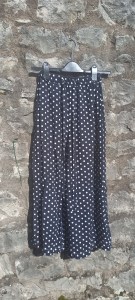
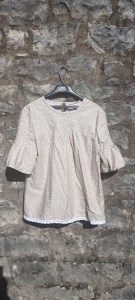
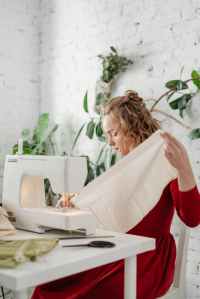
  • Firstly, I wanted to start off with my own experiences. I have always enjoyed sewing and creating, and over the lockdowns of the past year I have rekindled my love of crafts. In the past 6 months or so, I have made a few items of clothing (pictured below) using sewing patterns and templates from magazines, and while it can be challenging, it is such an accomplishment to wear something you have made from scratch and even more satisfying when someone asks where you got it from and you can give the smug reply of “I made it”! My main piece of advice would be to be patient and kind with yourself – you are not a machine and are unlikely to make a perfect garment first time. I am definitely still on a journey of improving my skill, and in every project find a step/instruction which I find really difficult. I may need help, about 30 mins of repeatedly reading it like I am back in my GCSE maths exam or to just give it a go and see what the result is. Imperfections are totally fine! You are the one who is going to be wearing it, so as long as you like it and feel comfortable wearing it then go for it.
  • If sewing is completely new to you, I would suggest starting by upcycling or customising an existing piece of clothing that you are not too worried about. You could try adding embroidery to a pair of jeans, a pocket to a dress, chopping the sleeves off a top or hemming some too-long trousers. Remember, it is easier than ever to give these things a go with resources like YouTube and sewing websites offering step-by-step guides.
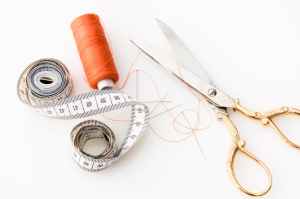
  • If you really want to get into sewing and dress-making, getting a basic set up would be a good start unless you are planning on only doing projects that are feasible by hand. This could include: a sewing machine ( See Midi Sewing Machine And Sewing Kit Bundle | Hobbycraft as a starting point), thread, needles, scissors and pins as the basics, but you may also wish to purchase sewing chalk, a seam-ripper and other resources as your skill set grows (Try Hobbycraft for sewing products)
Photo by cottonbro on Pexels.com
  • In regards to sustainability, try to use your resources when sewing in the least wasteful way possible. This could include: cutting your pattern from the fabric in the most efficient way to reduce fabric waste, using fabric scraps for smaller projects (e.g. making face coverings), only having your sewing machine or iron on when in use, reusing or recycling any used fabric and generally being creative about the sewing process, such as using fabric from existing items of clothing to make new ones instead of buying brand new fabric.
  • If you are looking for a complete resource to begin your sustainable sewing journey, try The Great British Sewing Bee: Sustainable Style by Caroline Akselson, Alexandra Bruce | Waterstones for a complete guide in choosing fabric, making alterations, fitting garments and how to work your machine.
Photo by Pixabay on Pexels.com

Hopefully this has inspired your inner fashion designer to be more creative with clothes and given you a more considered view on sewing, waste and sustainability. The best thing to do is to just give it a go, you’ll learn so much more through the experience than by trying to understand other people’s processes. So sew consciously, curate your own me-made wardrobe and get creative! 🧡