Underconsumption core

If you’re not up to date with your ‘cores’, here is a brief description. In recent years, social media and the online world have been mainly trying to convince of us one thing: Our lives are not enough as they are and if we want to fix that we can do so by just buying more things. Online shopping has increased, low quality materials and products are the norm and ‘overconsumption’ – consuming beyond a person’s own needs – has become glamorised within society. As the quote by Jeffrey Hammerbacher goes: โ€œThe best minds of my generation are thinking about how to make people click ads.โ€

But in the past year a new trend has emerged to counter this: underconsumption core. These posts present an alternative to constant consumerism, where people use what they have, reuse and repair their belongings and keep things in use for a lot longer, without romanticising constant extravagant ‘hauls’ or shopping. This idea also resists ‘influencer culture’, where we are constantly being sold lifestyles and products we must have to buy into them and keep in a spending spiral.

In many ways, this trend is absolutely nothing new. It is how the generations before us lived and aligns more with the principles of existing in balance with nature. We know that increasing waste and landfill is damaging our environment, and that financial pressures are increasingly high as well. Therefore, using what we have and stopping the cycle of overconsumption is an important behaviour all of us can learn and practice to live more sustainably. Let’s explore some practical ways underconsumption can be incorporated into our everyday lives…

  • Using products up fully – This means squeezing all the way to the end of the tube or adding a little bit of water to liquid products like soap or shower gel to help pump out the final bit of liquid. You’ll get a lot more out of your products and won’t have to buy as many refills.

  • Streamlining your products – Social media will tell you that you need 30 skincare products, the same top in every single colour, and new shoes as soon as they look like you might have even dared to wear them. But does anyone actually need three different moisturisers, or are they just wanting you to buy more? Having a core, small collection of products, clothes etc you actually use makes us feel a lot more purposeful in what we use, less wasteful and saves us money in the long run.

  • Repair – If you own items you love, you’ll want to keep using them. Looking after our things, fixing them if they break, repairing them if they need it, keeps them in use a lot longer and prevents unnecessary items being thrown away. Also – it is normal for items to look worn and show wear and tear, it means you are getting use out of them! It is good to wear something so much that it needs some TLC! Get comfortable with a needle and thread or making friends with someone handy at fixing electronics and keep the things you love in your life for longer.

  • Changing your shopping habits – If you make a habit of impulse buys and overconsumption, there’s a little bit of work to find out why you respond this way. Do you feel there is a certain standard you feel you are constantly chasing? Do you ever shop in certain circumstances, e.g. when you’re anxious or sad? If there is a pattern to your financial/shopping choices, you can start the path to trying to curb this. You might want to choose better when shopping, so that items are a higher quality and last longer. You might choose to unsubscribe from online creators that push a overconsumption lifestyle. Or you could choose to enjoy the things you already have and spend your money instead on other things, such as saving goals or experiences. This blog is in no way a place for financial advice! But because overconsumption is so integrated into multiple aspects of our lifestyle, taking a moment to look at your spending might help identify where you are consuming beyond what you need.

  • Do the things you can’t buy – Those of us who are truly rich are rich in health, nature and happiness. Businesses want you to feel a high from buying their products, then return when the high wears off. But we can all get that feeling without spending money: A walk in nature, a swim in the sea, spending a whole day with friends, having a home free of clutter to enjoy the things we already own. There is no price tag on these things are yet they are the things we remember most.

The eye cream in question….

Finally, here are a few things that are completely normal but that social media may try to convince you of otherwise…

  • Repeating outfits (clothes are there to be worn more than once!)
  • Having a simple skincare routine
  • Owning and using items that you have had for years (and years)
  • Using items that have been visibly repaired
  • Buying second hand

No Mow May 2025 ๐ŸŒผ

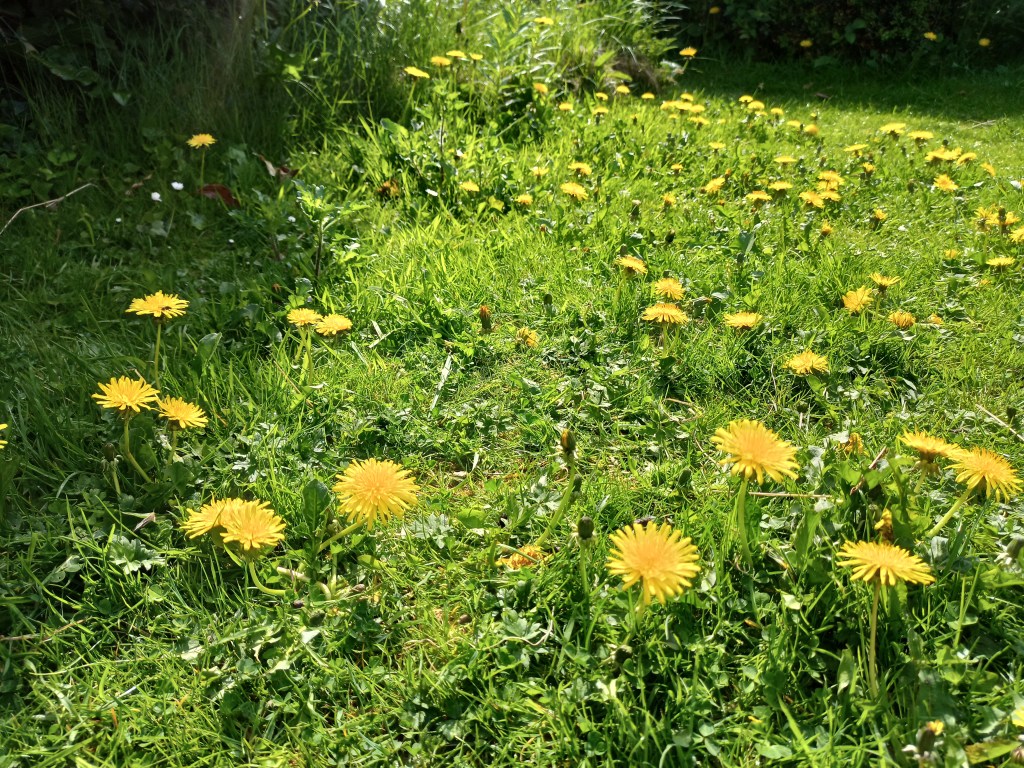
The sound of people mowing is often said to be a sign of summer arriving. Which when you think about it, is quite odd. Instead of the sound of the hum of insects, birds calling and nature blossoming all around from the spring plant growth, we chose to make the mechanical sound of cutting it all down our stimulus for the change of seasons. And for what reason do we mow in the first place? While there are some benefits to mowing in certain areas, the standard societal desire for a neat and managed lawn all year round generally stems from aesthetic ideals. Manicured lawns are highly valued and seen as traditional in our culture, but in terms of wildlife they could be doing a lot more. We are told that seeing flowers in the lawn means they are weeds. How crazy is that! When I see a lawn or village green or field full of dandelions, I personally don’t think ‘ooh, what a mess’, but ‘wow, look at all the colour, like tiny suns, how pretty’. Weeds are just other plants, the ones we have been told are undesirable. At a time when our pollinators, garden wildlife and so many other species are declining, creating habitats for them to thrive in is a necessity. And the wealth of land used as gardens serves as an important ecosystem in itself. All of these benefits are why Plantlife launched its No Mow May annual initiative. To sign up and access useful resources, please visit their website to learn more. Had a look? OK great, let’s get growing!

Firstly, you need to decide how long you are happy to leave the mower in the shed for. While it is all well and good letting your lawn grow during May, if you’re just going to mow it all back down again on the 1st of June, when many species will have already moved in, the positive impacts will be limiting at best. The RSPB provides information on different mowing cycles, but generally if you can wait until later in the summer, the species that grow in your lawn can be used during the intense spring and early summer breeding season period as important food sources and habitats. This way you can enjoy your time outside in the garden, making the most of the season, surrounded by beautiful flowers and visiting wildlife. Does anyone really prefer to see short stalks of grass when they could enjoy an abundance of colour and life?

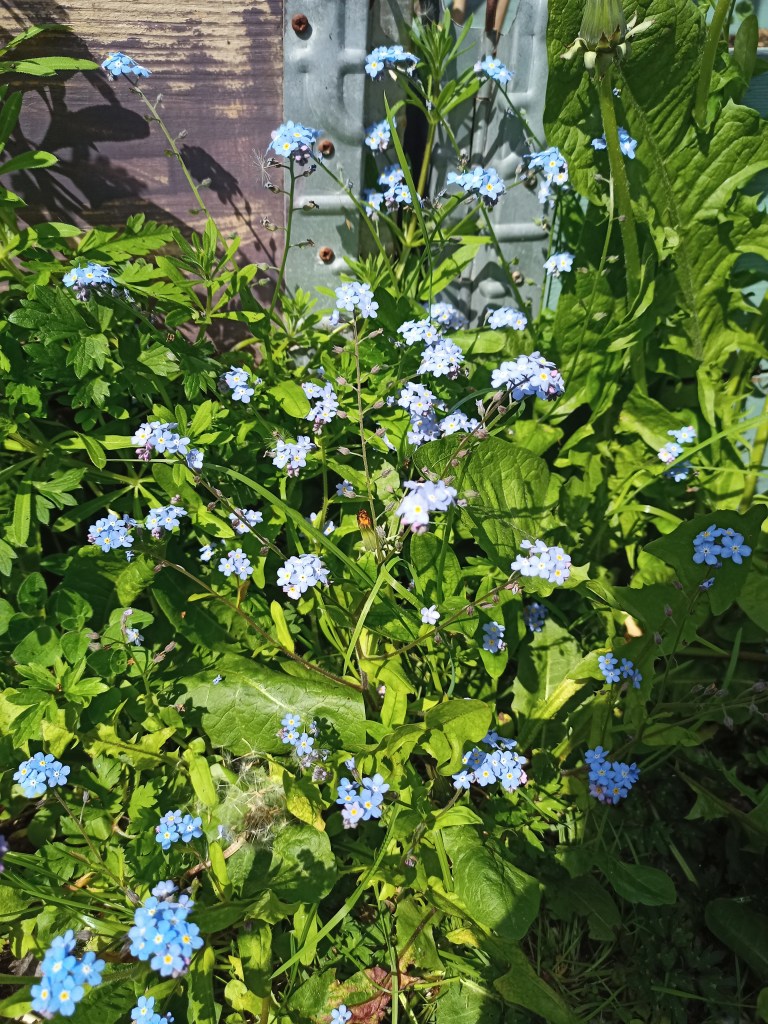
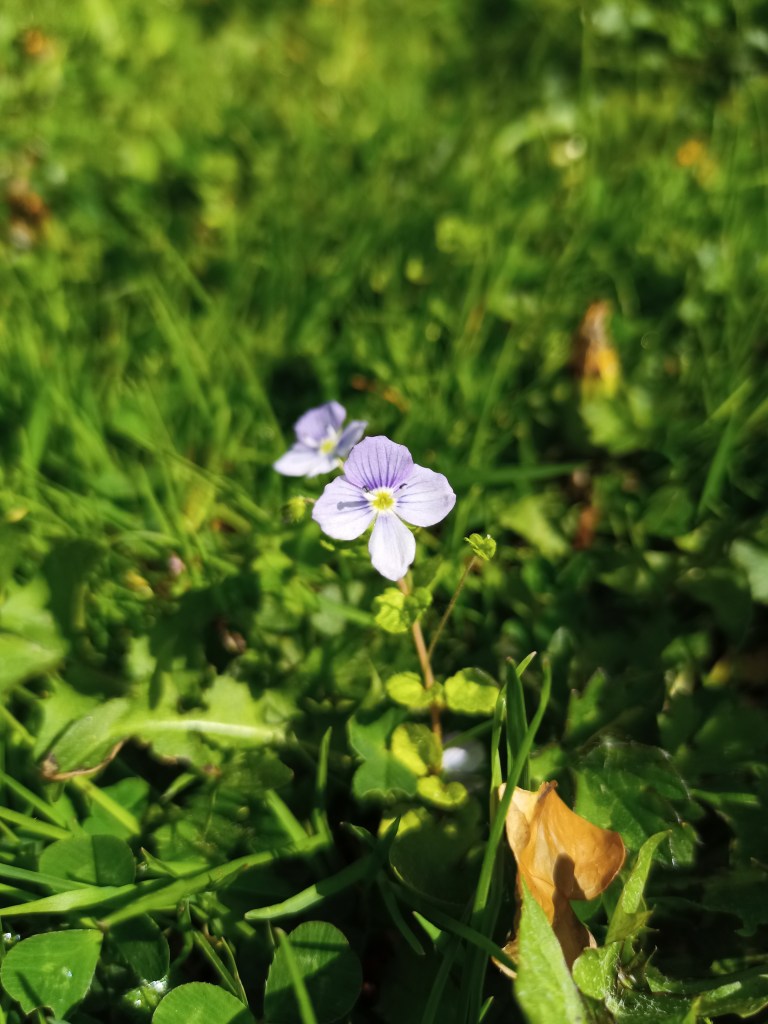
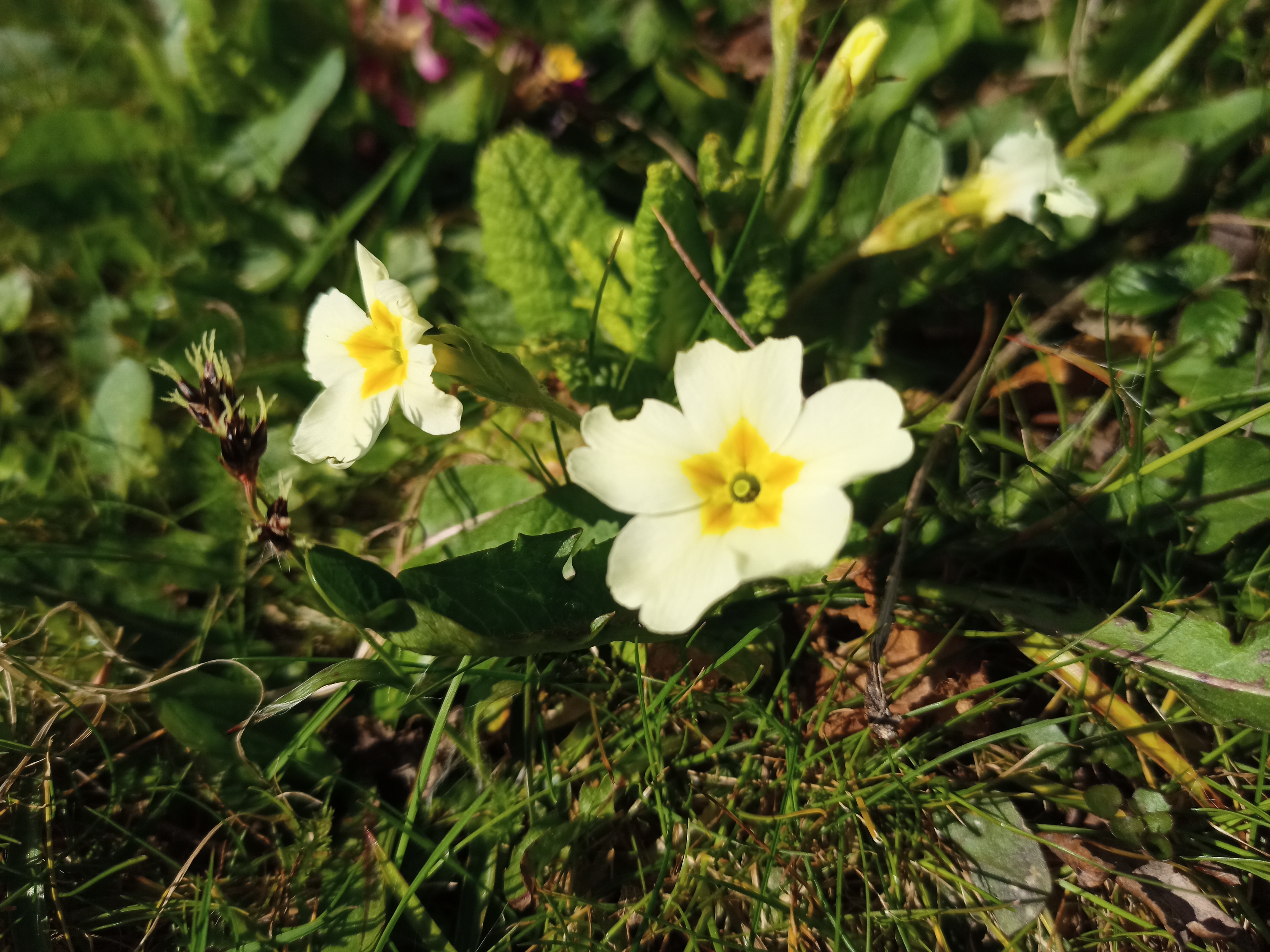
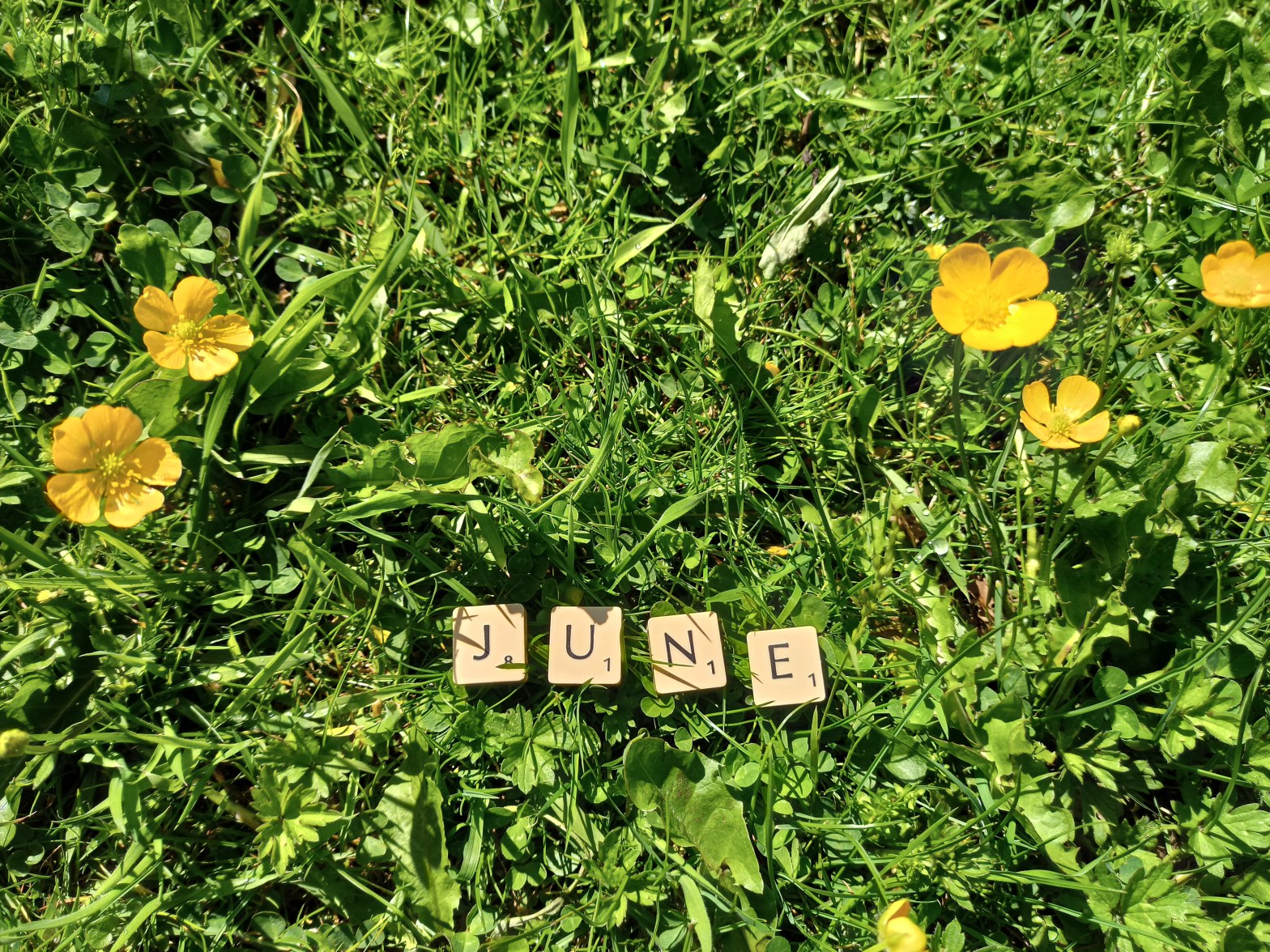
Here are some of the little pockets of joy growing in my garden right now…

Alternatively, it might work better for you to let one section of your lawn grow wild. You could put aside one area of the garden to be free of mowing, or you could mow a path between the wild areas and keep that part neat and accessible. There are many examples of this working and looking really beautiful too, plus you don’t get tickled on your way to the washing line.

Now then, I see you Recovering People Pleasers. I hear that little voice that says ‘Everyone will judge me for not looking after my garden? What will they think?’. Well, there is no need to make them speculate. You can download an official No Mow May sign, or you could make your own, and put it out on your front lawn to show people why you are leaving it wild. Some councils have started doing this to show the public the areas of land that are being left for nature, and there’s no reason why other councils, businesses, land owners and gardeners can’t do the same. Also, when they see what beautiful life you have encouraged, they are going to wish they hadn’t spent their Sunday mowing too.

Earth Day 2025 ๐ŸŒ๐ŸŒŽ๐ŸŒ

Modern life tells us that we are invincible, that anything can be fixed with enough money and technology and that the future is guaranteed. Life is anything but. We have stopped waking up each morning filled with wonder at the fact we live on a huge rock that contains such an enormous diversity of life. When we look at ourselves we have stopped seeing nature, and instead have classified and organised until we have put the world into neat little categories with ourselves at the top. I personally do love a bit of structure, and I am quite a big fan of organisation, but we have to remember that as a society, it is all made up. None of it is really ‘real’. You and I have no more right to exist than an ant. This is all a bit deep, but the bottom line is: Earth is miraculous. It is everything. And it is the only one we have. So this Earth day, really celebrate our home like you would a birthday, because this planet is worth celebrating.

At this time in existence, every day is Earth Day. And everyday we should all be doing what we can to make a difference. But if after a relaxing Easter weekend you would like a few ideas of things you can slip into your day to celebrate while you get over the return to work/studies, here’s what I suggest…

  • Get outside – Walk home, go into your garden, open a window. Look up at the sky and zoom out a little – isn’t it extraordinary? Look for life: follow a bee, lie on the ground and watch for beetles, look at your favourite flower. See things in the way you did as a child, full of wonder. This is the nature you are part of. This is your bit of the world to save. What a beautiful task ๐Ÿ’š
  • Pick up litter – On your way to work, when running errands, from the front of your home, if you see litter on the street or in natural spaces, pick it up and put it in the relevant bin. I recently read about this idea from Denmark, that you are CEO of everything in a 3 metre radius from you. The environment in that vicinity is your responsibility to look after, so if you see litter you pick it up. If someone looks like they need help, ask them. So if you see some litter when out and about, even if it’s not your fault, just pop it in the bin, and leave places better than when you found them ๐Ÿ—‘๏ธ
  • Do something different – Use today as an opportunity to switch off from autopilot. This evening, you could challenge yourself to cook something new using only what you have already in your cupboards or spend time on a hobby rather than social media. You could go out for a post-work stroll, or instead of getting a takeaway coffee, donate that same money to an environmental organisation. Charities that help us care for the planet rarely get the same fundraising events that other topics do, so if you can, donate towards sustainable projects. Learn somethings new about our planet, by watching a documentary or reading a book. Making a swap can change today from just a Tuesday to something a lot more impactful โœจ

Hello Spring ๐ŸŒท

  • The other day while I had breakfast, I watched a few different birds run around my garden collecting up any soft/wispy/light nesting material. It was such a beautiful moment to know that your house and garden aren’t only yours, but support so much life too. If you’re lucky enough to have a garden, we can all help by making sure our gardens have lots of natural material available for wildlife and that we aren’t too quick to make it neat and tidy. As they say, life is the messy bits. Keep dried materials, grasses, any feathers or sheep’s wool that has blown in accessible in your garden so that it can be repurposed into a nest for the next generation of visitors to your garden. It feels so good to share ๐Ÿ’•

  • I don’t know about you, but I always associated Spring with new life, nature and the joys of Easter, rather than tariffs and censorship, but hey, maybe I just had an alternative childhood. If life for you has been a bit hectic/stressful/heavy recently, maybe you can find 5 minutes at the start of this new season to make a hot drink, sit in the garden or by a window and observe the wildlife that visits your garden. The more you watch the more you see, maybe you have some regulars or there’s a pattern to their garden visits. I love to watch the interactions of a distinctive blackbird pair in my garden, and see how long it takes the jackdaws to swoop in and pick up the bits of apple core I put out after my lunch break, and wondering why the biggest bumblebee you’ve ever seen has managed to get into my house via a small window opening but can’t find the large open door. Whatever species you get and however many, this is your patch to look after so enjoy being part of your local nature. Creating a wildlife garden doesn’t save the whole world, but it save your little bit of it ๐ŸŒฟ

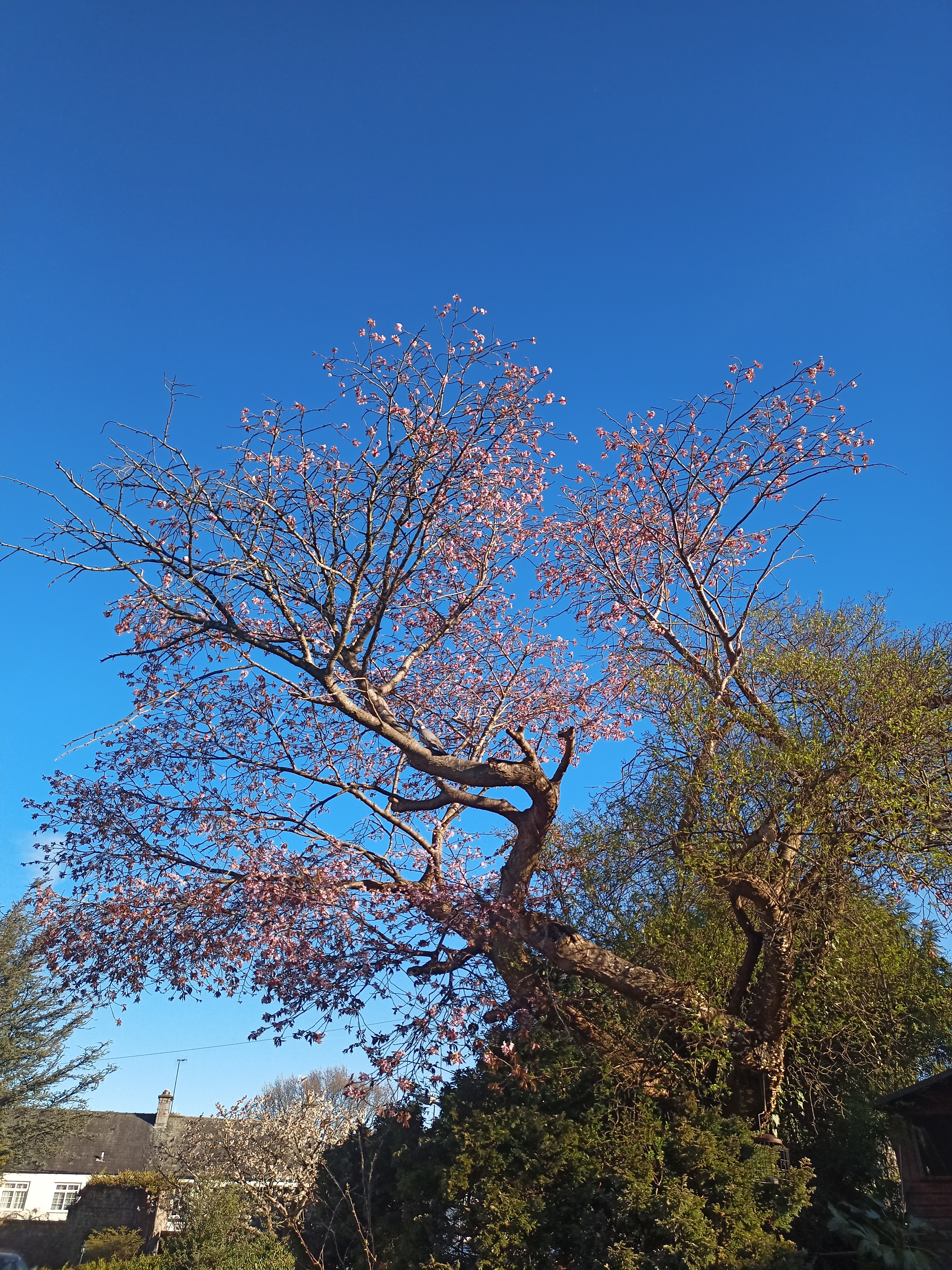
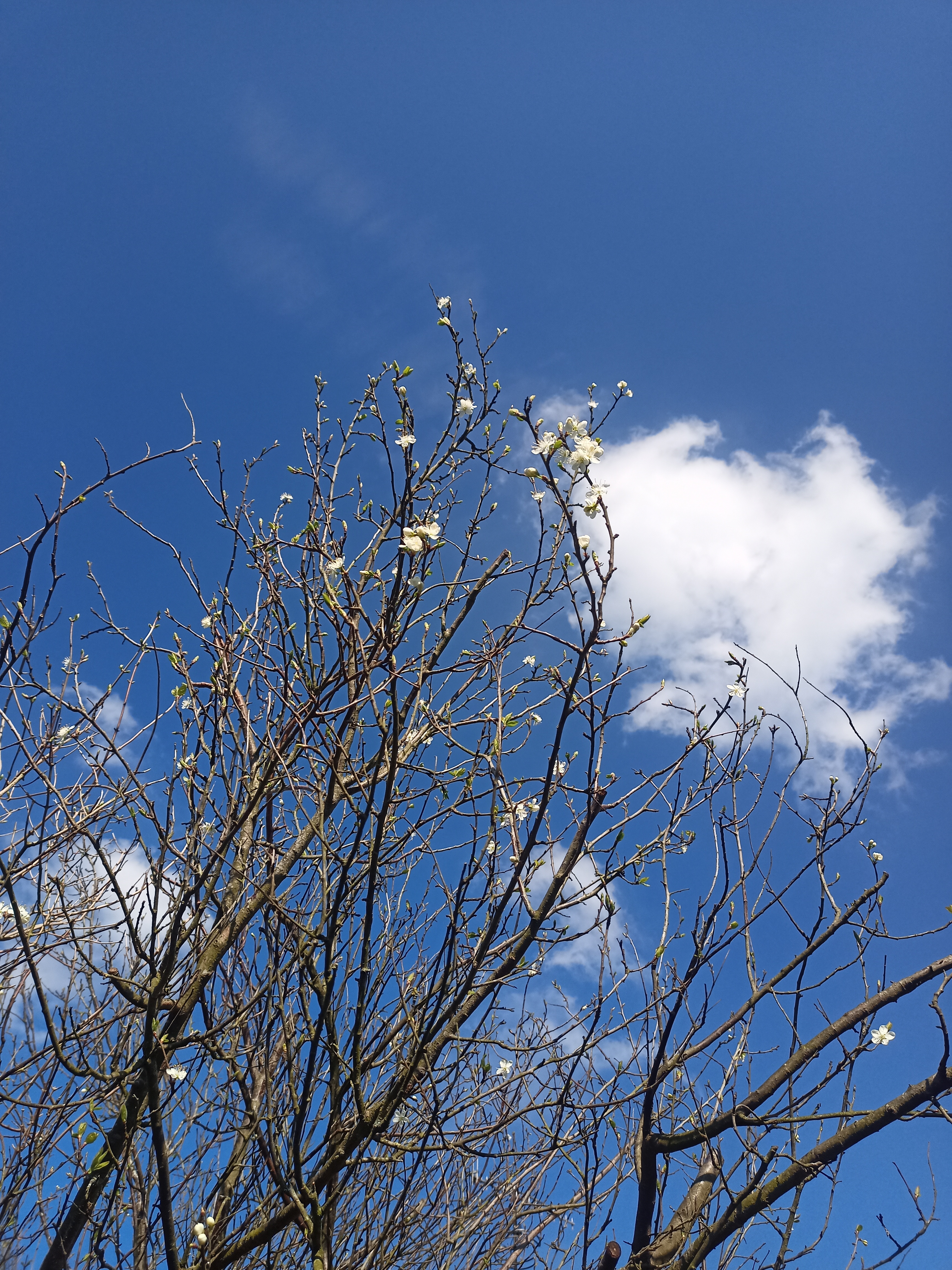
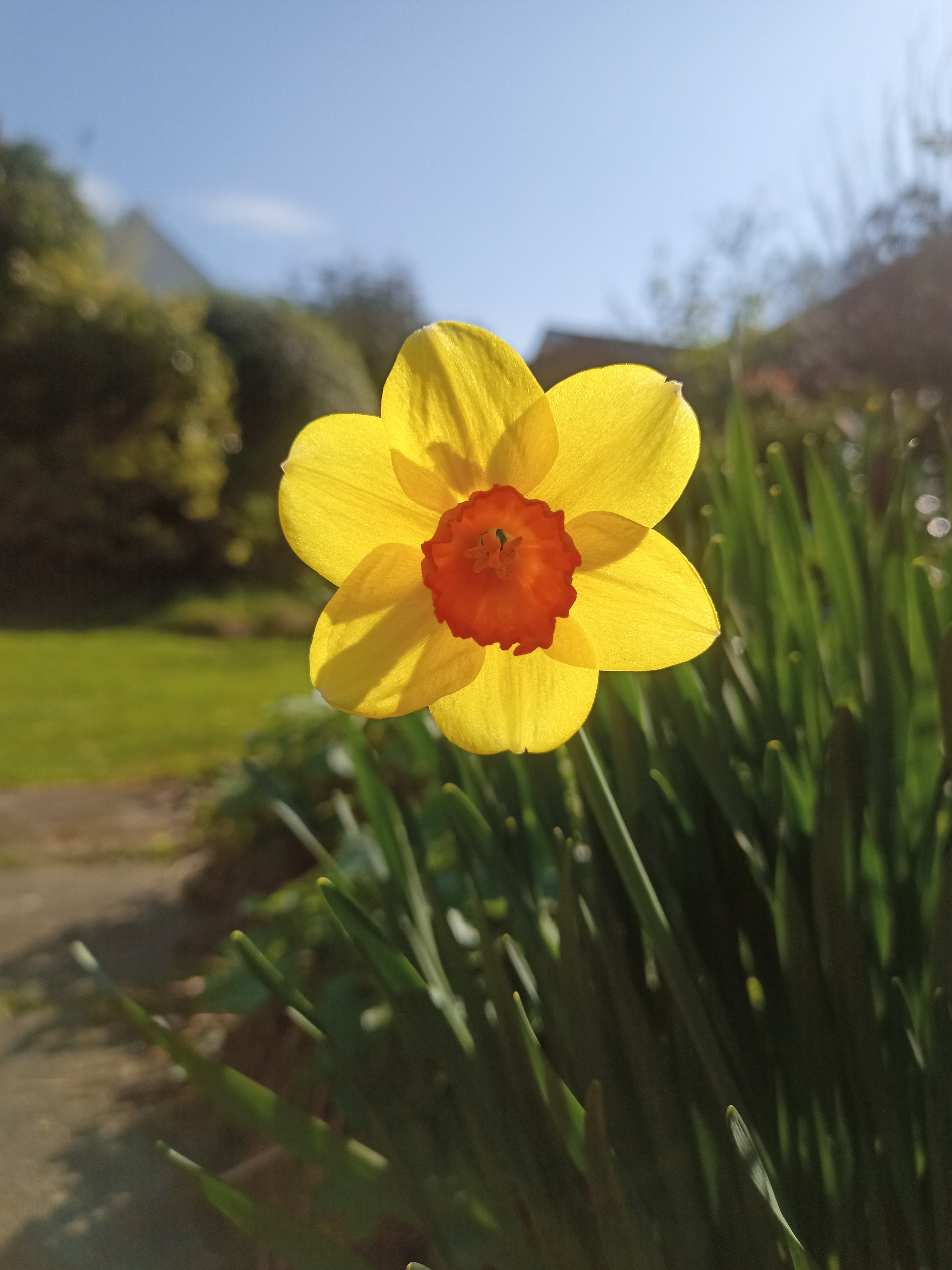
  • Get involved in The National Trust’s Big Blooming Break and find yourself some blossom! Is there anything some springlike than when the blossom comes out and the world erupts into tiny blooms? Whether you live in a city or in the countryside, the sight of blossom is sure to brighten up your day. You could get involved in a locally planned event, or just take your lunch break outside and eat under a tree, or go for a blossom-finding walk and take a picture when you find some. Before writing this post I walked around my garden and took a few pictures of the flowers popping up, which I will share below….
  • Ditch the dryer, get out the washing line: Tumble dryers are one the most energy intensive machines in our homes and additionally release a whole load of microplastics and fibres from our clothes. They aren’t good for the planet and research shows they aren’t good for human health either. And when the weather is like this, drying clothes outside is made even easier! Additionally, drying clothes outside has lots of other benefits, including the impact of UV on killing bacteria on clothing. It’s also somewhat of a tradition, gets us outside and reduces energy use. Trust me, as someone who lives in a fairly old and cold house but doesn’t have a tumble dryer (and didn’t use one when I had access), you can absolutely function without one. But for now, make the most of the sun and get those clothes out! ๐ŸŒค๏ธ

  • Now sunlight hours are longer, we can use this opportunity to re-evaluate what we do with our free time. It is normal to want to come home and relax after a long day at work, but do we really want to keep doom-scrolling into this next sunny season? Do we want to give the social media people that power over our days? Maybe the longer evenings give us the opportunity to pick up a project we started, like crafting or running. Maybe instead of looking at other people’s pictures of the world, we could go for an evening walk and see our own corner of it. Maybe instead of working out inside, we could do exercises in the garden or local green spaces. Whatever it is you enjoy, while the sun is shining and nature is blooming take your opportunity to enjoy it all๐ŸŒธ

  • Finally, this couldn’t be a spring ideas list without a spring clean! Now we have reached the end of the winter season, spend some time decluttering anything you didn’t use. Maybe it’s a jumper you said you’d wear but didn’t, a series of books that you never feel motivated to start/finish or crockery at the back of the kitchen cupboards you told yourself you’d use during party season but they never made it down. I’m the first person to admit that I find it hard to let go of things, and something I’ve had to ask myself recently is do I love it and have very sentimental memories using it? Or do I just have strong memories of buying/owning the thing? Separate your things into piles as you sort, I like to categories into: Things I love, Things I use, Things to recycle, Things to sell and Things to donate. It can be a hard task to start but it will make more room in your life for the things you love right now. And that is a lovely feeling to start the season with! ๐Ÿงน

My experience at the 2024 Green Gown Awards ๐Ÿ’š

So what are the Green Gown Awards I hear you cry?! (I had to do some quick googling when I heard about them!) These awards recognise a range of individuals and groups within further and higher education in the UK and Ireland (there are also international versions) for their work towards sustainability and environmental action. I was lucky enough to be shortlisted as a finalist last year in the Student Sustainability Champion category and invited to the awards ceremony in Edinburgh. While I didn’t walk away with the award, I had a fantastic experience and wanted to share some of my thoughts on the whole process…

  • 1 – We don’t celebrate sustainability enough ๐Ÿ†

Because our ambitions are so high, progress takes time to implement and there is still so much bad in the world, we rarely get a chance to celebrate the actions people are taking right now in our own communities. Sustainability hardly has celebrity status, and wins don’t make the headlines because this kind of work isn’t considered ‘cool’ or high profile ( when it is in fact saving the world, but hey what do I know?). So to have an event with so much recognition and grandeur – there was a green carpet! – felt like a rare occasion in this sector. The event was so well organised and I felt so valued to be part of it, which was a wonderful way to round off my student experience.

  • 2 – There are people out there doing amazing things ๐Ÿคฉ

Right now most of what we are hearing about are the people out there doing terrible things, and it’s easy to come to the conclusion that all people are bad and its better to stay in and talk to the cat. But trust me, there are others out there in the world, without fame or a spotlight, getting on and taking positive action. At the awards ceremony we got to hear about the projects that became winners and highly commended, and there was such a variety of incredible work going on in educational settings up and down the country (and of course across the sea!). From sustainable building projects to outreach schemes, so many different aspects of sustainability and the Sustainable Development Goals (pictured in the display below…) were being progressed by students, staff members and the wider community. It was such a pleasure to be amongst such a high calibre of people!

  • 3 – We don’t have to work in isolation ๐Ÿซ‚

We all know that collaboration is key to progress, but being part of the Green Gown Awards taught me that there are always people out there who share your interests and can help you grow, even when your interest is pretty niche. What were the chances that I got to sit next to staff members from a university that I had never visited but ran a project that so closely aligned with my own research and interests? (Pretty low if you’re wondering but it did happen!) Sharing our interests with others not only allows us to share our uniqueness but also to engage people you don’t normally mix with and enable connections to be made when you have something in common. I sound like a paid sponsorship for LinkedIn networking (I’m not) but the general idea is talk to people! Spread ideas, have discussions and maybe good things will come of them.

I also want to take a moment to appreciate how sustainability was implemented at these awards. I was able to travel to Edinburgh by train (a beautiful journey!) and the menu served was fully vegan. I’ve shared some pictures in this post of the event and it was beautifully done, so if anyone is ever nominated or gets the opportunity to attend, it is definitely worth it. My thanks go to the people who put me forward for the award, helped me create the application and the Green Gown Awards team for inviting me. Thank you to everyone who reads this blog and anyone who has been involved in my journey, you all helped this happen!

An ordinary human’s guide to……………. Critical thinking ๐Ÿง 

Critical thinking, a skill once reserved for the realms of academia and philosophy, might not be the first thing you think about when it comes to sustainability. But in our modern world, it is one of the most essential skills that everyone in the Anthropocene must develop to help us make progress in the future.

Recent news has not made for happy reading. In fact it’s been downright depressing and unbelievable at the same time. How is it that some people make it into leadership positions when their citizens had the choice of vote and voluntarily made that decision? How is it that entire countries and governments can backtrack against decades of science to prioritise immediate profits over long-term life on Earth? How did we get here again?? This is where an important distinction comes in: we need to be citizens not consumers.

So first of all, what do we mean by critical thinking? A quick web search will bring up loads of definitions for you, but in essence critical thinking means questioning the information we encounter in the world around us and formulating our own thoughts, rather than passively accepting what others tell us. This can include consulting multiple information sources or pieces of evidence, evaluating, analysing and using this to make informed decisions. In today’s world, where influencing is big business and it is people’s jobs to convince you to consume without thought, or the rise of AI that will flood our information rich world with fakes and misinformation, this skill is only getting more and more crucial. How many times have you seen trends take off just because it appears popular, or herd mentality set in just to blend in with the crowd? In order to safeguard our world for a sustainable future, it is vital we are able to respond to the information around us in a way that doesn’t take it at face value and allows us to use our own brains and opinions to logically work towards solutions.

We know that the human brain is an incredible organ and one of the most powerful structures we are aware of. Even with the rise of advanced technology, your brain is one of the most intellectual and advanced things you’ll ever own, but it needs practice and use to keep it healthy and on best form. So how can we bring critical thinking into our daily lives? All we need are some simple questions. Next time someone makes a bold statement, a narrative goes viral online or the media pushes a certain headline, ask yourself these…..

What?

  • What is it this media/person is trying to tell me?
  • What response do they want me to have?
  • What are they trying to make me feel?
  • What narrative are they trying to push, what agenda does this fit into?
  • What are my personal thoughts?
  • What aspect of sustainability does this affect, e.g. nature and gender equality?

Where?

  • Where has this information come from? Is it a trusted source, word of mouth, something seen on TikTok?
  • Where in the world has this originated from? Is this representative of everyone or is it a more localised opinion?

When?

  • When was this information published? Has it had access to the most up-to-date science and information?
  • When was this information released? Are you actually seeing more about a certain topic or are people adding more to a topic now it has become popular?
  • Especially when it comes to climate and sustainability, the science has been clear on this for so many decades that it is important to think critically of anything more recent that disagrees with the fundamental information. On what grounds are claims being made?

Who?

  • Is the author of this information a trusted source and a reliable voice on the subject?
  • Who agrees with this information? For instance, is it something the majority of scientists support?
  • Who is funding this information, such as research findings? Are they influencing the conclusions that can be drawn? Has it been requested by a particular political party?
  • Who is this information targeted at? Who are they looking to influence or recruit to their cause?
  • Who gets to create this information and who has access to consume it?

How?

  • How have the conclusions from this information been drawn? Research, personal experience or just drawn from thin air?
  • How has the information been presented? Is the author leading you down a specific path, or do you have access to all the data?

Why?

  • The ‘so what’?
  • Why is this information being presented this way? In what ways will it benefit the creator or push a certain agenda?
  • Why does it matter? Is this important for you, your local community, on a global level?
Photo by Leeloo The First on Pexels.com

Now, I appreciate that those were a lot of questions, but the bottom line is this – as citizens we have our own power and influence and we have something those in power can never have: the power of collective action. We don’t have to think the same as our leaders, we don’t have to act like them, we don’t have to accept everything they implement (I’m talking about recent changes made that don’t help us make progress in areas like the environment and society, rather than general anarchy and rule-breaking, do not take this as I sign to break the law!). If you’re reading this in a country lucky enough to have free speech, it is important we utilise our rights to disagree with policies and make our voices heard, whether through writing to your MP, peaceful protest or making your voice heard online or within your social circles. Otherwise actions we don’t agree with will keep happening because it’s assumed we don’t care enough about them to have an opinion. When a leader, or an influencer or just a loud voice, makes a statement, just take a moment to think: Is that right? Is there a wealth of evidence for that? Do I actually agree? And if I don’t, am I confident in my own actions to carry on behaving according to my values rather than following the crowd?

Example: The debates surround housing in the UK – What is actually driving demand for housing, is it population growth or changes to living arrangements? How many homes are actually going unused or underutilised? Why do we have a right to live over that of other species? Why is economic growth always prioritised over other forms of growth? Why is profit being billed as more important than nature? What happens when this narrative is used and who does it connect with? Where in the country will be most impacted, and where are there places of environmental and social significance? Who is telling us that this is the most important issue, and who agrees with them? When did this debate begin and what timeframe is being put forward? What is the government trying to do by pushing this particular narrative? What are my personal thoughts on the issue? ๐Ÿค”โ“๐Ÿ’ญ

We can stand up for nature, human rights, climate action and social issues, but those in charge will not make it easy. The most important thing each of us has is an incredibly powerful organ inside our heads that allows us to make our own minds up and act in a way that is true to ourselves. Like never before, we have to champion truth, facts and progress in an age of fakes, misinformation and regression. Practice critical thinking, be the maker of your own opinions and encourage others to do so too. We all need to keep our heads to face this challenge. Remember, we as humans are more than consumers, we are citizens first. Never forget the power you have ๐Ÿ’ช

GLL abroad: UK โžก๏ธ Belgium

Last month I did something completely new and travelled abroad by train! I did a full international trip using only public transport and had a brilliant time. If you are in a lucky enough position to be able to travel and want to move away from flying to a less impactful means, here are some ideas about how you can see more of the world for less emissions ๐Ÿš„

My trip started with two trains to my first stop to pick up my travelling companion. We then caught a train to London and took the Underground to St Pancras international to catch our train to Brussels! We arrived with plenty of time to browse the varied collection of shops and cafes at the station, and went through security in a matter of minutes. While security checks are still in place like an airport, the process felt much less stressful and there was no need to worry about liquids and other restrictions, like baggage weight. After the checks, there is a large waiting lounge where you can get a snack and/or drink and feel excited about the adventure ahead ๐ŸŽ’

Then it was time to board! This was my first time using the Eurostar trains, and my first impressions were that it was definitely much nicer than a lot of trains I’ve been on. We were in standard seating and had lots of room. After acclimatising to the difference in pressure as we left London, I soon relaxed into the journey as we watched the south of England go by. As someone who is claustrophobic, I was a little concerned about the part of the journey where we went through the Channel Tunnel, but after the tunnels coming out of London it didn’t feel as noticeable a difference and didn’t take long at all. I listened to a podcast (The Psychology of Your 20s, if anyone is interested) and did some colouring (book of choice from Calm over Chaos) and before I knew it we were in France. I really enjoyed the journey, there’s something about watching the world go by in a different country that’s just different to being at home, and in some ways when we pulled into the station it felt the whole thing was over too quick, I was so comfortable! ๐Ÿ›ค๏ธ

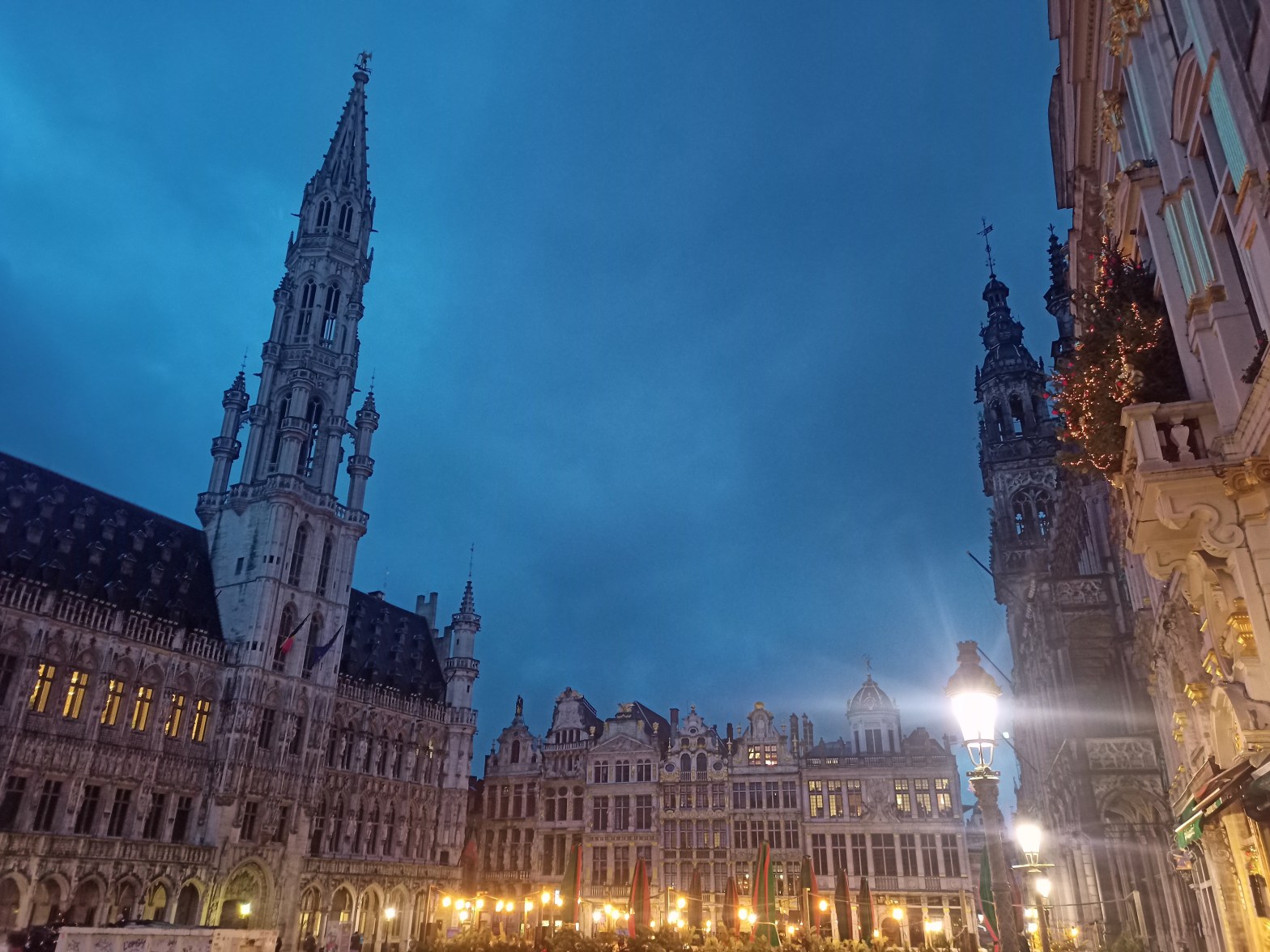
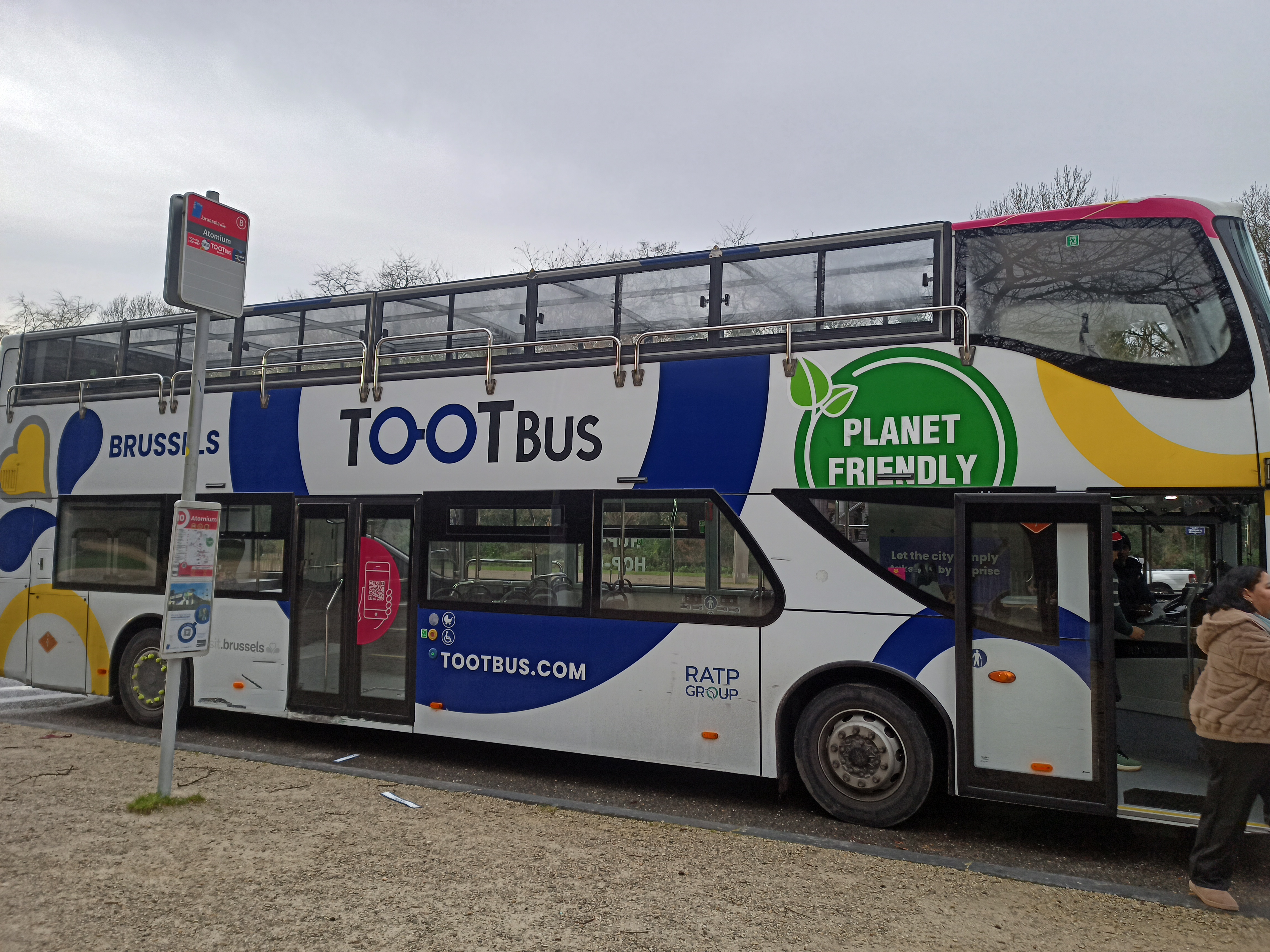
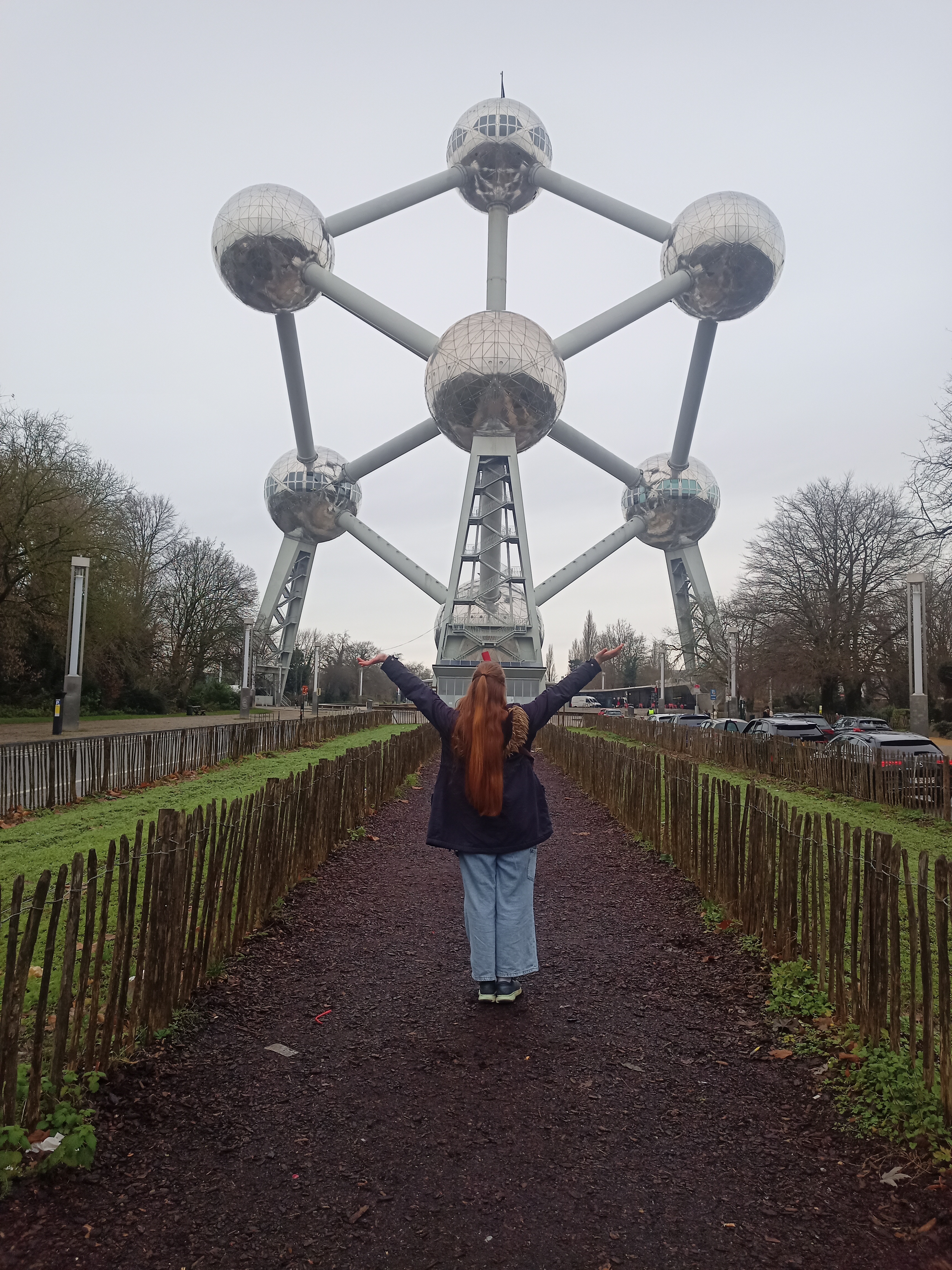
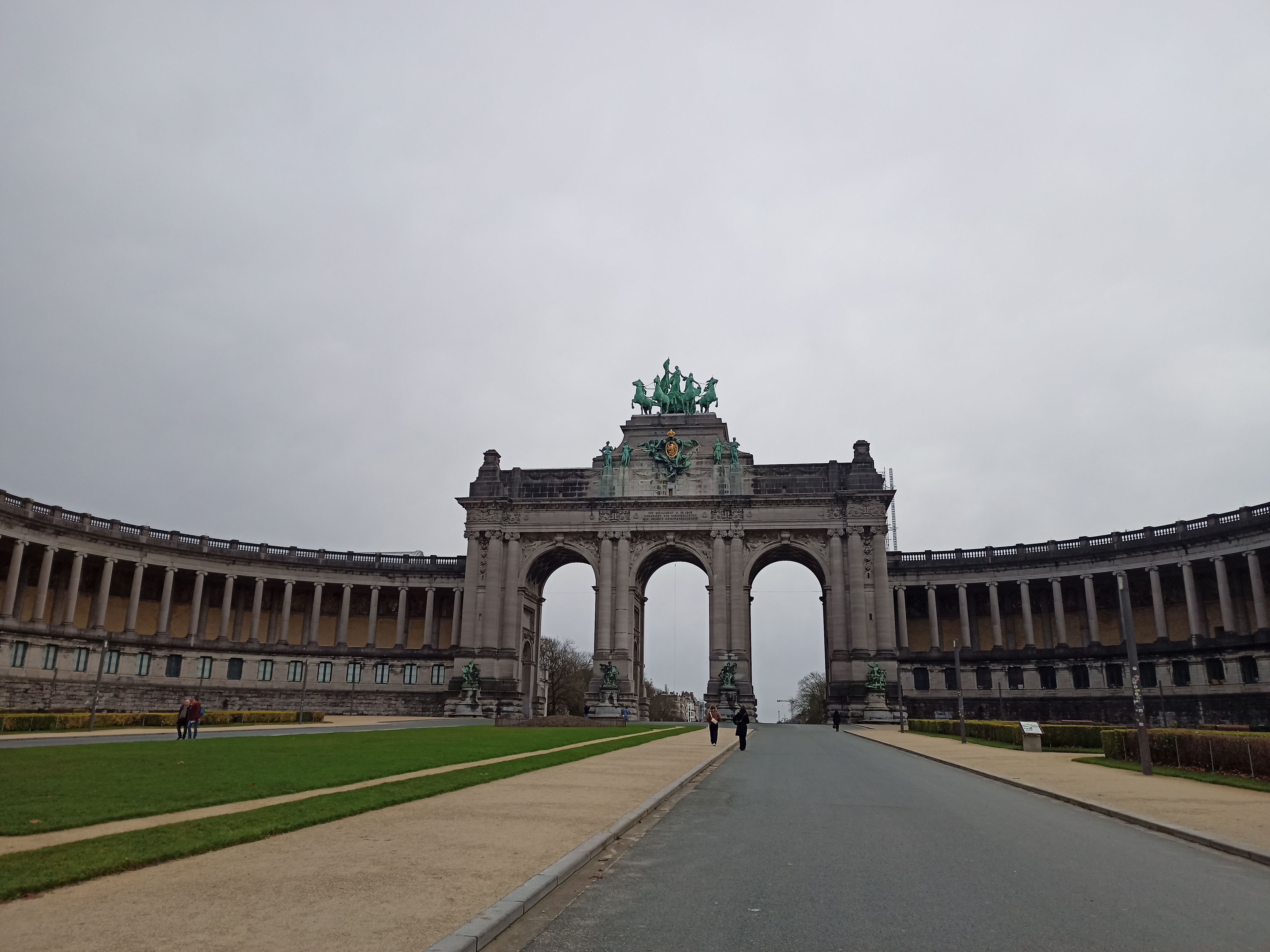
We arrived in Brussels only 2 hours after leaving London and walked to our accommodation. Neither of us had visited before and we only had 2 nights away, so we had to make the most of our time. On our half days we were able to walk to see a number of the major sights, such as Grand Place (first photo), and on our full day we booked to use the hop-on, hop-off sightseeing bus. These buses are often viewed as overtly touristy and expensive, but if you’ve got a city like Brussels where major attractions and sights aren’t all in the centre, using a bus that will take you to all these places as well as getting to see the in-between areas is an easy and enjoyable way to get around, without having to individually pay for transportation to each place. You can also get extra information from the audio narration, plus some jaunty music. Using the bus we were able to visit the Atomium, the European Parliament and Parc du Cinquantenaire, to name a few (see photos below – all author’s own).

Having the sightseeing bus ticket gave us peace of mind that wherever we got off in the city, we’d be able to pick it back up as many times as we wanted to that day. Getting off at the stops meant the bus route provided us with a fun day’s exploring while giving us a flavour for Brussels in our limited time. We also tried to visit local independent eateries during our stay, not only to experience the city more like the locals but to support small businesses in the city too – I can confirm the waffles and chocolate are very good.

On the last evening and final morning, it snowed! We were so lucky to see so many beautiful places in the snow, although some of us did not pick the right shoes for that type of weather (me) ๐Ÿ˜ถโ€๐ŸŒซ๏ธ๐Ÿคฆโ€โ™€๏ธThankfully, the trains still ran even with the change in weather, with only 10 minutes added onto our journey back to London. UK side, we then continued our journey home via the Underground, trains and buses, to complete the public transport journey.

The verdict: As so much of this trip was new to me, I wanted to see how I found the process. After this trip, I will absolutely be using the Eurostar again – the process was simple to use and for those of us in the UK it really opens up a range of options to visit Europe flight-free. While the Eurostar service isn’t new, I hope it continues to lead in train travel which is enjoyable and more environmentally sustainable. With less waiting times, no need for airport transfers and the ability to get straight into the heart of so many interesting cities, train travel can really enhance your holidays and travel plans.

And as for Brussels, if you are looking for a short break that offers beautiful architecture, history and modernity and many delicious sweet treats, I would definitely recommend. Often not talked about as much as other European capitals in terms of tourist hotspots, visiting in January gave us all the same amazing sights and experiences but with none of the waiting times and crowds. We were able to walk into restaurants in some of the most popular areas without reservations and see attractions clearly and peacefully. As for food, while the city isn’t known for being extremely vegetarian friendly, I was able to find vegetarian and vegan options for all our meals in a range of cafes and restaurants. Overall, for my first Eurostar trip this was a pretty good way to start.

Dear 2025…

Well let’s just hope that 2025 is throwing us all the curveballs now so we can enjoy the other 11 months of the year ๐Ÿคฆโ€โ™€๏ธI won’t beat around the bush, it hasn’t been the best start to the year. With 5 years to go to achieve the targets we all agreed to in the 2030 Sustainable Development Goals, our system is looking worse than Ethelred the Unready and at least his title gave us some clues. So far we’ve had a change in leadership that has thrown a good proportion of humanity back into the dark ages (only worse, because it’s intentional), in the UK our own political system blocking an actually progressive attempt at having some climate and environmental legislation (because obviously that would be too much to ask) and the general doom that reading the news brings. But we won’t let this be the end of our story because you and I are incredibly strong and want a better world and we will not stop until rights, equality and sustainability are achieved for all ๐Ÿ•Š๏ธ

OK, stepping down off the soapbox now because that was a heavy (but necessary) start. Today I want to build on our annual tradition of sustainability goal setting for the year ahead. I’ll be sharing some of my own goals, and hopefully it will inspire you reading this to grab a pen and a notebook and set your own sustainability goals for 2025. Let’s get to it!

My main sustainability focus for 2025 is to have a No Buy Year. I’ve heard of others taking on this challenge and this year it resonated with me for a few reasons. Firstly, appreciating that I have so much, and of my possessions I don’t get to fully enjoy everything I have. Secondly, we know that consumerism and waste have got completely out of control and we have more things on the planet than we all need now or even for the next generations. And finally, it will help to reduce my financial expenditure.

So what will this entail? Practically, I will obviously still be buying living essentials, like food, hygiene products and anything necessary to function in my life. For example, if during the next year my pair of trainers become completely worn out and beyond being able to be repaired, I will find a place to recycle them and will look into getting a new pair that will last me a long time. Where the no buying comes in is for anything unnecessary. For instance, clothes and impulse buys. If I see something I’d really like, have considered the purchase and know I will get lots of use out of it, then I will add it to my Wishlist to share with family and friends when it is my birthday or Christmas.

In recent years I have definitely changed my shopping habits a lot. Shopping used to be a fun hobby, and to be honest is something I still enjoy now. I am someone who enjoys browsing the shops, and more often than not I used to always come away with something. And I set this intention as someone who’d love to own their own shop one day! But the shift that has been happening is moving away from ‘hollow’ purchases. The ones that are so exciting at the time but then don’t get the use or love you expected. Away from fast fashion, cheap retail and unethical companies. I no longer want my money to fuel certain individuals or destructive ways of using the planet.

So my main goal is to use the No Buy Year to motivate me to love the things I already have, eliminate purchases that promote consumerism and don’t add anything to my life and keep that money instead for things that matter. It is going to be hard, as soon as I see a cute gift shop I am going to be severely tested! But if its just for the thrill of the buying, then its not coming home with me – only items that will enhance my life whilst having a minimal impact on the planet will be up for consideration.

In other goals, I want to continue to increase my plant-based recipe repertoire so I can confidently cook more tasty and vegetarian dishes๐Ÿด I’d like to travel to new places by train and have more adventures๐ŸŽ’ And I want to be more of a voice in activism, especially in a year when these voices will be the ones that are trying to be silencedโค๏ธ

Simple actions for sustainability this week ๐ŸŒฟ

Support the Climate and Nature Act โš–๏ธ

So here is the deal – On Friday (24th January) the Climate and Nature Act (AKA CAN bill) will get its second reading in Parliament. This bill includes the most up-to-date scientific understanding of climate change and biodiversity loss and addresses both the climate and nature emergencies we face in the UK, within the global picture. This will help us keep our leaders accountable and facilitate real environmental action in this country. Hooray! Finally! ๐Ÿฅณ๐Ÿ™Œ You can read the full Bill here. For the bill to be passed, we need over 100 MPs in attendance and backing the bill to pass it. As it currently stands we need a few more to go to reach the target of 150.

How can you help? The team over at Zero Hour have been the main campaigning organisation for this bill, and they make it super easy for you. Simply go to their website here, search for your postcode and see if your local MP is attending. If so, yay! Check to see what their stance is on the bill and whether they will be supporting it. If your MP has not confirmed their attendance, it is important that you write to them to make sure they know what their constituents want of them. Follow the steps on the Zero Hour site to customise the email template with your personal additions and send straight to your MP. It takes very little time and the process is very simple, but the significance of your MP attending is enormous. One thing you can do today – get on the Zero Hour website, follow the steps and urge your MP to attend. Let’s make a policy!

The RSPB Big Garden Birdwatch ๐Ÿฆ

On a bit of a different note, something for your weekend… The Big Garden Birdwatch is an annual citizen science event that allows us to see a snapshot of the state of wildlife in the UK and how it is changing. If you’ve never taken part before, now is the perfect time to get involved! All the information you need is on the RSPB’s website, but here is the low-down. The event takes place this Friday-Sunday (24th-26th January), and over that period you just need one hour to observe your garden or local greenspace and count the birds that you see. Remember to count the highest number of birds you see at any one time, rather than over the entire hour. Once you’ve made a note of which species and how many you have seen, you just upload your results online. If you are unsure of any of the species, the RSPB has identification resources you can use so you can identify what you see. It’s a really lovely annual event to just pause and enjoy the wildlife you have around you, whether in your own garden or a local park, all while contributing to important research. One weekend plan you can achieve – get involved in the birdwatch!

12 Days of Blogmas: Day 12 ๐Ÿ•Š๏ธ

We’ve made it to the end of Blogmas 2024! Hopefully by now you are nearly ready for the Christmas celebrations, or just some well deserved time off. To round up the series, today we will be discussing things you can do in your garden and outdoor space to care for your local wildlife over the festive season. We are intrinsically linked to nature, and it’s health is a reflection of our own health and that of the planet’s. Making your space a haven for wildlife and enjoying watching them is one of the best things you can do with your time over Christmas. Here are a few ideas to get you started…

  • Water – Essential for life, water is used by wildlife both as a source of hydration and also for washing in. It is important that during this colder season you make sure any water sources in your garden, be it a birdbath or drinking bowl on the ground, remain usable and don’t get frozen over for long periods. If your water source does freeze over, you can use some warmer water to gentle defrost it again. If you have a pond that freezes over, it is best to gently defrost a hole in the ice using a saucepan with hot water to allow access to the water, rather than smashing the ice which can impact the life below. These resources are vital for so many species, so will keep wildlife coming back to your garden all through the winter ๐Ÿ’งโ„๏ธ

  • Feeding – As food becomes scarce during the winter months, and natural food sources are becoming harder to find, we can help wildlife to get through the season with supplementary feeding. Whether you have a small outdoor space you add a bird feeder to, or have a garden where you can lay down food for small mammals, there are plenty of opportunities to help out. Christmas is a time of generosity and sharing, and this extends to nature too. Sharing with our garden friends not only helps them out during this harsh season, but is really good for our own wellbeing too – helping others makes us feel good and when you can enjoy the wonderful sight of birds and other animals enjoying the food you’ve put out from your window or garden, it is a wonderful thing ๐Ÿ’–๐Ÿฅœ

  • Habitats – If you use your time over the festive break to do some pruning in the garden, collect up all the trimmings and debris and create a habitat pile in your garden for wildlife to use. Nature has its own circular system where everything is used, so it’s important that the nutrients from plant debris go back into the environment to be reused, such as through the soil or by consumption from animals. Put aside at least a corner of the garden to be a wild habitat space, so that local wildlife has a safe space to use for shelter and especially for use by hibernating species. And don’t worry about it being messy, life is what happens in the messy bits! Again, sharing your space with wildlife is not only essential, but enriches our own lives too ๐Ÿ‚๐Ÿฆ”

  • Cleaning – Looking for a quick task for a winter day? This time of year is a good period for getting everything ready for the busy months of the spring and summer. Giving bird feeders a good clean out and cleaning out old nest boxes in your garden to get them ready to be used again help stop the spread of any infections that can build up with use and make boxes more inviting for birds to use next year. Step-by-step instructions can be found here from The Wildlife Trusts. Doing these tasks now has a minimal impact on wildlife as it is outside the breeding season, but will help you keep the visitors to your garden healthy come next year! ๐Ÿงฝ๐Ÿพ

Resource: https://www.wildlifetrusts.org/actions/help-wildlife-cold