What time is it? Summer time! ☀ Let’s start our summer of sustainability in style, whether you go full eco girl summer, swap for a staycation or are just starting your sustainability journey – all are welcome here! July, let’s go!
Waste free picnics – the ultimate summer with friends activity, but make it sustainable. The vision: cute rug, yummy seasonal food in reusable containers, reusable cutlery and good company. Single use plastic and litter not invited. 🧺
Take advantage of light summer evenings by turning off energy intensive appliance e.g. the TV, heating and lights to spend time in nature. Potter in the garden, stroll in the park or mini cycle ride, ditch the tech and reconnect with the great outdoors.
Sustainable summer 2021 starts right here 🌞Enjoy the sun, nature and environment responsibly, consciously and with kindness to ensure everyone this and every year can enjoy the joys of summer.
This series hopes to break down key sustainable terms and ideas to make them more accessible for everyone to understand and use to make change. If you are already are familiar with these ideas, refresh your mind and use your knowledge, but if this is new to you, read on and learn!
The 2030 Sustainable Development Goals are a group of 17 goals created by the UN that we as a planet are working towards to create a more sustainable future by 2030. While for many people, these policies and targets are merely for the work of politicians, I think it is important to have an individual understanding of the goals, both for keeping track of your own sustainable development and also keeping your country accountable for the progress it is making, wherever you may be. Also because relying on politicians doesn’t normally provide solutions….. 🙄
In this post, I will provide some very quick thoughts on each goal, on a global and individual level, to help you better understand what goals you can be working towards in your everyday life as well as on a wider scale to create a happier and healthier planet. If you want more information on the goals, feel free to do your own research as well (More info and quick video here: THE 17 GOALS | Sustainable Development (un.org))
2030 SDGs infographic (Credit: UN)
No Poverty 🏡
World: Tackling all forms of poverty everywhere by implementing sustained and secure policies (quite a big one)
You: Doing what you can to alleviate the effects of poverty in your area e.g. donating to grassroots initiatives, donating food/products to those in most need and being there for people struggling in your area.
2. Zero Hunger 🥣
World: Ending world hunger and promoting sustainable agriculture
You: Reduce you food wastage, buy local, support sustainable farming systems ad donate to local food banks if you can.
3. Good Health & Wellbeing 🩺
World: Promoting healthy lives through disease prevention and good healthcare practices
You: Lead healthy lives and keep yourself well by eating nutritional meals, following healthcare advice including getting the right medicines/vaccinations, exercising and finding ways you can personally look after your mental health so that you are in a healthy place to go on to help others.
4. Quality Education 🎒
World: Ensuring inclusive and equal access to education for all
You: Supporting education initiatives, making use of lifelong learning and being open to continually learning throughout your life.
5. Gender Equality ❤
World: Achieve gender equality and empower all women and girls
You: Educate yourself on different gender issues, be an ally, be respectful, act consensually, make space for women and challenge any unconscious biases you may have around gender.
6. Clean Water & Sanitation 💧
World: Ensure sustainable water usage and sanitation for all
You: Reduce water usage and wastage, become more water efficient and maintain high levels of sanitation to promote healthy lives.
7. Affordable & Clean Energy 🔌
World: Access to reliable and sustainable energy resources for all
You: Switch your energy supplier to renewable energy, become more energy efficient and waste less energy
8. Decent Work & Economic Growth 💰
World: Secure decent employment for all while ensuring economic development is sustainable
You: Invest in companies/stocks that prioritise the planet, practice sustainable economic activities e.g. ecotourism and be more conscious about what you do with your money.
9. Industry, Innovation & Infrastructure 🏙
World: Build resilient infrastructure and encourage sustainable innovation solutions
You: Adopt sustainable business policies, be innovative e.g. create your own sustainable small business and encourage a new way of thinking.
10. Reduced Inequalities 🧕🧑🏿👩🦽
World: Reduce inequalities within and amongst countries
You: Be open to educating yourself on different inequalities be it in regards to race, disability, income, age or background and work on creating a more inclusive community in your area.
11. Sustainable Cities & Communities 🌆
World: Make cities, urban areas and human settlements safer and more sustainable
You: Increase and protect nature in these areas, reduce your air pollution and pick more sustainable options of transport etc.
12. Responsible Consumption & Production 🛒
World: Move to more sustainable practices of production and consumption.
You: Recycle everything you can, reduce the amount you consume, reduce waste and reduce your dependence on high consumption goods such as fast fashion.
13. Climate Action 🌎
World: Commitment to limit global warming to 1.5oC and take urgent action to combat the impacts of climate change e.g. deinvestment in fossil fuels
You: Drastically reduce your carbon footprint by halting carbon intensive activities such as flying, eating excessive amounts of meat and burning fossil fuels
14. Life Below Water 🌊
World: Conserve the oceans, seas and marine resources and encourage their use sustainably
You: Reduce use of polluting single use items/plastic, reduce consumption of unsustainable fish and marine products and use our oceans in a respectful and conscious way.
15. Life On Land 🏞
World: Protect and restore terrestrial ecosystems and combat deforestation, desertification and biodiversity loss
You: Reduce use of polluting single use items/plastic, protect your local nature patches, rewild your garden and local areas, plant native trees and plants, restore habitats for wildlife, reduce damaging activities e.g. strimming and support sustainable activities.
16. Peace, Justice & Strong Institutions 🕊
World: Build effective, accountable and inclusive institutions at all levels in society
You: Using your human rights wherever you are to stand up for justice, encourage free speech and be respectful.
17. Partnerships For The Goals 🤝
World: Create global partnership to ensure implementation of the goals
You: Work with local grassroots projects e.g. nature groups, local councils, include everyone from all levels, spread awareness about sustainability and be a global citizen
We made it!!! If you made your way through all of that, well done my friend! Now when you are goal planning, you can identify which of your own goals aligns with on of these 2030 SDGs. For example: reducing plastic use ( Goals 12, 14 & 15) or joining a volunteer group for vulnerable people in your community (Goals 10 & 17). There are many targets and policies within these goals that governments can measure success by, but as an individual, these may be useful for checking in every once in a while and seeing if you can progress year on year to living sustainably by 2030. Grab those goals and good luck!
Climate change, to many, is an inconvenient truth. It inconveniences businesses, lifestyles and future plans. It makes us change the way we live however comfortable and happy we may be with our lifestyle, and its research is both scary and uncomfortable to confront. It makes us question our decisions now, actions taken in the past, as well as what the future holds. But maybe we should be questioning – why do we need everything in life to be convenient?
When I think of convenience, I think of convenience food: its quick, simple to cook and eat, and takes very little thought. I’m sure many of us have turned to this before when we are in a rush or have had a very long day. And sustainable solutions work in a very similar way: it is simply more convenient to throw items in the bin than sort the recycling, it is much easier to start up your own car than use public transport and it is simpler to carry on doing what you know than change. But life will not be more convenient if we carry on this way – inconvenience will come from rising sea levels, more extreme weather, a lack of food producing land (and therefore food) and overpopulation, which you could say is more inconvenient to your morning than putting that empty milk bottle in the right recycling bin. Just saying……
Though in relation to a different topic discussing the different genders, I heard a woman say something recently which I think really helps in this area:
“Just because something is difficult, does not mean its not worthwhile”
Just because something is difficult to understand, or difficult to change, or you just don’t succeed at the first attempt, does not mean that it is not worthwhile continuing, or trying again, or giving up. If living sustainably and without carbon was an easy task we would have been doing it for ages.
So how can you confront inconvenience? Here are a few thoughts to consider……
Change your thinking – stop viewing an inconvenience negatively, and instead explore it with curiosity. For example, if you were feeling upset that you couldn’t eat a meat burger every week, if there a vegetarian alternative you could try that you actually might really like? Are these changes actually as scary and annoying to implement as you once thought? P.S. Halloumi burgers 👌
Who does it actually inconvenience? – Are you just thinking about the consequences on yourself? What about your family, wildlife, or people on the other side the world that you may never meet, but are impacted by your actions? For instance, sure it might be quicker and easier to scroll through Amazon when you need something, but could you support a small, sustainable business but just taking a bit more time to research other options?
Extend your timeframe – it is easy to get caught up in the here and now and choose convenient short term options, but when we are engaging with sustainability and climate change solutions, we need to look into the long term to ensure our actions really are sustainable in the direct sense of the word and will be for future generations. E.g. will future generations be able to fly by aeroplane like we do now? Most likely not, so lets change now for an easier future.
Confront habits – I believe sustained action comes from positive habits. Acknowledge some of your unhelpful habits such as throwing items in the waste bin by default, driving to locations within walking distance or being wasteful with certain products. Then actively work on forming new habits, so for this example, taking a moment to choose the correct recycling bin, choosing to walk somewhere or being mindful of how much product you use. You may wish to journal or track your progress, and after a bit new, positive and sustainable habits should arise!
Hopefully this has helped you identity where in your thinking limits your sustainable journey. I do not use the word ‘journey’ to be cheesy, but to remind you that becoming more sustainable does take some time and won’t happen straight away, so be patient and keep going, knowing that the change you are trying to make will be important and worthwhile. ❤
As the days get warmer and the sun comes out, now is the perfect time to remind and reset your sun protection routine, for both your own health and that of the planet.
For those people who need to hear it – sun care is so important! I was that kid that hated putting on sun cream, but after some somewhat scary education as a teenager, it is now a vital part of looking after my skin. If you want more health information, take a look here (Sunscreen and sun safety – NHS (www.nhs.uk)). No one is too ‘cool’ for serious skin disorders and health problems, so be like Baz and wear your sun cream!
Health preach over, its time for the sustainability part. While sun cream is crucial for us humans to wear, some can have a negative impact on our environment. Some products contain ingredients that have harmful effects on our already fragile coral reef ecosystems, and can be polluting once in the ocean. Lotions containing ingredients such as oxybenzone, octinoxate, Octocrylene and nano-particles should be avoided as these are the worst offenders for harming our oceans and reefs.
So here is what to look out for next time you buy a bottle…..
Reef-friendly symbol – look out for packaging that complies with the Hawaiian Reef Bill, to ensure the product really is reef safe and not just using the symbol as part of greenwashing marketing. If unsure, check the ingredients list. These sun creams should not contain the harmful oxybenzone or octinoxate chemicals. Look out for BASF accreditation from EcoSun Pass (basf.com) which scores sun creams on how sustainable they are.
Water resistant formulas – if you are planning on swimming in the sea or other natural water sources, wearing extra water resistant formulas can help reduce the amount of product that ends up coming off your skin and polluting the water. Try Kids Swim & Play Sun Lotion SPF50+ | Sunscreen | NIVEA
So this summer, stay safe, stay protected and also protect our environment by limiting harmful chemicals, keeping our oceans clean and minimising plastic waste in your sun care routine. If its important enough for Baz, its important enough for you to go and protect yourself right now. So cover up and enjoy the sun safely! ☀
Summer is finally showing its face, the sun is coming out and its time for action! ☀ The month of June marks The Wildlife Trust’s 30 Days Wild campaign (more info in previous blog post), so to help you get more wild this month, here are a few tips for improving your connection with nature and the environment this month…..
Attempta plastic-free day – a very tricky challenge! Choose a day in June to commit to not using any plastic during your day. This could apply to food e.g. plastic packaging, beauty products or any other items in your day. Chances are, this will be quite a hard thing to do, but hopefully will get you thinking where in your life you use unnecessary plastic that you could swap out, such as disposable bags for reusable ones, and where plastic may be the best option if reused many times, such as refillable tubs or containers.
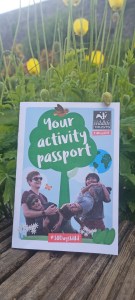
My 30 Days Wild activity pack – all ready to go! ⛅
Join a citizen science experiment – get involved in helping scientists and decision-makers make better choices about conservation and sustainability by participating in citizen science projects. There are loads to choose from, including a few recent ones like The Bugs Matter Survey ( take part here: Bugs Matter | Buglife) and regional projects which you can find here (Citizen science projects | The Wildlife Trusts). Get involved, provide data and help us build a better understanding of our environment so we can better protect it.
Find and read a wild poem, book or blog 👀 – get yourself a nature based read, either online (*cough cough*) or in paper form, find a sunny outdoor spot, and immerse yourself in nature, both by learning how to care for it and also experiencing it around you. You could maybe incorporate some wild reading time into your lunch break, your evening or even your breakfast.
This June, find joy in committing random acts of wildness each day, and you may find that not only does the environment around you prosper, you feel better as well. Go wild!
By taking part, you will receive a 30 Days Wild pack with lots of ideas for the month, including a monthly planner, wildflower seeds and stickers. Activities range from attempting a plastic-free day to listening to birdsong to going barefoot as well as your own ideas. There are also added activities to get involved with including the Big Wild Breakfast and Big Wild Weekend. You can sign up for yourself, your family or as part of a business to help as many people as possible get involved.
As well as being a fun challenge, 30 Days Wild is part of The Wildlife Trusts 30 By 30 campaign, to get 30% of UK land and sea in recovery for nature by 2030 (30-30-30 | The Wildlife Trusts). This is your chance to part a really difference in your local area as well as help you to reconnect with nature and your wild side.
While anyone can take part, this activity is especially good for families with children, by introducing them to nature and how to care for what’s around them from a young age. If children take an interest in their natural environment from a young age, they are more likely to want to protect it as adults.
So grab your activity pack, and let’s make June our wildest month yet and help our wildlife and wild places in their time of need 🌳
This series hopes to break down key sustainable terms and ideas to make them more accessible for everyone to understand and use to make change. If you are already are familiar with these ideas, refresh your mind and use your knowledge, but if this is new to you, read on and learn!
In a nutshell, Greenwashing is a process by which companies and organisations market their products and actions are more environmentally friendly than they actually are, usually to give the impression that they are acting on the climate emergency in order to engage our more environmentally conscious population. Greenwashing normally peaks around key environmental dates, such as Earth Day, by using these events as a marketing opportunity. In this post, I hope to help you understand when greenwashing is being used and how to avoid it.
Example: Some shops/companies have started selling ‘eco’ ranges, for instance New Look Kind, H&M Conscious and ASOS Responsible Edit. At first, it seems good that these companies are on board with sustainability and it shows a response to public awareness. But how sustainable is a practice when profit rules? Why are these eco products in small collections only, not the entirety of the stock, e.g. selling ‘recycled material’ T-shirts as well as newly made ones? Are these options not still prioritising consumption and the ‘new’ over reusing and reducing? Is this just a token gesture?
So what can you do to minimise the impact of greenwashing and encourage true action, if you do not own a company? Here are some tips:
Be Critical – When confronted with environmental claims, always question them first. Where has this claim come from? Is it being applied to the whole organisation, or just their new ‘eco’ collection? How sustainable is it really, if sustainability means being able to be maintained for a long time without further degradation and destruction to our planet and people?
Partnerships – Has the brand partnered with a known/official collaborator, such as a charity or environmental organisation? For instance, if clothes claim to use responsibly sourced cotton, is that backed up by the Better Cotton Initiative (Home – Better Cotton Initiative). If the company wants to tackle marine plastic pollution, are they working with an organisation in that sector, e.g. the Marine Conservation Society (Marine Conservation Society | Home (mcsuk.org)).
Chose truly sustainable over ‘eco’ marketed products – For example, a supermarket may swap from plastic to paper carrier bags in an effort to reduce plastic pollution, but how has that paper been produced and what has been its environmental impact? In this instance you are better off choosing a type of bag and using it over and over again. Additionally, you could just repair an item of clothing instead of buying new, regardless of its claims. Or make a curry out of seasonal vegetables instead of using manufactured artificial meat. The choice is yours.
Hopefully you now feel better equipped to recognise greenwashing in action, know how to critique it and know who is genuine and who making unsubstantiated claims. As the consumer, you have the power to decide what products and what information you consume. If more people are educated regarding greenwashing, the process may become inefficient, and companies may be forced to prove the claims they are making, leading us towards better, more substantial change. 💚
Tips and tricks for making environmentally friendly swaps today!
So now we have considered how to make our bathrooms a more environmentally sustainable space, how can we deepen our impact when caring for our hair? Take a look at these…..
Drying – this super simple change of habit has drastically changed my routine recently. If like me, you have long and/or thick hair which takes ages to dry, you should try this. After washing your hair, first remove as much water as you can from it in the shower/bath, then wrap in a towel. This is the key part – leave it like this for as long as you can! Go brush your teeth, do your make-up, tick off some chores. Then dry your hair using a hair dryer, and you should find it takes a lot less time to get significantly dry. Less time using hair dryer = less electricity used. Other tips include partially drying your hair with a hair dryer and letting the final wet areas dry naturally e.g. when you go to sleep or during your walk to work. Or if you are having a lovely sunny day, let the sun naturally dry your hair while you do some activity outside.
Embrace natural – put the styling tools down a little more and embrace your natural style. Straighteners, curlers etc use electricity when in use, so try building up the number of days you don’t use them to save energy, maybe just adding an extra natural hair day to your week, then go from there.
Water – turn off when not needed for washing out product, to reduce water use and turn down the temperature – too hot water can damage your hair and requires more energy to heat up, so turn down to just above body temperature (around 38 degrees centigradeHow Does Water Temperature Affect Hair Structure? (headandshoulders.co.uk)) for the best clean. 🚿
Hairdressers – get your hairdresser in on the act at your next appointment, they may want to become greener or be on their way, so find out what they are doing to help the environment. This website has great information for hairdressers as well as the clients/the public on the ways you can become more sustainable as well as certification for sustainable salons: Hairdressing for sustainability (vtct.org.uk)
Hopefully these tips have equipped you with the knowledge to have a really good hair day, both for you and the planet. Look good, do good! 💇♂️
I don’t know how many of you have questioned the name of this blog. It is in fact not named after the leaves of a ginger plant, lovely as I’m sure they are, but represent the 3 strands of this blog. Leaf represents the environment and nature, Living represents the change to a sustainable lifestyle and Ginger represents the social and personal views offered, as I myself am indeed a ginger/redhead/auburn/orange/red/copper…… And while this may not be relevant to sustainability, with this platform I wanted to share something that has been on my mind for a long time – is Gingerism a thing?
Red hair only makes up 1-2% of the global human population, making it a rare and beautiful phenomenon. With minorities, there always comes differences felt between people, and this is particularly true for redheads in regards to hair. The following are just some of the ways I have experienced ‘Gingerism’ in my life which may be true for others as well….
Changing of conversation when you walk in the room – usually something along the lines of “That reminds me, X has had a nightmare with his hair dye this week, it practically looks ginger” or ” I don’t really like my new hair colour, but at least it’s not ginger” – often implying that having ginger hair is the height of hair related disasters and to avoided at all costs.
Being confused with other redheads/grouping together redheads – I’ve had this happen with teachers mixing up my name with other red headed students (“Sorry, I mixed up my gingers!”) and next door neighbours confusing redheads walking near our houses with me. While genuine mistakes do happen, this can sometimes lead to a feeling of loss of individuality and ignorance of individual identities for redheads.
Bullying – probably the most obvious, and most common for anyone who is slightly ‘different’. Included name calling, nicknames, teasing etc…….. people shouting “Her head is on fire!” when you get up in assembly to collect an award, that sort of thing.
Misunderstanding – having red hair is a natural trait caused by the recessive MC1R, but from the amount of times I’ve been asked by hair dressers and others “Wow, is it natural?”, “How long has it been like this?”, ” Why are your eyebrows a different colour?” I get the feeling that red hair is largely misunderstood.
Representation – a few examples include the ginger hair emoji being launched after other hair colours were already available and at first only on certain devices, before they were finally released further 👩🦰👨🦰 and beauty products not including shade ranges for redheads such as matching hair colours, eyebrow products or products for very fair skin tones.
‘Harmless’ jokes – jokes about redheads are a basic part of banter in the UK, it is easy to make ginger jokes because its not really discrimination is it? One teacher I actually did like at school made an unfortunate comment about embryo screening, that it could be used to wipe out undesirable traits “like gingers”. While he did apologise after, he still seemed shocked when I said I’d be happy to have a child with red hair. At the time I just laughed along with everyone else, but in the years that have followed, it struck me that this comment probably wouldn’t have been so accepted if it had been about race or gender, but because he mentioned gingers, nobody minded.
Me, My hair and I
This post aimed to show that there is discrimination faced by redheads, and that as a society we need to show more kindness and compassion and accept rather than fight against our differences. The most important point I must make though, is that while I believe Gingerism is a thing and should be better tackled, it does not compare to the injustice faced by other minority groups. As a redhead, I am still likely to be given a fair job interview without bias, I am unlikely to be stopped by police regularly, I am less likely to be killed in hate crimes, I am likely to find the products I need in a shop. All things that are a part of our institutionally racist society. So while we must question how we treat people with red hair and do better, the big institutional actions must focus on tackling racism and sexism in our society.
I have been wanting to share these stories and views for a long time, so if you read this far I really appreciate it. If are are not red headed, maybe just take a moment today to consider how you could make redheads feel more included in the future and if you need to change any of your actions. If you have red hair, I’d like to take this moment to remind you that no matter what you have experienced, your hair is beyond beautiful and is a gift to have. What makes us different, makes us beautiful 👩🦰♥
May the 4th be with you on your sustainable journey this month, and let’s focus on bringing greater meaning and intent to our actions this May so we can achieve our goals and feel more present.
Seasonal eating – May marks the connection between the growth of spring and the energy of summer, and so is a great time to check in again with the produce local to you and eat a more seasonal diet. In the UK, May is a great time for asparagus, new potatoes and many herbs such as parsley, rosemary and wild garlic. You may have some of these things growing in your garden, or if not, look out for the British grown symbols at the supermarket to help you pick produce in season right now. Check out this seasonal food calendar (Seasonal calendar – BBC Good Food)
Make a motivational music playlist – we all have times when we feel unmotivated and overwhelmed, and the transition to a sustainable lifestyle is not always an easy path. So to pick up the energy this month, create playlists to help you in particular situations. Calming piano for study or work? Favourite songs in one place for added motivation? While music streaming services also face the need to make their services more sustainable, this exercise is here to get you thinking of what you can use to motivate yourself to be the change, keep trying and pursue your sustainable goals, even when its hard. My motivation recommendation – Gotta Work by Amerie (empowering lyrics and a great track to run to) 🎵😊
Check in with your goals – if you made your own sustainable goals earlier in the year, use this Month as a bit of a reset to see what progress you have made. Have you made any product swaps? Have you reduced polluting activities? Or has everything gone out the window as a result of restrictions easing? Either way, take some time to see where you are now and write down the next steps you can take to achieve them. For example, if your goal was to make your bathroom products waste free, and you swapped to a solid soap and shampoo, but still use some disposable products and have seen your carbon footprint in other areas of your life e.g. travel increase, you can now modify your goals to suit your current situation and keep improving.
May you have a productive, fulfilling and meaningful May! Check in with yourself, be kind and be the change we need to save the planet . You got this! 🌷












 Ginger Leaf Living