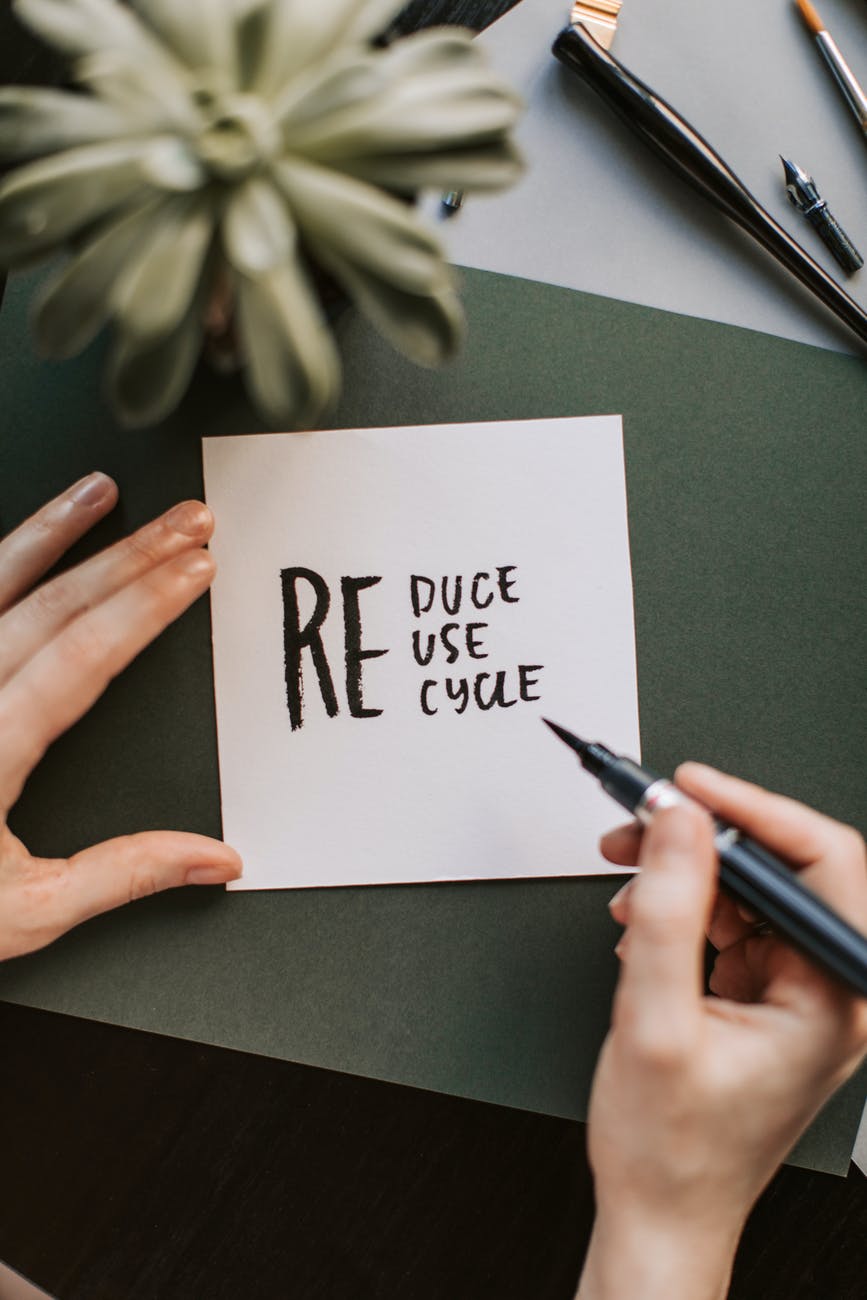
This series hopes to break down key sustainable terms and ideas to make them more accessible for everyone to understand and use to make change. If you are already familiar with these ideas, refresh your mind and use your knowledge, but if this is new to you, read on and learn!
Ah! The bread and butter of sustainability! 👌 But how well do you really know how and what to recycle? Are you partial to ‘wishcycling’ materials you think might be recyclable but don’t know for sure? Or do you just bin stuff on the assumption it can’t be? Let’s try and clear up the murky waters of recycling… (All information for UK – check out your own regional guidelines. Detailed information and pictures of the symbols at https://www.recyclenow.com/recycling-knowledge/packaging-symbols-explained)
- Green recycle symbol 👍 – The one that we want! This means that this product can be recycled in most local authorities through your local recycling collection. Do follow any added instructions, such as rinsing first to avoid contamination, put lid on (some are too small on their own so can’t be captured by the recycling machine, pop the lid back on for efficient recycling) or remove non-recyclable components such as sleeves.
- Black recycle symbol 😕 – this one takes a little more thought as it depends on where you live – not all localities recycle in the same way. Sometimes certain materials are collected at specific points, such as plastic bags at supermarkets, so check the logo and the recycling facilities on your weekly shop. Check what can be recycled in your area using the Recycle Now Recycling locator here https://www.recyclenow.com/local-recycling .
- Black symbol with line through👎 – It’s a no today. These materials are not currently recyclable, so try to avoid buying as many of these as they will most likely end up in landfill.
- The Green dot (a circle made of two green arrows) 🤔 – This means the producer has made some financial contribution to recycling packaging, however on its own does not guarantee it is 100% recyclable, so look out for its use with other symbols e.g. the green symbol. Bit of a sneaky one…
- Plastic resin codes – These are found on plastic items, usually a triangle of arrows and some initials. Generally, the lower the number inside the triangle (e.g. 1), the more likely it is to be recyclable, so check to see if used with the green symbol.
- Mobius loop ♻ – three arrows, indicating that the product is capable of being recycled, and may be accompanied by a percentage showing how much of the packaging is made up of recycled materials.
- Glass, steel and aluminium 🥫 – These may have their own symbols, either to help you recycle them in the correct recycling container or to let you know if they are made of recycled materials.
- Compostable 🌿 – A leaf symbol which tells you this can is industrially compostable. Can be added to your local authority garden waste recycling.
- Home composting 🏡 – Suitable for use in your home compost! Add in the ‘brown layers’ for effective composting.
- Tidyman – Cannot be recycled, so the best to do is to put this item in the bin to prevent litter.
So there we have it! A beginners guide to recycling symbols – in my opinion, not as clear as they can be, but with a bit of understanding will hopefully help you reduce your waste and keep our materials in usage. Make recycling a habit, have clear recycling bins at home that are in easy to access places and with a little practice your waste bin will cease to be the main character. Happy recycling! ♻
Discover more from Ginger Leaf Living
Subscribe to get the latest posts sent to your email.
 Ginger Leaf Living